Why Murchie's Glasgow blueprint can aid Wales' defensive philosophy

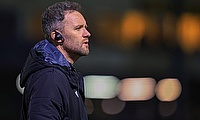
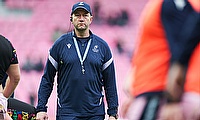
Peter Murchie, who will join Wales in the summer, was successful as a coach with Glasgow
©PA
Eight months after Steve Tandy was appointed Wales head coach, the Welsh Rugby Union have finally secured a full-time defence coach, with Peter Murchie joining ahead of this summer’s inaugural Nations Championship.
Murchie, a former full-back who represented Glasgow Warriors and Scotland after stints with Bath and London Welsh, retired in 2017 and moved into coaching.
He joins from Japanese side Kobe Steelers, where he has been working under former Australia coach Dave Rennie as defence coach.
Before that, he spent four seasons back at Glasgow between 2021 and 2025 - initially as skills coach before stepping into the defensive side of things.
In doing so, he became the first individual to make 100 appearances as a player and later oversee 100 matches as a coach for the Warriors.
So what can Wales expect from Murchie’s defensive blueprint at Test level, and where have things gone wrong during the opening three games of this Guinness Six Nations?
Success at club level: URC title triumph
Glasgow transitioned into title contenders while Murchie was a player under Gregor Townsend, adopting an expansive, high-tempo style that captured their first league crown in 2015.
Since then, the Warriors have always been in the mix for the big prize.
Their second league success arrived in 2024, with Murchie part of Franco Smith’s coaching team, as the Warriors picked up impressive away wins against Munster and the Bulls to claim the United Rugby Championship title.
Throughout that campaign, Glasgow were known for their attack as they scored 85 tries in the league, aided in no small part by prolific hooker Johnny Matthews, who didn’t always have to benefit from their useful rolling maul.
Yet it was defensively where Smith’s side truly set themselves apart.
They topped the league for the number of tackles (2,940) and posted an 84 per cent success rate, built on Murchie's defensive line staying connected instead of a particular individual looking to make a tackle and ending up being isolated.
They were also a team that would benefit from turnovers, with Glasgow the only side to surpass 150 turnovers during that URC campaign.
Stepping up to international level, you'd expect Murchie to look to implement a similarly cohesive structure, with a focus on winning breakdown turnovers.
Wales’ defensive lapses
After two rounds of the Six Nations, Tandy’s side had leaked 102 points in defeats to England and France before showing signs of improvement in last week's narrow three-point loss to Scotland at the Principality Stadium.
At the Allianz Stadium in their tournament opener against England, Wales made a disastrous start - conceding 11 penalties and collecting two yellow cards inside the opening 21 minutes.
England capitalised, piled on the pressure and claimed a convincing 48-7 win as Wales struggled to cope with the physicality and were repeatedly exposed in the narrow defensive channels.
Against France, Les Bleus were able to drift outside of the Welsh defence, isolating Scarlets centre Eddie James, who was frequently left with little option but to commit under France's attacking intent.
At Test level, there isn’t really a preference in terms of the traditional drift or blitz defence, with the majority of nations finding a balance to utilise both.
In previous years, sides would pretty much stick to one system, particularly when the blitz defence was first pioneered by former Wales defence coach Shaun Edwards during his time at London Wasps.
Wales are currently opting for a more aggressive, blitz defence, but opponents have found room in the wider channels.
With Murchie's impending arrival, the hope will be that Wales can retain that defensive intensity while tightening their spacing and decision-making - particularly ahead of summer Tests against Fiji, Argentina and South Africa.
Latest Wales news
In terms of the here and now, Wales remain hopeful that fly-half Sam Costelow could still feature in this season’s Six Nations, but flanker Taine Plumtree has been ruled out for the remainder of the tournament.
Both players picked up injuries during last Saturday’s 26-23 defeat to Scotland.
Costelow was forced off in the second half after suffering an ankle problem, but will stay with the squad to continue his rehabilitation.
Plumtree was withdrawn after just nine minutes with a shoulder injury and has now been released from the squad, bringing his Six Nations campaign to an end.
Elsewhere, nine players have been released by Wales to their regions for the next round of the URC.
Ben Thomas, Mason Grady and Liam Belcher have returned to Cardiff as they prepare to host Leinster on Friday evening, while Josh Macleod - who started against England - and Tom Rogers are back with the Scarlets, who travel to Edinburgh.
Ospreys quartet Gareth Thomas, Owen Watkin, Harri Deaves and Reuben Morgan-Williams are back with their region ahead of their meeting with Ulster.
Wales travel to Dublin to face Ireland on Friday, 6 March, before completing their Six Nations campaign at home to Italy.