Under the Microscope: Why Tomas Albornoz Is Facing a Storm of Scrutiny
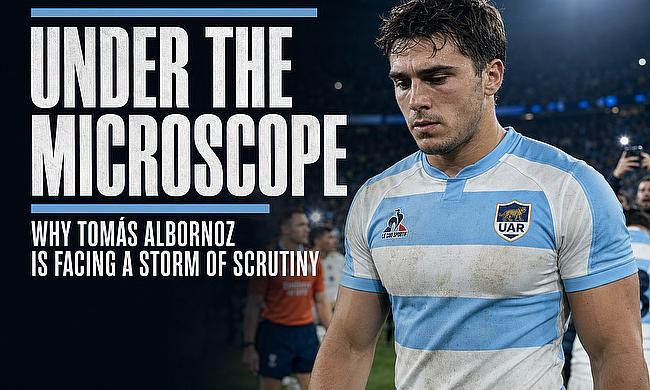
Tomás Albornoz is under scrutiny after Argentina’s 31-24 loss to England
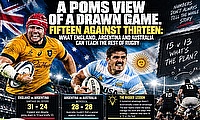
Argentina’s 31-24 defeat to England produced no shortage of talking points, but in the 48 hours since full time, one figure has drawn more heat than anyone else in the sky blue and white: fly-half Tomás Albornoz.
Between a costly error at the game’s pivotal moment and a heated confrontation with the referee at the final whistle, the Toulon number 10 has gone from Argentina’s chief creative outlet to the centre of a genuine disciplinary storm.
The moment that got away
Watching the Argentinian’s play good rugby, there was one man who stood out and that was Albornoz.
He was the most creative and deadly with his kicking. Argentina had just hauled themselves back into the contest, cutting a 19-point deficit down and building real momentum, when Albornoz kicked a pressure-relieving ball dead at what commentators are already calling the peak of the Pumas’ revival. It was the kind of error that, in isolation, happens in any Test match. In context, with Argentina playing some of their most dangerous rugby of the night and England there for the taking, it handed the initiative straight back, and pundits have been quick to place it alongside Santiago Carreras’s own dead-ball restart as one of the self-inflicted wounds that ultimately cost Argentina the game.
It wasn’t Albornoz’s only shaky moment defensively either. Earlier in the match he was bumped off attempting to stop Ben Earl’s break for England’s second try, and was also brushed aside by a barrelling Marcus Smith in the second half; two moments that, however small individually, have fed a broader narrative questioning his composure on the biggest stage.
The full-time flashpoint
Far more serious is what happened after the final whistle. With Argentina incensed by referee Angus Gardner’s decision to disallow Bautista Delguy’s last-gasp try, several Pumas players surrounded the official to protest, and Albornoz was reported as being “particularly vociferous,” with some reports suggesting he made physical contact with Gardner in the process.
That detail matters enormously. Any physical contact with, or intimidation of, a match official can be referred straight into World Rugby’s disciplinary process, with sanctions ranging from a fine to a lengthy suspension depending on severity. Whether Albornoz actually faces a citing will come down to Gardner’s own match report and the review carried out by the match commissioner but the incident has already gone viral on social media, with clips being widely shared and pundits speculating openly about a possible ban.
Footage adds a second flashpoint
As if the referee confrontation wasn’t enough, separate footage has since emerged that appears to show Albornoz making contact with Tommy Freeman’s head with a swinging arm as the England wing grounded the ball for his try. The angle isn’t conclusive enough to say definitively that a punch was thrown, and the incident went completely unreviewed at the time; missed by both Angus Gardner and TMO Brett Cronan in the middle of a wider scuffle around the try-line. It’s since been widely shared and picked apart by supporters on both sides, with the clip doing serious rounds on social media over the last day.
Context matters here too: this wasn’t an isolated flare-up. The passage of play around
Freeman’s opening try was chaotic well before Albornoz became involved, with Mateo
Carreras already carded for making contact with Freeman’s head moments earlier, and Gardner strangely penalising England’s Ollie Chessum, who appeared to be trying to calm things down rather than escalate them. Whether match officials revisit the Albornoz incident retrospectively, which does happen when clear foul play goes unpunished in real time remains to be seen, but it’s now a second, separate strand for World Rugby’s citing process to consider alongside the confrontation with Gardner.
Context: a symptom, not a one-off
It’s worth saying that Albornoz wasn’t alone in contributing to Argentina’s chaotic finish; Joaquín Oviedo’s dangerous clear-out and Santiago Carreras’s deliberate knock-down both fed into a night of individual and collective indiscipline for the Pumas. Head coach Felipe Contepomi didn’t help matters either, storming out of his own press conference mid-answer after taking issue with noise from England’s dressing room, in a moment that set the tone for how the whole occasion has been read: Argentina, by several accounts, came across as sore losers in a match they contributed heavily to losing themselves.
For Albornoz individually, though, the fallout is more pointed. He remains one of Argentina’s most important attacking weapons , a two-time Rugby Championship contributor with a growing reputation at Toulon and it’s precisely that profile that means his mistakes and his conduct get magnified rather than absorbed. A poor kick from a fringe squad player is a footnote. The same kick from your first-choice fly-half, on the night your side let a statement win slip away, becomes the story.
What happens next
The immediate question is whether World Rugby’s disciplinary process picks this up at all; if it does, Albornoz could be facing a ban that would rule him out of Argentina’s remaining Nations Championship commitments and potentially bleed into the Rugby Championship later in the year. Even if no citing follows, the court of social media has already reached its verdict, and Albornoz will know that his next appearance in the number 10 shirt will be watched more closely than any Test he’s played to date.