Did rugby union do itself justice in June? An honest verdict
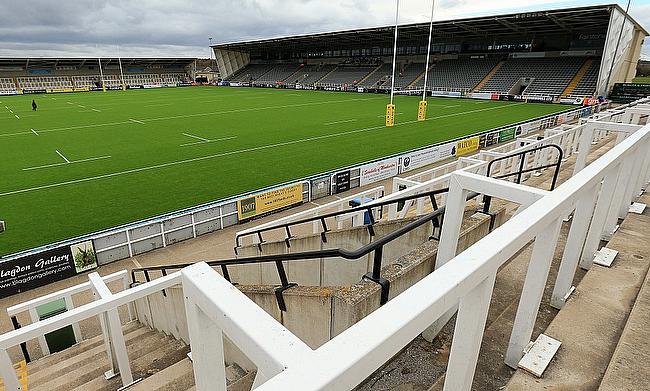
Frank Nickson’s June rugby union review, evaluating competitive balance and disciplinary consistency across major leagues.
©PA
June asked a lot of rugby union, and on the whole, the sport delivered; though not without its now-familiar blemishes creeping back into view at the worst possible moments.
Start with the Gallagher Premiership, which produced as fitting a final as English club rugby has served up in years. Northampton Saints beat Exeter Chiefs 26-17 at Allianz Stadium, with George Hendy scoring twice in four minutes to swing a tense contest the Saints’ way after Exeter had briefly led through Dafydd Jenkins. It was tense, ill-tempered in places; Jenkins was sent off for a foul tackle, with Exeter’s Josh Kemeny also yellow-carded for a shoulder-led tackle; but it had genuine jeopardy and a deserving champion. Northampton celebrated with an open-top bus parade through the town, their third English title and second in three seasons. If you want a snapshot of what the Premiership can be at its best, this was it: two well-coached sides, a result in doubt until the closing minutes, and a champion with real substance behind the silverware.
Where the Premiership still falls short of doing itself full justice is everything around the edges; the disciplinary inconsistency, the late-season pile-up of cards in a showpiece match that ought to be the league’s best advertisement. A final shouldn’t need cards to be remembered as a classic; ideally the rugby does that on its own.
The Top 14 told a similar story, with a familiar name back on top. Toulouse beat Montpellier 28-20 at the Stade de France to win their 25th Bouclier de Brennus, with Romain Ntamack’s boot and an early Peato Mauvaka try doing the early damage. There’s something to admire in that consistency of Top 14, but also a nagging worry. French rugby’s financial muscle is concentrating success at fewer and fewer addresses, and a competition this rich shouldn’t feel quite this predictable at the business end. Montpellier’s resurgence; a side that came within a whisker of relegation in 2024 and arrived at the final off the back of 23 wins in 26 matches, was the actual story of the season, even if they fell short on the day. Top 14 should be applauded for producing that narrative; it should be more worried about how rarely the eventual destination of the trophy is in doubt.
Pro D2, by contrast, did everything right. RC Vannes beat Provence Rugby 18-14 in Toulouse to seal an immediate return to the Top 14, a year after being relegated, and the story around it was as good as the rugby. Around 8,000 Breton supporters travelled to Toulouse to watch, with a giant screen erected back home in Vannes for those who couldn’t make the trip.
Provence, in their first-ever final and unbeaten in seven matches coming in, pushed Vannes all the way and were left to fight again in a promotion playoff against Perpignan. This is exactly the kind of jeopardy and romance that elite leagues with closed shops can lose, please note Prem Rugby in England.
Pro D2’s structure, with relegation, promotion and genuinely competitive playoffs, gave June a story with real stakes for a provincial club playing in front of its own people. If you wanted to point to one competition that did rugby union proud this month, it’s the one with the smallest TV deal.
The URC offered something closer to déjà vu. Leinster beat the Bulls 36-7 at Croke Park to retain their title, scoring three first-half tries to build a 22-0 lead from which the Bulls never recovered. It made Leinster the first two-time winner of the URC era and a ten-time winner of the competition across its various guises, while the Bulls suffered their fourth final defeat in five years. Croke Park’s scale and the occasion itself were undeniably impressive, but a final that’s effectively over by half-time, against an opponent who keeps coming back for more punishment, raises the same question Top 14 does: is the league doing enough to produce genuine contenders outside an entrenched elite? Glasgow and Ospreys create drama suggesting there’s real competitive depth lower down the table; it’s just not yet translating into final-day drama at the very top.
So: did rugby union do itself justice in June? Mostly, yes. The competitions produced compelling rugby, packed stadiums and genuine emotion; Vannes’ homecoming and Northampton’s parade prove the game still has the power to move whole towns. But the recurring theme across three of the four competitions was concentration of success among a small number of super-clubs, with discipline issues still occasionally overshadowing the final itself. The sport’s biggest leagues could learn something from the French second tier and England’s National 1.