Women's Rugby Bodies Join Forces to Untangle the Calendar
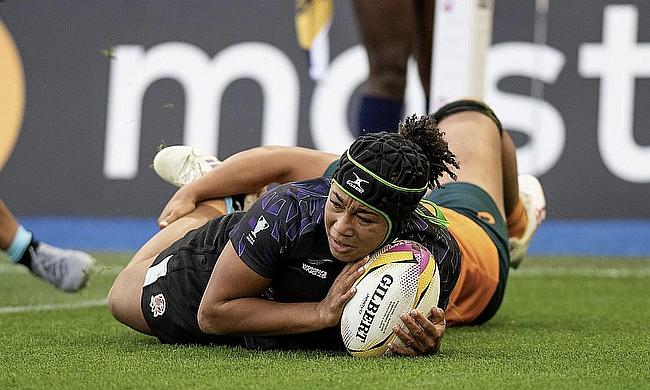
Red Roses' Sadia Kabeya
©Lizzy Terry/ TEZ.PHOTOG
It’s the kind of announcement that won’t grab headlines the way a squad naming does, but for the players caught in the middle of it, this could be one of the more significant pieces of news in the women’s game this year. British Universities and Colleges Sport (BUCS), the Rugby Football Union (RFU), Premiership Women’s Rugby (PWR) and the Celtic Challenge have confirmed they’ve aligned the 2026-27 women’s performance calendar across internationals, the PWR Cup and League, the Celtic Challenge, Women’s BUCS Super Rugby (WBSR) and RFU age-grade camps.
The driving force is a U23 Review carried out jointly by the RFU and PWR, which identified a problem familiar to anyone who’s followed the pathway: young players juggling club, university and international commitments in environments that were never quite designed to talk to each other. The stated aim is simple enough; give players, coaches, clubs and universities more clarity, so athletes spend their energy performing and developing rather than firefighting a diary clash.
The most concrete change is to the Women’s BUCS Super Rugby calendar itself. The Milk Championship Final will now be brought forward and played as a standalone event, combined with the WBSR Playoff, at Rodney Parade on 17 March 2027, ahead of the U21 Six Nations. That timing matters: it means U21 internationals playing in WBSR will no longer have to choose between the pinnacle event of their university season and representing their country.
Beyond the one-off fixture change, the four organisations have committed to coordinating the calendar collaboratively every year going forward, rather than treating this as a single fix. BUCS’s Dan Roberts framed it as recognising the role higher education plays within the wider pathway, while the RFU’s Charlie Hayter called it a model of what’s possible when stakeholders put player development at the centre of the conversation. PWR’s Genevieve Shore was blunter about the underlying issue, easing fixture congestion, particularly for younger athletes and the Celtic Challenge’s Josh Payne echoed the sense that this had been a genuinely collective effort rather than one body dictating terms to the others.
It’s a structural story rather than a scoreline, but for the U23 generation trying to build a career across multiple environments at once, this is the kind of behind-the-scenes work that shapes whether talent gets the runway it needs.
Do you think aligning the calendar like this will genuinely ease the burden on young players, or does the women’s game need more radical restructuring to get the balance right? Let us know in the comments.


.jpg "England head coach John Mitchell")
.jpg "John Mitchell names a 36-player Red Roses squad led by Megan Jones for WXV Global Series Tests against Australia, Canada and New Zealand.")

.jpg "John Mitchell says the new size 4.5 women’s rugby ball could increase contestable kicking")

.jpg "John Mitchell names a 40-player Red Roses squad as England begin preparations for the WXV Global Series.")