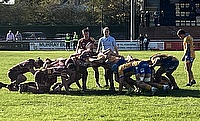
When the Path Isn’t Straight: Mark Jennings and his move to Preston Grasshoppers
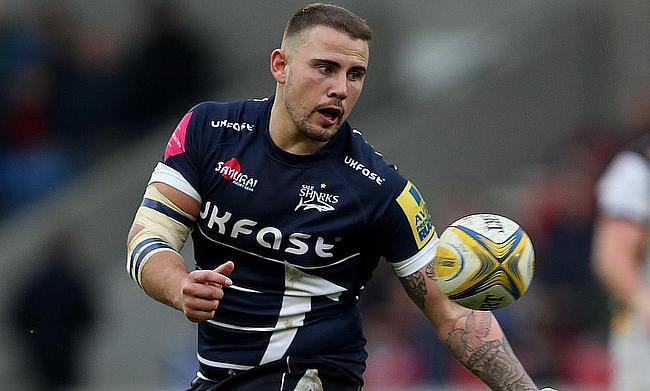
The former Sale star signed for National Two North outfit Preston this week
©PA
SeniorMash Reflections writing in collaboration with TalkingRugbyUnion.co.uk
See more of this work at www.markashcroft.substack.com
Mark Jennings was once Sale Sharks’ youngest-ever professional signing and a member of a hugely talented North age-grade side.
Now, at 33, the former Premiership centre has joined National Two North outfit Preston Grasshoppers.
His return to the game is a reminder that rugby careers and life rarely follow the route we imagine for them.
Sometimes a rugby signing takes you back, so when Preston announced the arrival of Jennings this week, my first thought wasn’t actually about his near 100 appearances for Sale.
In fact, it took me back to age-grade rugby and a talented North side which included my son, Max.
There are photographs and team sheets from those days which become increasingly fascinating with the passing of time. Young players stand alongside one another at 17 or 18, all with ambitions, all at roughly the same stage of their rugby lives.
Then their paths separate, with some reaching the Premiership and others moving into National League Rugby.
Some stop playing altogether and occasionally, many years later, those paths cross again.
A North Side Packed With Potential
Talking Rugby Union has actually visited this story before.
In 2015, TRU published a feature entitled ‘Where are they now – North?’, looking back at the North U18 side from the 2010 English Divisional Rugby Festival.
It was quite a group. Josh Beaumont was in the second row. Ross Harrison was among the replacements. Will Addison and Jennings were part of a backline which TRU described as being “packed with potential”.
My son Max was the starting loosehead prop. Five years after that festival, the rugby careers of those mentioned had already started heading in very different directions.
Max had spent two-and-a-half years at Bath before returning north and playing National League rugby with Sedgley Park.
Beaumont, Harrison and others were establishing themselves at Sale with Jennings and Addison regularly representing the Sharks in the Premiership and Europe.
When looking back at that article now, more than a decade later, it poses the same fascinating question.
Where are they now?
For Jennings, the latest answer is Preston Grasshoppers.
Sale’s 16-Year-Old Prospect
Jennings had been identified as an outstanding prospect even before that North U18 side came together. I vividly remember watching him play for Lymm High School.
On his 16th birthday in February 2009, Sale Sharks made him the youngest player they had ever signed professionally.
He was still attending Lymm and was part of the England U16 set-up, with an arrangement allowing him to combine his education with training at Sale.
Academy manager James Wade called him “one for the future”.
It would have been easy to dismiss that as the sort of phrase routinely attached to talented teenagers, but in Jennings’ case, it proved accurate when he went on to represent England at U16, U18 and U20 level before breaking into Sale’s senior side.
He was quick, powerful and comfortable with the physical side of midfield rugby.
From Potential to Premiership Player
By the time TRU revisited that North team in 2015, Jennings was no longer simply a promising academy player. He was a professional rugby player.
There was even an early glimpse of the National League environment for Jennings, with him making five appearances on loan at Sedgley Park in 2012.
But Sale was where his career developed.
There were Premiership matches, European rugby and the week-to-week demands of being a professional player.
Then, in March 2017, came another moment which is particularly interesting when viewed from 2026.
Jennings signed a new two-year contract with Sale.
He was only 24 and Steve Diamond’s comments at the time suggested this was a player approaching the prime years of his career rather than somebody nearing its conclusion. “Mark has come through the ranks at Sharks,” Diamond said, adding that Jennings would play a big part in what Sale were building.
Jennings spoke of wanting to help the club achieve its ambitions. At 24, having been in Sale’s system since 16, the road ahead appeared reasonably clear.
Except it wasn’t.
When the Path Stops Being Straight
Injuries increasingly became part of Jennings’ story and eventually, in 2019, he stepped away from professional rugby.
But there was more happening than injuries alone. Jennings subsequently spoke publicly and candidly about some of his difficulties away from the pitch, including his experiences with depression and issues involving alcohol, drugs and painkillers.
In a powerful interview with Sky Sports in 2020, he talked about addiction, rehabilitation and the support he had received from Restart Rugby. There were also incidents during that difficult period for which Jennings had to accept responsibility. They should not be erased from his story but neither, though, should they become the only way his story is told.
When Rugby Becomes Your Identity
Consider Jennings’ timeline.
At 16, he was a professional rugby player. Just remind yourself what most of us were doing at 16.
For Jennings, rugby was already becoming far more than the sport he played at weekends. Suddenly, it was his workplace and routine.
For those of us who played rugby recreationally, the game generally had to fit around life but for professional players, life has to fit around rugby.
Training schedules dictate the week. Selection dictates the weekend. Contracts determine where you live. Injury determines whether you work. And when that structure disappears, replacing it isn’t necessarily straightforward.
Jennings’ experience was clearly more complicated than most, but there is a wider rugby issue contained within it.
Professional rugby rightly spends enormous amounts of time identifying talent and preparing young people to become professional players.
It must devote equal thought to preparing them for the day when they are no longer professional players.
Because for almost everybody, that day comes relatively young.
Two Very Different Journeys
Interestingly, Jennings’ arrival at Preston comes as TRU has been exploring exactly this transition from another perspective.
This week, National League Rugby spoke to former Northampton Saints and Ealing Trailfinders winger Tom Collins following his move to Oundle.
Collins’ journey has been very different and after more than a decade at Northampton and three seasons with Ealing, he has moved into National League Rugby while developing the construction business he established alongside his playing career.
He remains fiercely competitive and still wants to win.
But rugby is beginning to fit around the rest of his life rather than the rest of his life fitting around rugby.
Jennings arrives at Preston by a much less conventional route.
Put the two together, and perhaps they illustrate something important about the role National League and community rugby can play. Leaving professional rugby doesn’t have to mean leaving rugby.
What Jennings Can Bring to Preston
From a purely rugby perspective, Preston Grasshoppers have acquired a player with considerable experience.
Jennings made 95 appearances for Sale and experienced Premiership and European rugby.
And he is still only 33.
There will naturally be interest in what he can contribute in the centre, but perhaps his influence can extend beyond matchday.
Imagine being an ambitious young player at Preston and sharing a training session or dressing room with someone who entered the Sale system at 16.
Jennings knows what professional academies demand. He knows Premiership preparation. He knows what it feels like when rugby is going well but perhaps just as importantly, he knows what it feels like when it isn’t.
Experience doesn’t have to be perfect to be valuable.
Sometimes the difficult experiences are the ones containing the greatest lessons.
Rugby’s Two-Way Pathway
We often discuss National League Rugby as a pathway upwards. TRU sees it constantly.
Young players develop at clubs such as Preston Grasshoppers, Sedgley Park, Fylde and others before opportunities emerge further up the pyramid, but the pathway works in both directions.
Players return from professional rugby carrying years of accumulated knowledge.
That knowledge enters another dressing room, another training session and that allows another generation of players to benefit. That is one of the reasons National League Rugby remains such an important part of the English rugby ecosystem.
It isn’t simply a competition sitting two levels below the Premiership. It is one of the places where different generations and different rugby experiences meet.
Sixteen Years Later
Perhaps that brings us back to that North U18 team. In 2010, nobody standing on the touchline could possibly have mapped out what would happen to all those young players.
Josh Beaumont would become a Sale captain. Others would establish substantial professional careers.
Max would spend time at Bath before moving into National League Rugby and now has a commercial career in Rugby League.
Jennings would become a Premiership regular after being Sale’s youngest-ever professional signing; then his journey would take a much more difficult turn.
Sixteen years later, he is back playing rugby in the North-West.
There is something rather appealing about that, and that’s not because it completes some perfect sporting circle.
Life rarely works like that, and certainly not because rugby somehow erases everything which has happened in between. It doesn’t, but sport can provide structure, friendship, competition and belonging.
Perhaps, at 33, those things look rather different to Jennings than they did when Sale Sharks handed him a professional contract on his 16th birthday.
Which is why his move to Preston Grasshoppers shouldn’t simply be described as another former Premiership player dropping into National League Rugby.
It is another chapter in a rugby life which has already contained extraordinary highs and some very difficult lows, and maybe this chapter doesn’t require predictions about where Jennings might eventually end up.
Instead, it is another fresh opportunity to pull on a rugby shirt and compete.
We will certainly want to know whether he plays alongside Big Sam, Sam Russell and how he performs for coaches Orwin, Maher and Sturgess.




.jpg "Max Ashcroft (left) in action for Sedgley Park")