The Other Blokes: The Players Who Make Test Rugby Possible
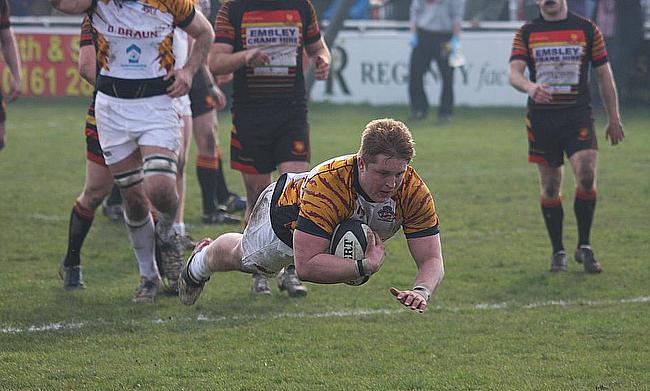
Johnny Matthews’ rugby journey has taken him from the grassroots of the English game at Sedgley Park to the international stage
©TRU
Across the course of the rugby calendar, millions of supporters will watch 23 players run out wearing their nation’s colours every year.
Television cameras will follow every carry and tackle plus every match-winning moment. Headlines will celebrate the stars, the tries, the kicks, question the captain and analyse the fly-half’s performance.
But international rugby is built on far more than the 23 players whose names appear on the teamsheet.
Behind every Test match are “the other guys” or "the other blokes"
The training squad member who spends two weeks preparing the starting XV before quietly returning to his club. The experienced professional called into camp to provide opposition analysis.
The uncapped prop who pushes established internationals in training every day. The player who earns one cap before injury, form or circumstance means there is never another. The young up-and-coming player who is there to “experience it”.
Their contributions rarely make highlights packages, yet without them the elite game simply could not function.
Modern Test rugby demands depth as much as brilliance. Coaches now speak about 40 or 50-player squads rather than simply selecting their best XV.
Summer tours, autumn internationals, the Six Nations and the Rugby Championship all require players ready to step in at a moment’s notice.
England boss Steve Borthwick is keen on the 46-man squad. Increasingly, it resembles the old-fashioned touring squad.
Some become household names. Many do not.
Yet every one has reached a level that thousands of young rugby players can only dream about, and perhaps that is why rugby remains different.
Unlike many professional sports, there is still enormous respect for those who simply earn the opportunity. One cap still carries immense significance. It represents years of sacrifice, thousands of training sessions and countless journeys on wet Tuesday nights with clubs, schools and universities that first nurtured ambition.
Let me tell you, those journeys matter; and rugby parents know all about this. I love to share Tim Haley's last-minute rush to South Africa to watch his son, Mike, play for Munster.
And that is without me starting to recount my own parental travel to watch my son, Max. I do intend to share that in separate articles over the coming months.
At Talking Rugby Union, the team spend much of their time covering the parts of the game that rarely dominate national headlines.
National League Rugby, university rugby, community clubs and the Champ are not separate worlds from international rugby. They are its foundations.
Look closely enough, and the evidence is everywhere.
Before becoming one of Scotland’s most prolific try-scoring hookers, Johnny Matthews honed his game at Sedgley Park.
"Playing at Sedgley is still some of the most amazing memories I’ve ever had playing rugby," Matthews, who has recently moved to Pro D2 side US Montauban, tells TRU.
"We had an unbelievable group of lads across the club, a lot of whom I am still good friends with today. It’s a proper family club run by great people.
"It [playing in National League Rugby] definitely brought me on as a player. We had some brilliant coaches while I was there, who taught me how to look at the game differently.
"One thing it did teach me playing for Sedgley was resilience. The season is so long, and you play in some very tough places. It makes you very mentally strong.
"It also made me really enjoy playing again, training and playing every week with your mates, and then enjoying a few beers in the club or on the bus back after a win. They are some of the best memories."
The aforementioned Mike Haley’s rugby education included invaluable years at Preston Grasshoppers before progressing into the professional game and representing Sale Sharks, Munster and Ireland.
More recently, Asher Opoku-Fordjour’s journey through Sedgley Park and Sale FC into the Sale and England environment underlined once again how community clubs continue to develop players capable of reaching the very highest level.
Plus, professional clubs trust National League teams with their valuable assets.
In two separate interviews with Talking Rugby Union and National League Rugby, Opoku-Fordjour spoke highly of his time in the National Leagues.
“It [the National Leagues] just gives you confidence that when you'd get on the pitch [for Sale], you feel free to know what you can do instead of hiding away and shying away from the stuff that you know you’re good at but maybe you wouldn’t try.
“Like in the scrum, there is always going to be big boys in the National Leagues. They get pretty heavy so you get loads of learnings from it. You might get f***** a couple of times, but you always learn from it and you come back stronger from it each time so it really does help your development.
“It all adds to the build. You keep working hard at the lower levels, you are just going to continue gradually getting better, better and better."
These stories are not exceptions. They are reminders that the pathway to Test rugby rarely begins under bright lights. It starts on community pitches, with volunteer coaches, muddy changing rooms and clubs whose greatest reward is seeing one of their own fulfil a dream; and they celebrate very loudly.
Every England international once played for a local club, and it's good to see the England social media team share such important things on their posts.
Every established Test player relied on teammates whose names would never appear in national headlines.
Those are the stories that deserve telling, and the team at TalkingRugbyUnion continue to chase these whilst providing the environment for young sports journalists to gain experience.
Some players spend years in international camps helping prepare teammates for Six Nations victories yet only collect a handful of caps.
Others toured the southern hemisphere without ever taking the field. Some became outstanding club servants, respected throughout rugby but largely unknown beyond it.
Were they failures? Far from it.
Most would describe representing their country, even once, as the greatest honour of their sporting lives.
Perhaps we have become too focused on measuring careers by caps, tries and social media following. Rugby has always been about something more enduring.
Contribution.
Character.
Sometimes the player making the biggest difference is the one wearing a bib on the training pitch rather than a numbered shirt on match day.
Sometimes the reserve hooker who spends all week throwing line-outs allows the starter to shine on Saturday afternoon.
Believe us when we report that an international returning to his community club inspires dozens of young players simply by sharing the standards and habits he has experienced.
That influence spreads far beyond the Prem. It reaches schools, universities, National League clubs and community rugby across the country.
Perhaps that is why “the other blokes” deserve a little more attention.
Because while history remembers the players lifting trophies, rugby itself is sustained by hundreds of men and women whose contribution rarely earns a headline.
At Talking Rugby Union, we believe those stories matter just as much.
After all, every international journey begins somewhere and more often than not, that somewhere is a community rugby club.
SeniorMash Reflections in collaboration with Substack and TalkingRugbyUnion.co.uk

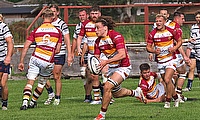
.jpg "Max Ashcroft (left) in action for Sedgley Park")