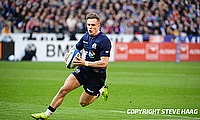
Wales kicking coach Alex Davies: 'It's an absolute privilege' to work alongside Welsh greats
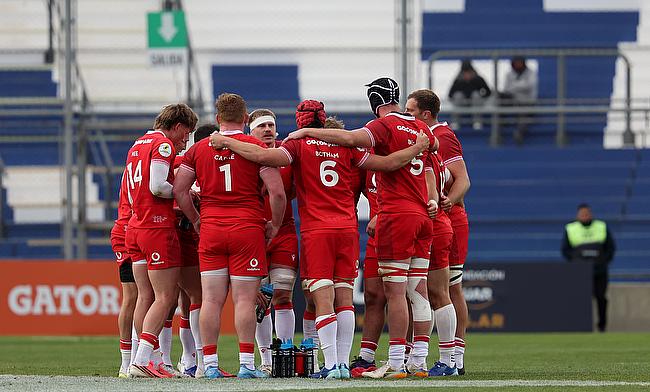
Alex Davies begun working with the Wales senior squad last month
©Photo by Marcos Brindicci - Nations Championship/Getty Images
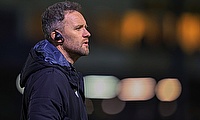
Wales kicking coach Alex Davies has admitted “it’s an absolute privilege” to be working with some of Welsh rugby’s greats ahead of the Nations Championship.
Davies officially joined Wales from Gallagher Prem side Leicester Tigers in September, and has been working alongside former internationals Leigh Halfpenny, James Hook and Neil Jenkins, who have all offered their input during the opening two months of his tenure.
"It’s an absolute privilege to be in the same office as Jenks, who’s an absolute legend," said Davies.
"Leigh, Hooky and even Scott Sneddon at the Scarlets, like to have those guys around just to chat with and talk about tactics, the game and technique [is great].
"They’re all absolute legends, so for me it’s an absolute privilege to have those boys and all of us together in the room."
A look towards the future
While Davies will work within the senior international set-up alongside head coach Steve Tandy, a key part of his role will be developing the next generation of Welsh players.
That includes working alongside Halfpenny and Hook, who are currently involved with Cardiff and Ospreys respectively.
From working at camps with regional players to helping academy prospects develop from a young age, Davies explained his role during his first press conference.
"In different stages there’ll be different requirements," said Davies.
"Like 13, 14 and 15-year-olds just need to be competent kickers - the basics of the ball drop, what the body does and the kick itself - and, as you progress up, it’s the tactical side of it. Then you marry them both up in a high-pressure environment.
"The more you go into the Under-18s and Under-20s, these boys need to be exposed to that.
"The kick strategy will change from game to game depending on your opponents, but the underlying technical aspects and the tactical part of it remain the same.
"So it’s just implementing that at the right stages and understanding what’s required for boys of that age."
Could kicking be a point of difference for Wales?
Wales have enjoyed mixed success with their kicking game during the Tandy era.
At the start of their autumn campaign last year, they were working on an approach that involved attempting to tap the ball back towards a teammate on the floor.
It did not work out in their opening game against Argentina last November, when a tap-back bounced into the path of Juan Martín González, who broke through to set up Gerónimo Prisciantelli for a try.
However, Tandy’s side may be moving away from the tap-back tactic, which has become increasingly popular in modern rugby.
Davies explained why the high-ball contest remains a fundamental part of Wales’ approach, while outlining how the game is evolving and how the side improved between the Six Nations and the summer internationals.
"I think you’ll see changes, with some teams having their wingers retreating to catch now and trying to escape that area. New Zealand are doing the exact same thing," said Davies.
"All I would catch in that area is the technique aspect of dominating the space, some technical points around your knee, your hands and where they are and how we can attack and be super aggressive in that area to win that collision.
"If we don’t win it, we’ve got a plan of solution around the floor and how we can win that.
"So if we’re not winning the air, we’re definitely going to hopefully have the best chance of winning it on the floor.
"As you’ll see, most teams will have all that in place, and the kick is really important. The accuracy of the kick, what the chase looks like and the organisation off the back of it, where we can transition to attack straight away. All this is a big part of it and needs to be trained.
"The individuals, Rees [Rees-Zammit] getting in the air and Josh Adams, are excellent. Rio was excellent in the air, and even Ellis [Mee] and Jacob Beetham at Cardiff. These boys are really good athletes at getting up in the air and winning the contest.
"I think the aerial contest, attacking contest for Wales, has improved from the Six Nations to the summer in terms of how many balls we got back.
"We jumped up to third in the world in getting the ball back, so we’re going to keep continuing that trend and still evolve that to be as high as we can in that area because it’s a huge part of the game.
"You look at the middle part of the game, it’s so transitional now with kicks. Everyone’s trying to disorientate defences and play off that.
"That’s exciting for me. I really enjoy that part of the game and how we can manipulate the backfield, but the fundamentals of the high-ball catch are what we’ll be coaching."
Wing change to Wales squad as Page gets a chance
Davies’ press conference followed the announcement that Scarlets back Macs Page had been called into Tandy’s squad on Tuesday, following a hamstring injury to Rio Dyer.
The Dragons wing scored his first try of the season in their 31-14 defeat against the Ospreys at St Helens on Saturday, with the score proving to be his final involvement after he appeared to injure his hamstring in the final play of the first half.
Davies acknowledged the cruel timing of Dyer’s injury.
"It’s obviously really tough," said Davies. "To be selected in camp and get an injury is tough for anyone. For Rio personally, he was playing really well for the Dragons.
"His high-ball work was excellent and he was super positive about it. It was really sad to see him go.
"The kicking game and his aerial game are technically very efficient. Some good stats backed up his performances, and that’s why we brought him in for those areas of his game."
Despite leaving the field wearing an oxygen mask during Scarlets’ 52-40 defeat by the Stormers last weekend, Page has been in impressive form at the start of the season.
He has scored five tries in as many matches for Nigel Davies’ side, including braces against the Dragons and Newcastle Red Bulls.
Page will have to complete the necessary return-to-play protocols following his head injury before he can be considered for a first Wales cap.