Numbers Don’t Lie: What the Stats Sheet Tells Us About the Inaugural Nations Cup
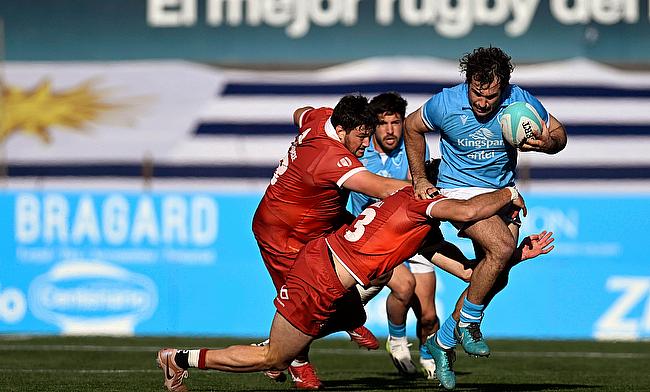
Uruguay's attacking intent caught the eye last month
©Guillermo Legaria/World Rugby via Getty Images
Three rounds into World Rugby’s brand new Nations Cup - the tier-two competition built as a launchpad towards Rugby World Cup 2027 - the raw data is starting to tell a sharper story than the results table alone.
Every one of the twelve nations in this competition has already qualified for Australia 2027, which makes this stats sheet worth far more than a midyear form guide.
Over three articles, TRU is going to dig into what the underlying numbers; rucks, carries, entries, line breaks say about where each side really stands.
This opener looks at the two extremes of the table: Canada and Uruguay, who are generating plenty of ball and plenty of tries but bleeding just as much at the other end, and the unbeaten pairing of Georgia and the USA, who’ve found two different routes to the same result - control.
Article Two turns to the Iberian contrast between Spain and Portugal, and the series closes by asking what all of it might mean once the Nations Cup form guide is set against the RWC 2027 pool draw.
Canada: all volume, no control
No side in the competition has done more with the ball than Canada. Their totals after three rounds, 266 rucks, a competition-high 359 carries, dwarf almost everyone else in the pool. This is a team happy to keep the ball alive phase after phase, grinding territory through sheer volume of carries rather than line-breaking speed.
The problem is what happens without the ball. Canada conceded 39 twenty-two-metre entries, the worst mark of any of the twelve nations by some distance, six clear of the next-worst defence.
Their carry-heavy game hasn’t yet translated into control. Opponents are still finding their way into the red zone at will. It’s a classic tier-two profile: physical enough to dominate possession stats, not yet organised enough to keep the scoreboard quiet. Zimbabwe’s trip to Winnipeg in Round Three was the latest side to test that soft underbelly.
Uruguay: the shootout specialists
Los Teros own the most eye-catching attacking number in the competition, 17 tries scored, the best of any side. On the face of it, that looks like form. But sit it next to their 20 tries conceded, also the worst defensive return in the tournament, and a different picture emerges. Uruguay are playing the loosest, highest-variance rugby in the Nations Cup.
That fits the results. Uruguay opened with a 41-34 loss to Georgia, then played out a 36-36 draw with Romania in Round Three, a game their own head coach admitted got away from them through discipline, at one stage going down to 13 men, something David Gerard called too “unstable” for a consistent performance.
Seventeen tries for is a genuine weapon heading into November. But until the defensive line breaks (22 conceded, among the leakiest) get sorted, Uruguay will keep giving back almost everything they create.
Georgia and the USA: the control freaks
At the other end of the spectrum sit the competition’s only unbeaten sides. Georgia and the USA both sit on 3-0 records with 14 standings points after Round Three, and the underlying numbers back up why.
Georgia have conceded just 11 tries, second-best in the competition, while playing some of the most direct rugby on show. The USA’s defence is tied for the meanest, conceding only 9 tries so far, matched only by Portugal.
The USA’s shape is different to Georgia’s, though. Their kicking count, 100 across three rounds, is comfortably the highest in the tournament, suggesting a side using territory and pressure rather than ball-in-hand carries to control games.
Georgia lean the other way, sitting mid-table on kicks but topping the table for tries scored relative to games played among the top sides.
The picture heading into November
With the Nations Cup pausing and resuming in November, the underlying stats suggest the pool isn’t just about who’s winning, it’s about how sustainably they’re winning.
Canada and Uruguay have plenty of attacking intent to build on but need to sort out what happens when they don’t have the ball. Georgia and the USA have already found sustainable, if very different, formulas.
Portugal, the reigning European champions, sit just behind on points having lost to the USA by a single score, and Chile remain unbeaten in Pool A, proof there’s more than one way to top these tables when November comes around.
Portugal’s name coming up here is no accident. They’re the subject of the next piece in this series, alongside their fellow European qualifiers Spain, whose numbers make for an interesting contrast once you put the two sides side by side.
Stats current through Round Three of the World Rugby Nations Cup 2026. Part one of a three-part series, part two looks at Spain and Portugal, part three at what it all means for RWC 2027.
Which would you rather have heading into November: Canada and Uruguay’s attacking firepower, or the control Georgia and the USA have found?

.jpg "Meg Jones will lead England against Canada")