Mapping the Champ: How Geography Will Shape the 2026-27 Season
Rotherham Titans’ return to the second tier of English rugby was won the hard way. They had to beat Sale FC on the final day of the National One season to claim the title outright, holding off Blackheath and Plymouth Albion in a title race that went right down to the wire. It is exactly the kind of promotion story English club rugby should be celebrating; a club that dropped out of this level eight seasons ago, climbing back through graft rather than a playoff shortcut, in a season where the gap between first and third was a matter of points, not games.
Blackheath’s route was different but no less compelling. The world’s oldest club had to win the accession final to get here, and in doing so returned to tier two for the first time in 27 years. Between Rotherham’s title, Cambridge’s automatic relegation at the bottom of last season’s table, and London Scottish’s play-off defeat to Blackheath, promotion and relegation did exactly what it is supposed to do: reward the team that peaked at the right moment and punish the two that couldn’t hold their form.
But Rotherham’s arrival brings something else into focus, and it’s the reason this piece exists: geography.
The Doncaster Question
Rotherham Titans and Doncaster Knights are roughly fourteen miles apart. Both South Yorkshire clubs, both drawing on an overlapping catchment of schools, amateur clubs and semi-professional players who, until this season, only had one senior pathway in the county worth taking. Now there are two, sitting in the same division, chasing largely the same pool of talent.
That’s not necessarily a problem; competition for players can sharpen recruitment and coaching as much as it can thin out squads but it is a dynamic worth watching closely across the season. Does Doncaster’s established infrastructure give them first refusal on the best South Yorkshire talent, or does Rotherham’s promotion narrative and fresh momentum make them the more attractive destination for players weighing up their options? Fixture congestion aside, this is the sort of local rivalry that used to be common in English rugby’s lower tiers and has become rarer as clubs have consolidated. It’s worth revisiting once a few rounds have been played and squad lists have settled.
Yorkshire’s Rugby Depth and an Old Imbalance
None of this works without understanding just how much rugby Yorkshire produces in the first place. It is, and always has been, one of the great rugby-playing counties; a fact I’ve had the good fortune to see up close over the years, standing on touchlines watching Yorkshire take on Lancashire at age-group level, with Sir Bill Beaumont, with his son Josh, and my own son Max turning out for the Red Rose. Those county battles were, and still are, a proper measure of strength in depth, and Yorkshire’s has rarely been in question.
For a long stretch through the county system’s strongest years, that depth flowed largely through one channel: Leeds. Through the early 2000s, as Leeds Tykes established themselves in the Premiership, the club became the natural home for the county’s representative and development rugby too. For clubs like Doncaster, Rotherham, Hull and Hull Ionians, there was a long-standing sense that Leeds absorbed a disproportionate share of the resource and investment on offer in the county; understandable given their topflight status, but a source of real frustration further down the pyramid, where clubs were developing just as much talent with a fraction of the backing.
Leeds’ pull on the county’s talent was never confined to the professional club, either. The old Carnegie College, the physical education institution founded in the 1930s with Carnegie Trust money, later absorbed into Leeds Metropolitan University, built a rugby reputation of its own alongside the Tykes. And for a period the two strands weren’t just parallel, they were entwined: the university took a majority stake in the professional club, which played as Leeds Carnegie from 2007 to 2014. It is the university side of that story that has proven the more durable. Leeds Tykes are long gone from the Premiership, but Leeds Beckett University, as Leeds Met became, has been ever-present in BUCS Super Rugby since the competition launched in 2016, still turning out players for the professional game every season. The city’s gravitational pull on Yorkshire rugby talent has always operated on two levels at once, club and university, and only one of those levels is still pulling.
That history matters now because Rotherham’s return puts a second Yorkshire club back in the Champ alongside Doncaster, at a time when the county’s playing base is as strong as it has ever been. Whether that translates into two well-resourced Yorkshire clubs pulling from a deep well, or two clubs competing for a pool of investment and players that has traditionally gravitated elsewhere, is one of the more interesting subplots of this Yorkshire double act.
A Closer Rivalry Hiding in Plain Sight
If Rotherham-Doncaster is the new geographic story, there’s an older one that gets talked about less than it should. Ampthill and Bedford Blues are separated by roughly eight miles of Bedfordshire; closer together than Rotherham and Doncaster, and a fixture that has quietly built into one of the most fiercely contested local derbies in the competition. Both clubs meet twice this season, in November and again in March, and both matches carry the kind of needle that pure league position rarely explains on its own.
The Rest of the Map
Zoom out and the Champ’s 2026-27 geography splits into some clear clusters
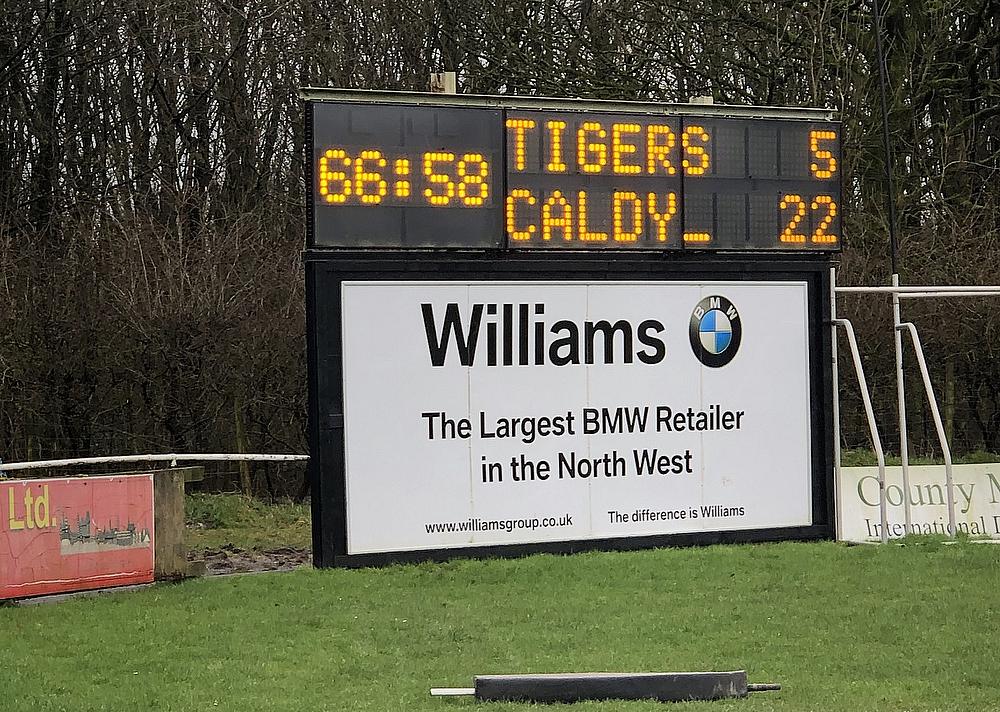
- The North stands almost alone. Rotherham, Doncaster, and Caldy; the Wirral club sitting apart from everyone else, the division’s sole representative for the north-west, and a side that has grafted its way up from National Two in the years I watched them do it.
- The Home Counties and London cluster is the heaviest. Blackheath, Richmond and Ealing Trailfinders all draw from a relatively tight radius of the capital, which means local bragging rights are on the line most seasons but also means the travel burden across the rest of the fixture list falls disproportionately on everyone else.
- The West and South-West arm is the outlier for travel. Worcester Warriors, Hartpury and Cornish Pirates are the trips that test squad depth and matchday budgets alike; Cornish Pirates in particular face the kind of round trips no other club in the division has to contend with regularly.
- The Midlands corridor, Ampthill, Bedford, Coventry, Nottingham, Chinnor, is the most evenly spread, and arguably the most manageable on pure travel logistics, with nothing forcing a squad much beyond a couple of hours on the coach.
Worth Remembering: Cambridge’s Fall
It’s worth pausing on Cambridge, too, if only as a counterpoint. I watched them, along with Caldy and Ampthill, rising through National Two between 2013 and 2019; three clubs on similar upward trajectories at the time. Two of them have gone on to become fixtures of the Champ. Cambridge reached this level and then dropped straight back out, finishing bottom of the table last season. Geography alone never decides anything in this division; infrastructure, recruitment and coaching continuity matter more but it’s a reminder that arrival at tier two and survival there are two very different achievements.
What to Watch For
The real test of all this comes in the fixture list rather than the map. Does Rotherham’s early form suggest they’re pulling talent away from Doncaster, or strengthening the county’s rugby base as a whole? Does the Ampthill-Bedford double-header live up to its billing again? And does the travel imbalance between the London cluster and the South-West arm start to show up in results as the season wears into its second half? The Champ’s geography has always shaped its narratives quietly, in the background of results and player movements rather than in headlines. This season, with Rotherham back and Cambridge gone, it’s worth watching more closely than usual.