From Rugby's Greatest Rivalry to NLR's Local Rivalries, a weekend that got it right
While the Springboks and All Blacks contested the final Test of Rugby’s Greatest Rivalry, National League Rugby demonstrated that the sport’s most authentic rivalries are often found much closer to home.
“Rugby’s Greatest Rivalry” is a formidable piece of sporting promotion.
It has taken the historic contest between South Africa and New Zealand two nations with more than a century of shared history and packaged it as a major international event.
The Springboks and All Blacks undoubtedly justify the billing. The rivalry has history, quality, political and cultural significance, and an extraordinary collection of memorable players and matches.
Yet while the final Test of that series was being played in Baltimore, National League Rugby was staging its own, rather different celebration of rivalry across England.
There was no attempt to identify one rivalry as the greatest. Instead, NLR brought clubs together for a designated round of local fixtures.
The result was a Saturday which felt well conceived, well timed and, at grounds such as Fylde, extremely well supported.
If Rugby’s Greatest Rivalry represents the international game at its most marketable, NLR’s Local Rivalries round showed the domestic game at its most recognisable.
A proper Lancashire derby
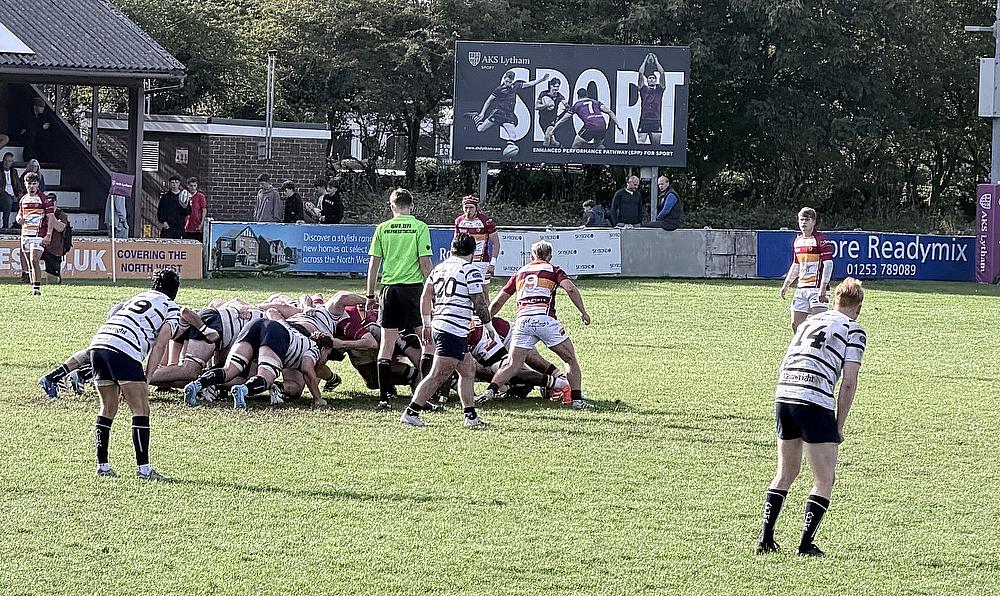
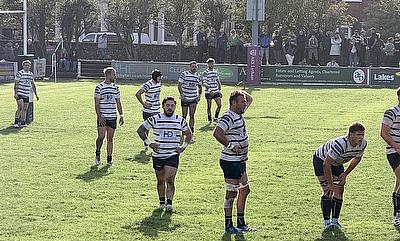
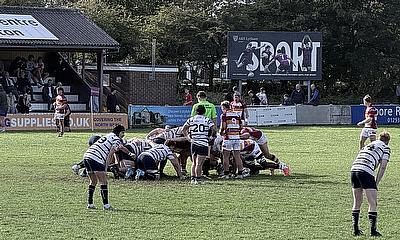
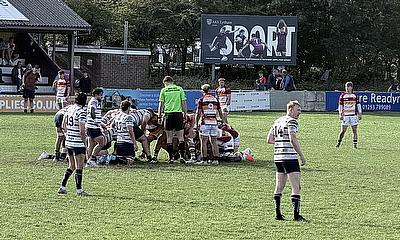
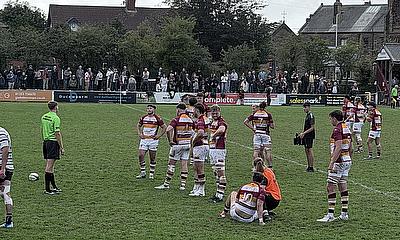
I was at The Woodlands for Fylde against Preston Grasshoppers.
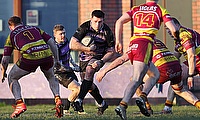
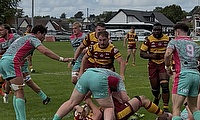
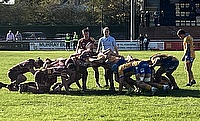
The rugby itself produced an impressive 31-12 bonus-point victory for Hoppers, built upon a dominant first-half scrum, two outstanding try-saving tackles by Jennings and Russell and a more clinical use of the opportunities available.
But this second weekend of the National Two North season was about more than the result.
There was a big crowd at Fylde and, importantly, it was a crowd containing different generations.
There were long-standing supporters who understood the history of both clubs, parents catching up with people they had known through the game and large numbers of children experiencing a proper National League occasion.
That intergenerational element matters.
The future of rugby is not secured simply by encouraging children to watch internationals on television. It is secured when they attend their local club, stand close to the pitch, hear the collisions and celebrations, and begin to associate Saturday afternoon rugby with their own community.
At The Woodlands, they were not passive spectators sitting at a distance from the action. They were close to the players, surrounded by the noise and able to feel part of the occasion.
That is something National League Rugby continues to offer exceptionally well.
Hoppers find their voice
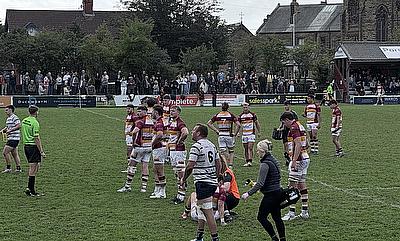
The Preston support gathered beneath the scoreboard became a noticeable part of the afternoon.
They were vociferous, organised and increasingly confident as Hoppers established control. They also included what could reasonably be described as a Preston Grasshoppers cheer squad.
It added colour and personality without making the occasion feel manufactured.
This was not noise being generated through a stadium sound system. It came from supporters who had travelled the relatively short distance to follow their club and who cared deeply about what was happening in front of them.
Their players responded to it.
Each defensive stand, scrum penalty and score brought a reaction from beneath the scoreboard. As the result moved beyond Fylde’s reach, the Hoppers support was able to enjoy both the performance and the local bragging rights which accompanied it.
That is the value of scheduling these fixtures together.
A normal league match can become an occasion. Visiting supporters travel in greater numbers because the journey is manageable, while the familiarity between the clubs gives the game an immediate story.
Fylde against Preston does not need an artificial narrative. The geography, history and connections between the two clubs already provide one.
NLR simply gave that rivalry the correct stage.
Rivalry across the division
The same principle was visible throughout National Two North.
Wharfedale hosted Otley in a Yorkshire contest decided 37-29 in the visitors’ favour. Huddersfield and Sheffield Tigers produced a 78-point match, with Huddersfield winning 42-36.
Chester welcomed Sedgley Park, Harrogate faced Billingham and Hull Ionians made the short journey to Heath.
In the north-east, Darlington Mowden Park travelled to Tynedale and produced the weekend’s most emphatic result, winning 55-12.
Not every pairing is a next-door neighbour and every club will have its own view about which opponent represents its principal rivalry. Nevertheless, the round succeeded in reducing travel, increasing familiarity and giving supporters an additional reason to attend.
That combination should not be underestimated.
National League clubs operate in an environment where travel costs, volunteer workloads and matchday income all matter. A well-attended local fixture can benefit the rugby, the clubhouse, the bar and the wider community around the club.
It also creates the possibility of away support becoming a visible and audible part of the occasion, as Hoppers demonstrated at Fylde.
Supporters will travel hundreds of miles for their clubs, but the easiest journey to promote is the one which can be completed quickly and shared with friends, families and junior teams.
Rivalry without hostility
The phrase “local rivalry” can occasionally create the wrong impression.
It does not have to mean hostility. At this level of rugby, it more often means familiarity.
Players have been teammates at school, university, county or academy level. Coaches have worked on opposite sides of the fixture. Parents know one another from the junior game, while supporters have often visited both clubhouses over many years.
There is an edge because the teams want to win. There is also an understanding that the contest belongs within a much larger rugby community.
That was evident at Fylde.
The Hoppers support celebrated noisily, while the home crowd remained engaged despite Preston taking control. Children moved around the ground, families watched together and the rugby created the focal point for a much broader social occasion.
It felt like a club rugby afternoon should feel.
The NLR app joins the grounds together
The other important success of the weekend was digital.
The National League Rugby app deserves particular praise, especially for its live-scores service.
While watching Fylde and Preston, it was possible to follow the scores coming in from across National Two North and the other NLR divisions. That added a further dimension to the afternoon.
A match at The Woodlands did not exist in isolation. Each change at Wharfedale, Huddersfield, Chester or Tynedale contributed to an emerging picture of the round.
For supporters accustomed to instant information from the professional game, this should perhaps feel routine. At National League level, however, producing a reliable central service across numerous grounds is a considerable achievement.
The live scores make the competition feel connected.
Supporters at one ground can follow their rivals, clubs can monitor the developing table and those unable to attend still have an immediate link to the afternoon’s action.
It is particularly valuable during a themed round. The app effectively joins the different local rivalries together, turning separate matches into one identifiable NLR event.
There will always be further opportunities to develop digital coverage, but the fundamentals are now strong. The live-scores function is simple, useful and habit-forming; most needs to be.
Something worth repeating
Professional rugby frequently searches for new ways to create jeopardy, sell occasions and bring supporters into stadiums.
National League Rugby already possesses much of what the professional game is trying to manufacture.
It has history, geography, tribal identity and clubs deeply embedded in their communities. The Local Rivalries round recognised those assets and placed them together on one weekend.
It did not require extravagant promotion. The fixtures did most of the work.
NLR’s achievement was to understand their collective value.
At Fylde, the evidence could be seen in a large crowd, the number of children around the ground and the noisy contingent of Hoppers supporters beneath the scoreboard. It could also be seen on a phone, where live scores connected The Woodlands with matches across the country.
Rugby’s Greatest Rivalry gave the sport a global event.
NLR’s Local Rivalries gave communities across England their own version and, in its own way, it was every bit as meaningful.