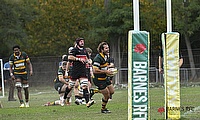
Back to the Touchline: What I'll Be Looking For When National League Rugby Returns
Mark Ashcroft returns to the touchline this weekend as National League Rugby begins another season. After a summer spent watching rugby, studying the numbers and thinking about how the game is changing, here are the things he’ll be looking for when the whistle blows.
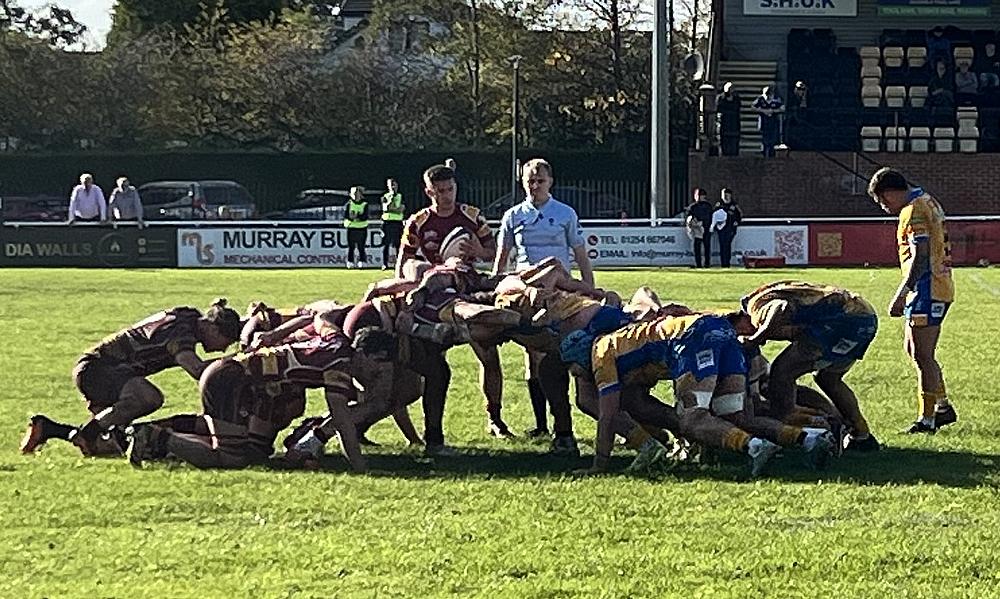
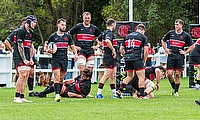
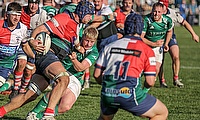
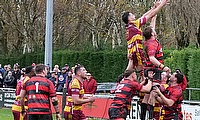
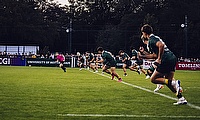
“Next Saturday, I go back to the touchline and it’s not the AJ Bell or Twickenham and it will be somewhere in National League Rugby. I’ve already chosen the match and I’m just not telling anyone where quite yet; but I can’t wait, because for me, National League Rugby sits at a fascinating point in the English game.
This is very serious rugby where players train hard, coaches prepare meticulously, analysts increasingly influence what happens on Saturday afternoon and club chairmen have ambitions which extend well beyond simply getting 15 players onto a pitch.
However, it isn’t the Premiership and it’s not fully professional or full time. As you know for many of the players there will be work on Monday morning. Around them are volunteers, members, sponsors and supporters who remain deeply connected to their clubs for 365 days a year; you’d be surprised how many clubs see supporters watching Tuesday night training.
It is the heart of semi-professional rugby in England and after spending much of this summer watching rugby and digging increasingly deeply into the statistics behind it, I’m interested to see whether I watch NLR differently this season.
So when I’m standing on that touchline next Saturday, and every Saturday after that, here’s where I’ll start.
It sounds ridiculously obvious, but increasingly I’m interested not simply in what teams do with possession, but why. One of the clearest differences when you examine rugby below the elite level is the willingness to keep the ball in hand.
Professional rugby has become increasingly territorial. Teams will kick relatively early because possession itself isn’t necessarily considered valuable. It seems to me that professional coaches and analysts believe “possession in the right part of the field is valuable.”
At semi-professional level, and from watching it weekly for the last 14 years, the instinct is much more often to play. I have been reading excellent rugby analysis on Substack and in The Rugby Paper over recent months and have caught up with a number of the ex-pros now doing podcasts; not forgetting Tim Cocker with Eggchasers.
Recent analysis of data from rugby below the professional game suggests the difference can be substantial. On first phase, professional sides are considerably more likely to kick than teams lower down the pyramid.
That allows me to ask my first real question. What will an NLR team do with clean firstphase possession? Watch the scrum-half. Watch the fly-half. Is the automatic response to get the ball away and attack? Is there a genuine kicking option? And, most importantly, does the decision change according to where they are on the field?
I’m not looking for National League Rugby to become Premiership-lite; far from it, but I am interested in how sophisticated that decision-making has become and becomes over the course of the season.
Which leads to what might be the biggest one for me. A team wins possession and goes through two phases. Then three. Then four. Nothing much has happened. What next?
There is something wonderfully optimistic about rugby players believing that the next carry will be the one which finally opens the defence. Sometimes it is, but every additional carry also brings risk. A handling error. A breakdown penalty. An isolated carrier. A jackal. A counter-ruck. The statistics I’ve looked at this summer suggest those risks increase significantly below the professional game.
So I’m going to watch phases four, five and six particularly closely. Who recognises that the picture hasn’t improved? Which scrum-half puts a box kick into the air? Which fly-half turns the opposition around? Which team keeps going until eventually it gives the ball away?
That isn’t really a question about kicking. It’s a question about rugby intelligence.
Then there’s perhaps my favourite one. What happens in the five seconds after a turnover? National League Rugby can be wonderfully chaotic. And I mean that as a compliment.
At the highest levels, defences are extraordinarily organised. Players are exceptional athletes and teams spend huge amounts of time analysing how opponents attack. Further down the pyramid, there are inevitably more mistakes. But mistakes create opportunities.
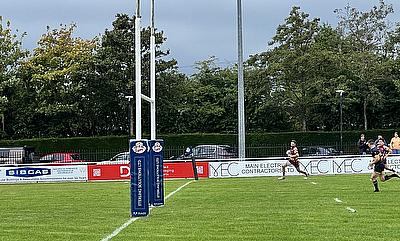
A ball goes loose. Suddenly the team that was attacking is defending. The winger who was holding width is trying to get back. A prop is somewhere he doesn’t particularly want to be. The defensive line hasn’t formed. For perhaps five seconds, the structure disappears.
What happens next? Does the team immediately attack? Does someone recognise the mismatch? Does the scrum-half get the ball away? Does the full-back suddenly arrive? Or does everyone take a breath, set another ruck and allow the defence to reorganise?
I’ll be watching those five seconds. Because I suspect some of the most dangerous attacking opportunities in National League Rugby don’t begin from a beautifully constructed lineout move. They begin with somebody dropping the ball.
Which raises a related question: can teams defend by being patient? We’ve become obsessed with the turnover. The jackal gets the applause. The counter-ruck gets everyone out of their seats. But there is another way to regain possession. Wait.
If handling errors and breakdown turnovers happen more frequently at this level, perhaps sometimes the cleverest defensive strategy is simply to remain connected and make the opposition keep playing. Make the tackle. Get back into the line. Make another tackle. Don’t over-chase the breakdown. And ask the opposition to complete another five passes without making a mistake. Then another five. Eventually they may give you the ball.
So I’ll be watching defensive patience. Not simply who wins turnovers, but how teams try to create them.
Which brings me back to the 9s and 10s. I’ve always enjoyed watching individual players, but this season I want to spend more time watching the people making the decisions.
When I’m standing behind the barrier next Saturday, I’ll occasionally try not to follow the ball. I’ll watch the scrum-half. What’s he looking at? I’ll watch the fly-half. Where is he standing? Who is talking? Who recognises that the opposition winger has dropped back? Who spots that there is nobody covering the backfield? Who decides that three phases have achieved nothing and changes the picture?
At professional level we talk constantly about game management. I want to understand more about what game management looks like in National League Rugby.
Then there’s the gap between the best and the rest. Look at the opening weekend.
Cambridge and London Scottish arrive in National One from Champ Rugby. Sheffield and Camborne come the other way as promoted National Two champions. Sedgley Park return to National Two North and immediately begin trying to get back up. Heath play their firstever National Two fixture. Jersey begin their National League adventure.
Different clubs. Different resources. Different histories. Different ambitions. So how visible are those differences when the rugby actually starts? Can you see the influence of a bigger playing budget? Does greater access to coaching and analysis produce obviously different rugby? Can an exceptionally well-organised club overcome greater individual talent? And how quickly do promoted players discover that the space they had last season has disappeared?
League tables will eventually give us some answers. I’m interested in what my eyes tell me before the table does.
And finally, perhaps the most important question: what can’t the statistics tell me? I’ve enjoyed looking at rugby data this summer. There is more available than ever before and people such as analyst Sam Larner are asking some fascinating questions about the differences between professional and semi-professional rugby. It makes you think.
But a spreadsheet can’t tell me everything I want to know about National League Rugby. It can’t properly capture the noise from the touchline when a home side is defending its line with two minutes remaining. It can’t tell me why a 20-year-old released from an academy suddenly looks like he’s rediscovered his love for rugby. It doesn’t understand the 34-yearold prop who has somehow found enough energy for one final scrum. It doesn’t see the volunteer who arrived hours before kick-off. And it can’t fully explain why several hundred people standing around a rugby pitch on a Saturday afternoon can care quite so much about the result.
That’s why I’m going back. I’ll have the statistics in my head. I’ll be watching the kicking, the turnovers, the transitions, the defence and particularly the decision-makers at 9 and 10. But I’ll also be looking for the things the numbers can’t explain.
National League Rugby returns this Saturday. I’ve chosen my game. I’ve spent the summer doing my homework. Now it’s time to get back behind the barrier and see what the rugby tells me.