England Answered Argentina's Theatre - But Nearly Lost Themselves Again

England captain Jamie George
©Lizzy Terry/TEZ.PHOTOG
From Maradona’s 1986 shirt and Argentina’s World Cup celebrations to Ellis Genge’s provocative response, this was never merely another rugby match. England embraced the emotion, produced some of their finest rugby and then came dangerously close to being consumed by it.
Argentina had made their intentions clear before a rugby ball had been kicked.
The Pumas emerged wearing dark-blue shirts inspired by the kit worn by Diego Maradona and Argentina during their victory over England at the 1986 football World Cup.
It was clever theatre BUT was also unmistakably provocative.
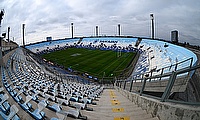
The shirts carried Argentina’s sporting history into the Estadio Único Madre de Ciudades and reminded England of one of the most discussed, disputed and painful encounters between the two countries.
The timing gave the gesture considerably more force.
Only three days earlier, Argentina had defeated England 2-1 in the semi-final of the 2026 football World Cup in Atlanta. England had led through Anthony Gordon, but Argentina scored twice during the closing stages to reach the final against Spain. England’s footballers had become increasingly passive after taking the lead. Argentina sensed the change, increased the pressure and eventually overwhelmed them.
Then came the celebrations.
Members of the Argentina team displayed a white banner carrying the words “Las Malvinas son Argentinas”, introducing political symbolism into an already emotionally charged sporting rivalry.
By the time the rugby teams met in Santiago del Estero, this was no longer simply Argentina against England in the Nations Championship. Neither the football players or rugby players representing England are old enough to remember the Falklands but it now appears that the Argentinian players and their governing bodies are using this as bait in sport.
Football, rugby, Maradona, national identity, disputed history and the events of the previous three days had all been pushed into the same stadium.
Argentina created the theatre.
England chose to participate in it.
Genge Answers The Message
Tommy Freeman’s opening try arrived after only three minutes.
Fin Smith saw the opportunity, placed a clever kick behind the Argentina defence and Freeman completed a superb beginning for England.
Then came Ellis Genge’s reaction and it was forceful, emotional and, to my eyes at least, provocative. There is little point pretending otherwise but I do understand why.
Genge appeared to be answering the atmosphere, the shirts and the message surrounding the occasion. England had not travelled to Argentina to become passive participants in somebody else’s celebration.
They intended to confront it.
That response helped trigger the first of several exchanges between the teams, with players pulling at shirts and tempers beginning to rise almost immediately.
There was something understandable about England’s reaction.
International rugby is not played in an emotional vacuum. Players understand symbolism, atmosphere and provocation. They knew why Argentina were wearing those shirts and why the crowd was particularly animated.
But there is a distinction between responding to provocation and allowing it to control your behaviour.
That distinction became increasingly important as the match developed.
England’s Best Rugby Came Before The Chaos
It would be a mistake to allow the subsequent yellow cards to obscure how well England played during the opening half; although there do seem to be plenty of 40 year old ex-pros who do; the good thing is that we are all entitled to our opinion.
This was not a victory built solely upon defiance, confrontation or survival.
For long periods, England produced ambitious and intelligent attacking rugby; Lee Blackett is now making an impression with his coaching and Borthwick very much backs him.
Fin Smith controlled the game with increasing authority. His kick for Freeman’s try demonstrated awareness and precision, but his wider contribution was equally important. He gave England shape, moved the defence and appeared comfortable accepting responsibility in an exceptionally hostile environment.
The fly-half mantle increasingly belongs to him.
George Ford continues to demonstrate his value to England through his experience, tactical intelligence and almost coaching-like influence around the squad, but Smith is beginning to look like the player around whom this side can be built.
England’s second try also demonstrated the progress in their attacking game.
Joe Heyes broke through the defensive line before Immanuel Feyi-Waboso collected his pass and released Ben Earl in support.
It was direct, instinctive and clinically executed.
Earl added another after England dominated a five-metre scrum, completing a first half in which the visitors combined physical authority with genuine attacking ambition.
England led 19-3 at the interval.
More importantly, they had not retreated from the occasion.
Three days earlier in Atlanta, England’s footballers had gone ahead against Argentina and gradually surrendered territory, possession and initiative. The rugby team initially offered a very different response.
They continued to attack.
They continued to look for space.
They continued to challenge Argentina physically.
For the first 40 minutes, England displayed controlled aggression.
The problem came when control began to disappear.
Discipline Requires Context
The immediate media narrative will inevitably focus upon England’s discipline and that is understandable.
Jack van Poortvliet was shown a yellow card for deliberately knocking down the ball. Alex Coles followed him after another deliberate knock-on, with Argentina also awarded a penalty try.
Later, Henry Pollock and Emmanuel Iyogun were sent to the sin-bin, leaving England to complete the contest with 13 players.
That cannot simply be dismissed.
England gave Argentina opportunities to return to a match which should have been beyond them. At 19-3 ahead, England were in command. At 19-17, with two players temporarily removed, they were in danger of surrendering everything they had built.
Steve Borthwick and his coaches will know that England cannot routinely survive international matches while repeatedly playing with 13 or 14 men.
But yellow cards should still be considered in context.
A deliberate knock-on is not necessarily an act of reckless indiscipline in the traditional sense. It can be a split-second defensive reaction, sometimes involving a player attempting to intercept a pass rather than cynically attempting to kill an attack.
The margins are extremely fine and a hand positioned slightly differently can produce an interception, an England breakaway and praise for defensive anticipation.
The same action judged unsuccessful can result in a penalty, a yellow card and, under certain circumstances, a penalty try.
That does not mean the officials were wrong.
It means the modern disciplinary conversation is more complicated than simply counting cards and declaring that a team has lost control.
England must improve their judgement, particularly when defending close to their own line. But analysis should distinguish between foul play, cynical offending, technical infringements and attempted interceptions which go wrong.
Placing them all under the single heading of “discipline” risks telling us very little about what actually happened.
Argentina Were Part Of The Disorder
England were not the only team caught in the disorder. Argentina also received yellow cards and were themselves reduced to 13 players during a match littered with confrontations, penalties and emotional reactions.
Joaquín Oviedo was sent to the sin-bin for a dangerous clean-out. Santiago Carreras was also yellow-carded after attempting to disrupt the pass which led towards Marcus Smith’s try.
The irony was difficult to miss.
Both teams were punished for incidents involving attempts to prevent attacking passes. Both teams spent periods with 13 players. Both teams repeatedly became involved in exchanges after the whistle.
This was not an otherwise calm match ruined by England’s inability to behave.
It was an ill-tempered international contest in which both teams contributed to the temperature.
Argentina had deliberately helped create an emotional atmosphere before kick-off. England, through Genge’s early reaction and their willingness to answer every confrontation, helped sustain it.
The officials were then expected to manage the consequences.
Marcus Smith And Feyi-Waboso Restore Control
England deserve considerable credit for continuing to find attacking solutions while under pressure.
With Argentina having reduced the deficit to two points, Van Poortvliet returned from the sin-bin and delivered a long pass which allowed Marcus Smith to finish in the corner.
It was an important try, both on the scoreboard and psychologically. England had spent much of the second half defending, losing players and absorbing the noise of a revitalised crowd. Rather than merely attempting to survive, they found a way to strike back.
Then came the outstanding individual moment of the match.
Argentina lost possession at a lineout and Feyi-Waboso accelerated into open space and once he was clear, there was little doubt about the outcome. His pace transformed a loose moment into an England try and stretched the lead to 31-17. It was another reminder of what England now possess.
Feyi-Waboso provides the threat which can change the emotional direction of a match within seconds. Defences cannot simply focus on England’s kicking game, forward carriers or structured phase play when a player with that acceleration is waiting on the outside.
England are beginning to develop multiple ways of scoring.
That matters far more to their long-term prospects than the simple observation that they received four yellow cards.
The Final Minutes Exposed The Problem
The closing stages nevertheless demonstrated why the discipline issue cannot be ignored altogether.
Pollock and Iyogun were yellow-carded during the final 10 minutes. Argentina scored through Justo Piccardo and, following the restart, launched one last attack.
After more than 80 minutes of confrontation and several minutes of additional play, Bautista Delguy appeared to have scored in the corner.
Had the try been awarded and converted, Argentina would have completed a remarkable recovery but instead the match moved into a lengthy review.
The television match official and referee Angus Gardner examined whether Delguy had grounded the ball before touching the sideline.
Eventually, the try was disallowed.
England had won 31-24.
The decision will inevitably be debated, particularly in Argentina. Some television angles appeared to create uncertainty, while the delay itself reflected the difficulty of the judgement.
This was not a simple or comfortable decision for the officiating team. The referee and TMO were attempting to determine, through multiple angles and under enormous pressure, whether a tiny part of the player or ball had made contact with the line.
It was the final example of how modern officials are expected to make precise decisions within emotionally explosive environments.
The Referee And TMO Disagreement Matters
There also appeared to be uncertainty in the communication between the referee and TMO about what the available pictures showed and which decision should follow. That should not automatically be presented as incompetence.
Officials are allowed to discuss, question and challenge what they believe they have seen. The purpose of the TMO process is to introduce additional evidence, not merely to confirm the referee’s first impression.
But the exchange exposed the pressure under which the system now operates.
The referee must continue to manage the players, listen to the TMO, interpret technical language, review the stadium screens and arrive at a final decision while thousands of spectators demand one outcome. The TMO must identify the relevant pictures, decide whether the evidence is clear and communicate without creating further confusion.
Meanwhile, television commentators, former players and supporters can study repeated slow-motion angles before announcing with certainty that the officials have got it wrong.
The process is not perfect.
There are legitimate discussions to be had about how deliberate knock-ons are judged, how long reviews should take and whether the threshold for overturning an on-field decision is being applied consistently.
But imperfection does not justify abuse.
Abuse Of Officials Is Unacceptable
The scenes following the final decision were deeply uncomfortable.
Tomás Albornoz reportedly had to be restrained as he attempted to confront Gardner at the final whistle. Frustration was understandable.
Aggressive confrontation was not.
No player, coach or supporter is required to agree with every decision. Rugby would become a strangely sterile game if controversial calls were never discussed. There is also nothing wrong with robust criticism of officiating systems. World Rugby should continue examining the deliberate knock-on law, the operation of the bunker and the relationship between the on-field referee and the TMO.
But criticism of a decision must not become personal abuse of the person making it.
Referees are not responsible for the existence of complicated laws. They are asked to apply them, in real time, while players and coaches attempt to exploit every possible margin.
The abuse directed towards officials across professional and community rugby is becoming increasingly troubling. It also carries consequences beyond the international game.
Young referees and volunteers see how leading officials are treated. Parents and players at grassroots level imitate the language and behaviour they observe on television and social media.
Rugby cannot spend years talking about its values and then tolerate officials being surrounded, intimidated or personally abused whenever a marginal decision goes against one team. Gardner and his officiating team were placed in an extremely difficult position during the final moments in Santiago del Estero.
People are entitled to believe they reached the wrong conclusion.
They are not entitled to treat the officials as though they acted dishonestly or deserved abuse.
England Found Themselves and Nearly Lost Themselves
Before England travelled to Argentina in 2025, there were serious questions surrounding the direction of Borthwick’s team and that tour helped England rediscover something important. They found greater freedom in attack. New players accepted responsibility. The team developed confidence away from home and began to establish an identity which was not based solely upon defensive resilience and tactical kicking.
Returning to Argentina offered an opportunity to discover whether that progress was real.
The answer was largely encouraging.
England scored five tries.
They created opportunities through kicking, forward power, support running, width and individual pace.
Fin Smith controlled important periods of the contest. Earl again demonstrated his influence. Freeman finished intelligently. Marcus Smith delivered when England needed an attacking response. Feyi-Waboso produced the moment which ultimately separated the teams.
This was an England performance containing considerably more good than the disciplinary headlines might suggest.
But England also nearly lost themselves in the emotion of the occasion.
Genge’s reaction after the opening try helped declare that England would not be intimidated. It may also have encouraged a contest in which every incident became personal.
The challenge for England is not to remove that edge. They need Genge’s aggression. They need Earl’s emotion. They need Pollock’s enthusiasm and the willingness of younger players to enter hostile environments without fear.
But those qualities must remain attached to judgement.
The best international teams do not avoid emotion. They control it.
South Africa have built World Cup victories upon physical confrontation, but their aggression is usually directed towards a specific tactical purpose.
New Zealand’s greatest teams could overwhelm opponents while appearing emotionally detached from the chaos surrounding them.
Argentina’s football team had demonstrated something similar in Atlanta. When England became passive, Argentina increased their intensity but retained enough clarity to take advantage.
England’s rugby team must learn the same lesson.
More Than Just A Win
Winning in Argentina remains one of the most difficult challenges in international rugby. The travel, climate, noise, passionate supporters and emotional intensity create demands which cannot be recreated on a training field in England.
On this occasion, those demands were intensified by the events of the football World Cup, the 1986 shirts and the political symbolism which followed Argentina’s semi-final victory.
England entered that environment and won.
That deserves recognition.
They did not retreat into a defensive shell. They did not allow the early confrontations to prevent them from playing. Even when reduced to 13, they continued to search for attacking opportunities.
The result was not perfect.
It was not controlled. At times, it was barely contained however it represented another step in England’s development.
The wider lesson is not that England should become less aggressive or emotionally restrained to the point of passivity.
It is that they must learn when to answer provocation and when to walk away from it.
Argentina created the theatre.
England accepted the invitation.
For an hour, it inspired some of their most convincing rugby.
During the final quarter, it almost consumed them.
England returned to the place where they first began to rediscover their identity.
They leave knowing that identity is still there.
The next stage is learning how to defend it without allowing opponents; or their own emotions, to drag them away from it.