South Africa v England: Nations Championship Armchair - Opinion
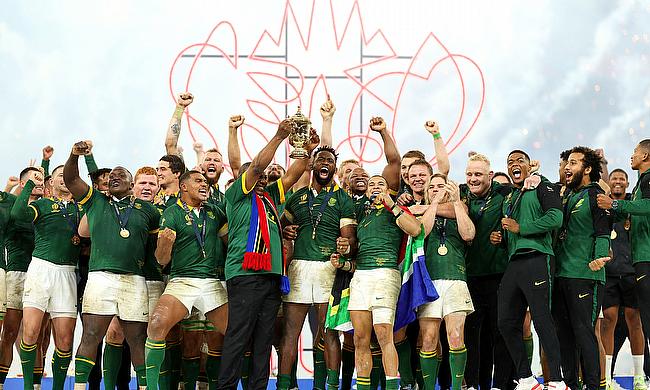
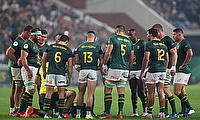
South Africa will kick start the Nations Championship with a clash against England
©Photo by Julian Finney - World Rugby/World Rugby via Getty Images
Unlike Tim Cocker from the excellent Eggchasers on YouTube; I am in my armchair at home with multiple screens. So it is the inaugural Nations Championship and we couldn’t have asked for a tougher opening fixture for
England than this one. On Saturday 4 July at 4.40pm BST, Steve Borthwick’s side travel to Ellis Park in Johannesburg to face the back-to-back world champions in a match that will set the tone for the entire competition’s opening weekend. Bookmakers already have South Africa as outright tournament favourites at 12/5, with France and New Zealand the closest challengers at 4/1.
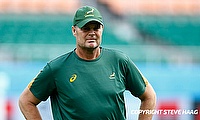
Rassie Erasmus has made his intent clear by naming a full-strength side. The Springboks coach has gone for his strongest possible XV, with World Cup winners Damian Willemse and Cheslin Kolbe both set to win their 50th caps. Despite naming several uncapped players in the recent win over the Barbarians, Erasmus has reverted to tried and tested combinations, with only one player in the run-on side, lock Ruan Nortje, owning fewer than 20 caps.
It’s a matchday 23 boasting a combined 1,099 Test caps, built around 935 caps in the starting line-up alone; 567 among the forwards and 368 in the backline. Siya Kolisi captains the side for the 72nd time, in the first meeting between these two nations at Ellis Park since 2018; his very first Test as Springbok skipper. South Africa arrive in ominous form: they have won 23 of their last 27 Tests since lifting the 2023 Rugby World Cup.
One selection headache has been forced on Erasmus rather than chosen. First-choice flyhalf Sacha Feinberg-Mngomezulu suffered a serious ankle injury playing for the Stormers in the URC quarter-final against Cardiff in late May, an injury initially expected to keep him out for three months or more, ruling him out of the entire July series. With Feinberg-Mngomezulu sidelined, Manie Libbok has been handed the number 10 jersey ahead of Handre Pollard, who hasn’t even made the matchday squad, and notably there’s no specialist fly-half cover on the bench, meaning Willemse would shift to 10 if anything happened to Libbok. Eben Etzebeth also returns immediately after suspension, having been sent off for an eye gouge in his previous Test against Wales and featured only once for the Sharks since; Erasmus has thrown his most-capped player straight back into the second row alongside Nortje.
The remainder of the pack picks itself around proven quality. Reigning World Rugby Player of the Year Malcolm Marx anchors the front row at hooker, flanked by Ox Nche and Thomas du Toit; a player who must still be wondering how Bath blew their PREM semi-final. Kolisi and Etzebeth are both Test centurions, with Jasper Wiese and Pieter-Steph du Toit completing an experienced loose trio. Behind them, Grant Williams partners Libbok at halfback, with Damian de Allende and Jesse Kriel in midfield and Kurt-Lee Arendse completing a formidable back three alongside Kolbe and Willemse.
Erasmus has been candid about the scale of the challenge England represent. He described England as a “quality outfit” despite a difficult 2026 in which they have “only registered one win and succumbed to their poorest ever Guinness Six Nations finish,” and warned his players that beating the Barbarians counted for little. “England are a settled team, they come off a Six Nations campaign earlier in the season, and, similarly to us, they will also want to have a good start to this exciting new competition, so we are expecting it to be a bruising encounter,” he said. Erasmus is looking forward to facing an England side arriving at Ellis Park on a run of four consecutive Six Nations defeats.
For England, this is a fixture shaped as much by absence as selection. Steve Borthwick has made an immediate captaincy change, resting Maro Itoje and handing the armband to veteran hooker Jamie George for the tour, with Itoje expected to resume the role from November. It’s a sensible long-term call given Itoje’s heavy recent workload and personal circumstances, though it does leave England somewhat short of an 80-minute on-field leader, since George is typically replaced around the hour mark. Ellis Genge and Ollie Chessum have been named vice-captains for the tour. Borthwick has named five uncapped players in his wider 36-man squad: Benhard Janse van Rensburg, Noah Caluori, Greg Fisilau, George Kloska and Vilikesa Sela, though the contentious Janse van Rensburg, a South African-qualified centre, is unavailable for selection against his country of birth this week.
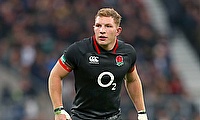
The confirmed starting line-up leans toward width and pace rather than aerial security. George Furbank starts at full-back, with Immanuel Feyi-Waboso and Cadan Murley providing a quick, powerful back three built for broken-field rugby, a tactical shift previewed in England’s recent uncapped fixture against a France XV, where they looked to create space wide and hit their strike runners. Tommy Freeman and Seb Atkinson start in midfield, Fin Smith and Jack van Poortvliet at half-back, and in the back row Ollie Chessum (six), Tom Curry (seven) and Ben Earl (eight) provide the balance of lineout value, breakdown work and carrying threat.
England’s preparation has also had a distinct physical edge to it. The RFU has built altitude acclimatisation into the squad’s build-up at Ellis Park, a venue that has long punished visiting sides who fail to manage tempo, kick chase and defensive reloads, with the framing being that this opener doubles as much as a conditioning test as a tactical one before Fiji and Argentina complete the July run.
Erasmus, notably, has gone out of his way to praise England’s most talked-about young forward; even though Henry Pollock starts among the replacements rather than starting. Asked about Pollock, the Springbok coach drew comparisons with his own Sacha Feinberg-Mngomezulu, saying: “People make a big deal about certain players, but I don’t always think the players themselves want that attention. What counts is what they do on the field, and recently, he’s been doing that.” With Pollock, Alex Mitchell and Marcus Smith all named among the replacements, Borthwick has kept a considerable amount of firepower in reserve for the closing stages at altitude.
History offers England little encouragement. South Africa have won three of their four previous meetings with England at Ellis Park, with their only defeat there dating back to 1972, and the Springboks’ overall head-to-head record against England reads 29 wins from 47 meetings, with a 61.7% win rate. This will also be the first meeting between the two sides since South Africa’s hard-fought 29-20 win on their end-of-year tour in 2024. Beyond the head-to-head numbers, there’s a deeper structural gap worth acknowledging: rugby’s deep embedding in South African school life, and the country’s elite schools system built specifically to produce Test-ready players, gives the Springboks a development pipeline that England’s Premiership academies, strong as they are, simply don’t match; while England’s shifting playing identity between the Eddie Jones and Borthwick eras has made it harder to build the consistency South Africa now enjoys.
There’s no disguising the gulf in continuity and experience between these two camps right now. South Africa arrive as world champions fielding a near first-choice 23, even with enforced changes at fly-half and a returning Etzebeth carrying some rust; England arrive without their captain, coming off four straight Six Nations defeats, but with a settled centre pairing in Freeman and Atkinson and real depth in reserve. There’s also a freshness to England’s selection: the pace out wide, Furbank’s attacking instincts, a considerable amount of impact named on the bench in Pollock, Mitchell and Smith, and a deliberate effort to prepare physically for altitude that gives this fixture genuine intrigue beyond the form book. Erasmus’s own assessment feels about right: a hard, bruising opener that both sides need to win to set the right tone for a long Nations Championship campaign, with South Africa’s strength in depth the most likely difference come full-time at altitude in Johannesburg.
And in my armchair – my heart says England by 5 and my head says South Africa by 10