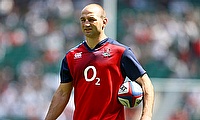
What Kevin Sinfield Can Teach England Before Mexico
As England prepare for their World Cup last-16 clash with Mexico, the conversation has inevitably centred on football.
Formation. Selection. Tempo. Pressing. Substitutions.
All important.
But sometimes the most powerful sporting lessons come from outside your own sport and that is why Sir Kevin Sinfield’s words this week feel so relevant.
Speaking to the BBC and other media outlets ahead of England rugby’s daunting Test against world champions South Africa at Ellis Park in Johannesburg, Sinfield spoke not about fear, but preparation. Not about excuses, but adaptation. Not about pressure, but challenge.
“This is just another challenge for the lads,” he said. He talks with authority, his relationship with the BBC and particularly BBC TV’s Breakfast show, really shines through.as he has run for MND, the Breakfast Show have never been far away. There have been some lighter moments but his chats, with the BBC’s, Sally Nugent will resonate with everyone.
Now back to what he recently said. “Not about pressure, but challenge.”
That line should resonate deeply with Thomas Tuchel’s England Football Team, because Mexico presents a challenge that goes far beyond tactics. This is not simply eleven versus eleven. This is atmosphere. Emotion. Noise. Heat. Hostility. Expectation.
England will walk into an environment where momentum can swing in seconds and where every Mexican tackle, interception or shot will be amplified by tens of thousands of voices.
Sinfield understands something elite athletes all eventually learn.
You cannot control the environment. You can only control how well you prepare for it.
That is what stood out from his comments about altitude. He spoke about oxygen levels dropping, about his watch warning him that his body was under stress, and about how preparation gave his squad the best possible chance to adapt.
It is a perfect metaphor for knockout football.
Pressure does something similar. It raises the heart rate. It shortens decision-making. It creates fatigue in the mind before the body.
The teams that survive are not always the most gifted. They are the teams that adapt fastest.
That is England’s first task in Mexico City. Adapt - to the tempo, to the crowd, to setbacks, to momentum swings.
But Sinfield offers England another lesson, and perhaps a more important one.
Humility.
When discussing his extraordinary fundraising work inspired by his friend Rob Burrow, Sinfield reduced one of the great sporting acts of compassion to a single humble sentence.
“I do a bit of running for a mate.”
That line says everything. No ego. No self-promotion. No grandstanding.
Just loyalty. Just commitment to someone beside you.
And that may be the biggest lesson of all, because knockout football punishes ego. Games at this stage are rarely won by individuals trying to force greatness. They are won by teams willing to sacrifice for each other.
The recovery run. The block. The second ball. The calm word after a mistake. The pass when shooting would bring headlines.
Doing the hard yards for a mate.
That is Sinfield. That must be England.
Against DR Congo, England showed quality late on with Harry Kane. Against Mexico, they may need something deeper: resilience, patience, togetherness. Because if the game becomes chaotic and Mexico will try to make sure it does, England must remain emotionally connected. That is what elite teams do.
Sinfield said of his rugby squad: “What a great challenge for us.”
That is the right mindset. Not fear. Not anxiety. Challenge.
Mexico should not be seen as a trap or a burden. It is an opportunity. If England truly believe they can win a World Cup, these are precisely the nights they must embrace.
Does it get any bigger? Sinfield asked that about facing South Africa. The same applies here.
World Cup knockout football. A nation watching. Everything on the line.
The Sports Science of Altitude
There is a striking sports science dimension to England’s challenge and it makes Sinfield’s comments even more relevant.
Sinfield was talking about playing rugby at Ellis Park, which sits around 5,750 feet above sea level. Mexico City is higher still. At roughly 7,300 feet (2,240 metres), it places an even greater physiological demand on elite athletes, because the higher you climb, the lower the air pressure becomes and every breath delivers fewer oxygen molecules into the bloodstream.
In simple terms, England’s players will have less oxygen available to fuel working muscles than they would at Wembley or St George’s Park.
That changes everything. Repeated sprints become harder. Recovery between highintensity efforts slows. Legs feel heavy earlier, especially when the game becomes stretched and transition-based.
Sports scientists measure this through VO2 max, the body’s ability to transport and use oxygen efficiently. Even highly conditioned athletes can see aerobic performance fall by 10 to 20 per cent before their bodies fully adapt.
And adaptation takes time. The body responds by increasing breathing rate, adjusting blood plasma levels and, eventually, producing additional red blood cells to improve oxygen delivery. These changes are gradual. That is why preparation matters.
Nor is this just about lungs and legs. Altitude affects concentration, decision-making and composure under fatigue. Technical sharpness declines. Reactions slow. Errors creep in.
In knockout football, one mistake can end a World Cup.
The smarter team often wins by managing energy, choosing when to press, knowing when to slow the game, recognising when to conserve.
Against Mexico, England may need to be as intelligent with their energy as they are with the ball.
Home Advantage: The Invisible Opponent
If altitude is the physiological challenge, home advantage is the emotional one.
Sinfield understands this from rugby. Playing South Africa in Johannesburg is not simply about facing fifteen elite players. It is about confronting the full force of South African rugby culture. The Springboks carry immense physical presence, but they are also powered by environment; crowd noise, national pride, familiarity with conditions and decades of emotional history.
The same is true for Mexico in Mexico City.
England are not just playing Mexico. They are playing the stadium. They are playing the altitude. They are playing history.
Few venues in world sport feel more intimidating than the Estadio Azteca. Built for spectacle and steeped in legend, it has hosted two World Cup finals and some of football’s most iconic moments. Pelé lifted the World Cup there. Maradona produced both the Hand of God and the Goal of the Century there. For generations, visiting teams have spoken about the same combination: thin air, relentless noise and wave after wave of emotional pressure. Mexico have lost there only rarely.
That matters, because home advantage is not just theatre. Sports psychologists have shown crowd intensity can subtly influence momentum, confidence and even officiating.
A roar after a challenge can feel like a goal. A missed pass can feel catastrophic.
South Africa enjoy something similar in rugby. The Springboks feed off pressure. Mexico do too.
That is why elite away performances demand emotional discipline. The best visiting teams absorb noise without absorbing panic. They quieten the crowd. They slow momentum swings. They remain connected under stress.
Against both South Africa and Mexico, the challenge is ultimately the same.
Silence the environment and impose your own.
Grounds Matter
There is one final sporting thread running through this weekend.
While England’s footballers prepare for Mexico, rugby league gathers in Liverpool for Magic
Weekend at Hill Dickinson Stadium, Everton’s spectacular new home. Across two days, Super League rivalries will be transported into one stadium, thousands of supporters travelling together to celebrate the tribal joy that rugby league does so well.
That matters to this story because Sinfield is not just a rugby union coach. He remains one of rugby league’s defining figures. A Leeds Rhinos legend. A captain. A competitor. A teammate.
And, perhaps most importantly, a friend.
Because that is the emotional link between all of these sporting moments.
Grounds matter. Ellis Park matters to South African rugby. The Azteca matters to Mexican football. And this weekend, Everton’s new ground becomes part of rugby league’s travelling story.
Sport is never only about tactics, physiology or scoreboards. It is about places. Memories. Communities. And people. It is about the mate beside you. The crowd around you. The shirt you represent.
Sinfield understands that better than most. His greatness has never simply been about trophies or records. It has been rooted in friendship. In service. In loyalty, and perhaps that is the final lesson for England.
Big grounds test teams. Hostile crowds expose weaknesses. Pressure magnifies everything. But great friendships and great teams sustain belief.
England unquestionably have talent. The question is whether they also possess Sinfield’s mindset.
Can they prepare smartly? Adapt quickly? Remain emotionally calm? And above all, play for each other rather than themselves?
If they can, Kevin Sinfield may just have provided the blueprint.
Prepare well. Adapt fast. Do the hard yards. Do it for the mate next to you.
Sometimes sport really is that simple, and sometimes that simple truth is powerful enough to carry a team through the biggest night of all.