Me, My WHOOP and the Box Kick
Why Sedgley Park Sends My Stress Score Through the Roof
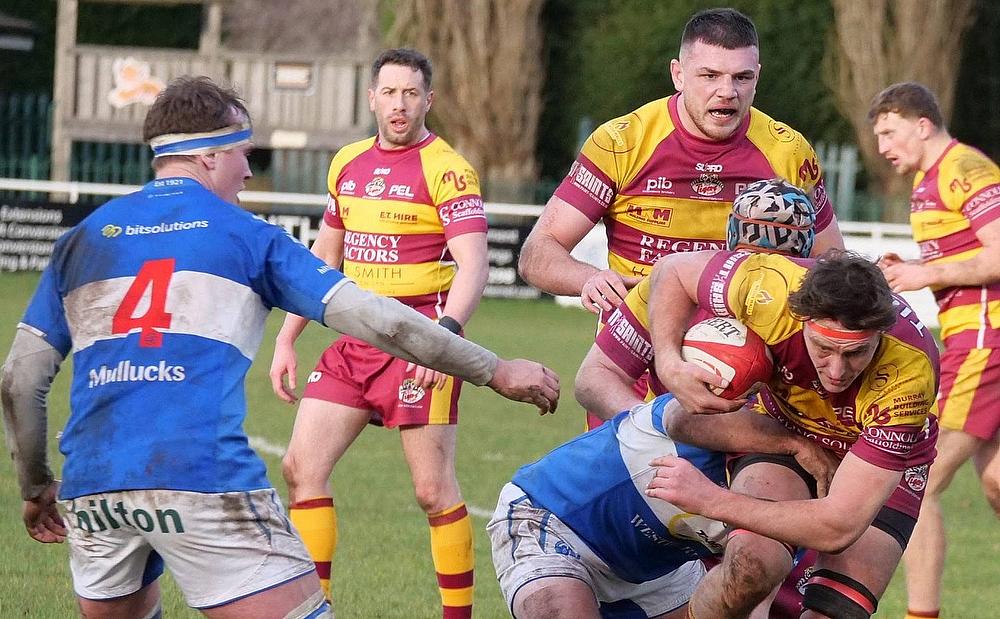
There’s a particular kind of quiet that descends over a rugby ground in the second before a box kick goes up. Not silence exactly, Park Lane, the home of Sedgley Park Tigers on a Saturday afternoon is never silent, not with the tea hut queue still muttering about the ref and someone’s dad bellowing “USE IT” from the clubhouse steps, but a kind of held breath. The scrum-half loads up. The chasers set. And somewhere on my wrist, entirely unbidden, my WHOOP starts twitching like it’s been asked to defuse something.
I used to think my strain scores were driven by the big moments. A line break. A missed tackle that turns into forty metres of exposed grass. A last-minute penalty with the wind doing something unspeakable off the clubhouse roof. Turns out, according to several months of increasingly damning data, it’s the box kicks. Not the tries. Not the scrums. The box kicks.
The anatomy of a very specific kind of dread
Here’s what I think is actually going on, both in my chest and in the numbers WHOOP is quietly logging while I pretend to be relaxed on the touchline, standing with Dave Brierley and Glenn Hutton.
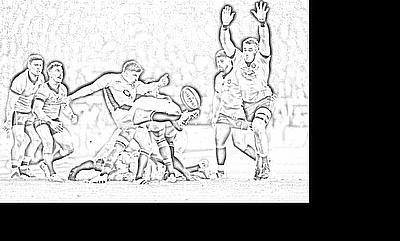
A box kick is not one event. It’s three, stacked on top of each other, each with its own little jolt of uncertainty. First there’s the kick itself, will it be accurate, will it hang up there long enough, will it drift into row Z and hand the opposition an attacking scrum for nothing. Then there’s the chase, two players sprinting into a contest they may or may not win, under a ball that hasn’t decided yet whose day it’s going to ruin. And then, only then, comes the actual outcome, which might be a clean take, might be a knock-on, might be a horrible pinball ricochet off three different heads before somebody in yellow falls on it.
That’s three discrete moments of “we don’t know yet” compressed into about four seconds. Compare that to a scrum, where, Sedgley Park props notwithstanding, you’ve got a reasonable sense of how it’s going to go once it engages. Or a maul, which is basically slowmotion chess. The box kick offers none of that. It’s the rugby equivalent of watching someone flip a coin, catch it, and then not tell you the result for a full second and a half while they check under their other hand.
I went back and looked at the data from a few recent matches, and it’s genuinely consistent: every contestable kick produces a small, sharp spike, heart rate up, HRV dipping, that’s disproportionate to how much actual physical effort I’m expending, which is to say none, because I am standing by a tea hut holding a polystyrene cup. It’s pure anticipatory stress, the body doing its ancient threat-assessment thing over a fifty-fifty ball that has absolutely no bearing on my safety, mortgage, or standing in the village.
Why Sedgley Park specifically
Part of it, I’ll admit, is the ground itself – Park Lane. There’s something about a proper old rugby club setup tight touchlines, everyone close enough to hear the calls, no polite corporate distance between spectator and contest; that turns every kicking duel into something almost uncomfortably intimate. You’re not watching box kick anxiety happen to fifty-two strangers on a television somewhere. You’re eight yards away from a bloke who has to catch this thing or explain himself in the bar afterwards.
And modern rugby, whatever else you want to say about it, has leaned hard into exactly this kind of tension. The stats bear it out at the top end of the game too, contestable kicking has become a genuine attacking weapon rather than just a way of getting rid of the ball, with teams increasingly building entire phases of play around forcing a fifty-fifty in the air rather than trying to batter through fourteen defenders.
Look at this summer’s Nations Championship. South Africa lead the whole competition for kicking volume with 83, just ahead of Japan on 80; which tells you the modern kicking game isn’t some southern hemisphere afterthought, it’s a first-choice weapon for the tournament’s most dominant side. Wales (75), England (71) and France (69) aren’t far behind. Individually, Wales’s Tomos Williams tops the player charts with 37 kicks from the base of the ruck alone, which is a genuinely absurd number of times to ask two chasers to go and have an argument with gravity. Every single one of those box kicks, somewhere, is putting a spike through somebody’s wrist strap. I like to think of it as a hidden tournament stat: aggregate spectator cortisol.
Which is thrilling, tactically. It is also, I now understand, why my Tuesday morning recovery score sometimes looks like I ran a half marathon on Saturday when in fact I stood very still and worried.
And here’s the bit that really needled me. Not every side plays this game. New Zealand, the tournament’s other unbeaten side alongside South Africa, have gone the entire opposite direction, barely touching the contestable kick, leaning instead on the territorial version that doesn’t ask two chasers to go and fight for possession in mid-air. And by every measure going, they’re better at it than anyone when they do choose to compete for the ball back. Which means the side causing me the least amount of wrist-based distress are also, statistically, the most accomplished practitioners of the exact skill that’s been quietly wrecking my Tuesday mornings. I don’t know what to do with that information except resend it.
The WHOOP verdict
WHOOP, for its part, does not care about tactical nuance. WHOOP does not know Sedgley Park from the San Siro. All it knows is that my body behaved, for four seconds at a time, roughly a dozen times over eighty minutes, like it was under low-grade threat and it logs that with the same flat, faintly disapproving efficiency it applies to everything else I do to myself. No context. No credit for the fact that at least I wasn’t the one who had to catch it.
Next time out, I’m going to try something: watching the chase rather than the ball. See if fixing on the chasers’ body language, shoulders, eyeline, that little half-stride adjustment they make in the last two metres takes the edge off, or whether my nervous system has simply decided box kicks are a category of event it’s not prepared to negotiate on. Either way, I’ll have the data. Sedgley Park won’t know what’s hit it. Neither, probably, will I.



.jpg)