Le Notebook: Which French team will turn up? Willis, Bordeaux and the old European question
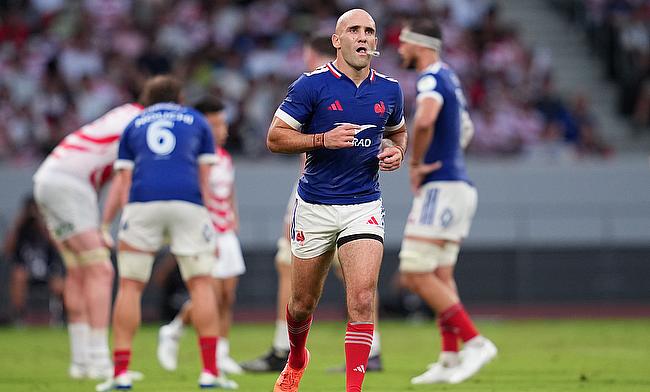
Maxime Lucu's Bordeaux go to Gloucester on Friday night
©Photo by Toru Hanai - Nations Championship/Nations Championship via Getty Images
Which French team is going to turn up?
Those of us who remember the early years of European competition will recall formidable French sides, almost unbeatable in front of their own supporters, occasionally looking rather less formidable once they had crossed the Channel.
The atmosphere, the weather, the travel and perhaps even the priorities of individual clubs could all make a difference.
It wasn't universally true, of course. Toulouse have spent decades demonstrating that French excellence travels perfectly well. But the reputation existed, and for many English supporters, it became part of the fascination of European rugby.
As the 2026-27 Champions Cup begins this weekend, perhaps it is time to ask whether that old question has finally become outdated.
Bordeaux at Kingsholm: The perfect examination
Friday evening's meeting between Gloucester and Bordeaux-Bègles provides an excellent starting point.
Bordeaux arrive as back-to-back European champions, chasing a third successive title. They possess extraordinary attacking resources and have already shown their ability to overwhelm opponents at home.
Away from Bordeaux, their Top 14 form this season has been rather less convincing.
They were beaten 48-12 at Toulouse and 38-25 at Perpignan in their first two trips. That made last weekend's narrow 23-22 win at Clermont significant. It showed UBB could find a way to win without producing another attacking exhibition, and it took a late breakdown steal from - guess who - Tom Willis to secure it.
Kingsholm presents a different examination. Gloucester have their own European traditions and a crowd capable of generating an intimidating atmosphere. They also beat Bordeaux twice in the 2022-23 pool stages.
The Cherry and Whites have made an encouraging start to the Gallagher Prem season - spearheaded by Welsh duo Dewi Lake and Jac Morgan - but facing the double European champions will be a test for George Skivington's charges.
Willis Watch: two brothers, two remarkable stories
For TRU readers, Tom Willis provides another compelling reason to follow Bordeaux.
Back for a second spell at the club, the former Saracens No.8 has made an immediate impression, scoring five tries in his opening six Top 14 appearances.
His physical contribution has been equally impressive, with the club's recent statistical graphic highlighting 74 carries and 19 defenders beaten in his first five matches.
These are not simply the numbers of a powerful ball carrier. They suggest a player becoming central to Bordeaux's attacking structure.
And then there is older brother Jack. The Toulouse flanker has just been named Top 14 Player of the Year for the second consecutive season, joining Antoine Dupont as the only player to retain the award. He has been sidelined since Round Two with a thigh injury, picked up, of all places, against Bordeaux.
Two English brothers, at two of France's strongest clubs, have become significant figures in a competition that continues to attract international talent.
There is also the unavoidable England question. Under current RFU policy, overseas-based players are generally excluded from selection. Tom gave up his England place to make his move a year out from the World Cup, and Jack remains unavailable while he stays at Toulouse.
The Willis brothers are a fascinating example of the tension between individual opportunity and international eligibility.
Pau: the surprise that refuses to disappear
If Bordeaux and Toulouse represent the established elite, Section Paloise are becoming one of this season's most interesting challengers.
Five victories from six Top 14 matches have taken Pau into second place. English fly-half Joe Simmonds has been central to their recent rise, although a hip injury has kept him out of the last two rounds, with Axel Desperes stepping in impressively.
Portugal international Rodrigo Marta, meanwhile, has emerged as one of the competition's outstanding attacking players.
Sunday's meeting with Leicester Tigers offers a different sort of examination. Unlike Bordeaux, Pau have home advantage. But can a club enjoying a remarkable domestic resurgence reproduce that confidence against established European opposition?
For Pau, this is an opportunity to show that their excellent start is more than early-season momentum while Leicester head to the South-West buoyed by last Friday's win over Gloucester.
Road to Australia: The Iberian connection
One of our developing Le Notebook themes is the importance of French professional rugby to Spain and Portugal ahead of Rugby World Cup 2027.
Marta, who progressed through Dax and Colomiers before joining Pau this summer, has already scored six Top 14 tries and received the league's September Player of the Month award.
Spanish international Joël Merkler continues to gain valuable experience at Toulouse, including recent appearances outside his customary tighthead position. At Stade Français, Barcelona-born Samuel Ezeala, who has finally committed to Spain, is another player worth following.
For emerging rugby nations, regular exposure to this level of competition could prove invaluable when Australia 2027 arrives.
Are the French now too strong?
There is a broader question hanging over this season's competition.
French clubs have won the last six Champions Cup titles, with Toulouse, La Rochelle and Bordeaux demonstrating the growing strength of the Top 14. The financial resources, squad depth and infrastructure of the leading French clubs are increasingly difficult for rivals to match.
But European rugby has always been about more than financial comparisons.
Bath welcome Montpellier, Munster host Racing 92, and Ronan O'Gara's La Rochelle begin against the Lions. Each fixture will tell us something about the relationship between domestic form and European ambition.
And on Sunday, Toulouse welcome Exeter Chiefs, with the French champions again among the leading contenders.
Perhaps the old question remains relevant after all. Not because French teams lack the ability to win away from home, but because European rugby continues to expose the differences between reputation, resources and performance.
For English supporters of a certain age, that unpredictability was always part of the attraction.
And when Bordeaux run out at Kingsholm on Friday evening, we'll discover whether the latest generation of French champions travel quite as well as their reputation suggests.