Fiji’s Home From Home: Why England's Trip to Liverpool Is Rugby's Strangest Away Day
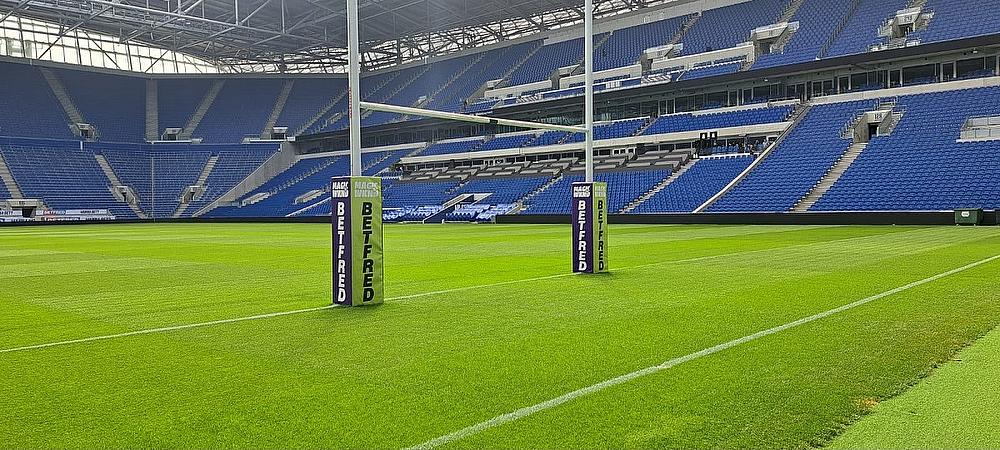
There is something quietly brilliant, and more than a little absurd, about Saturday’s fixture at Hill Dickinson Stadium. England will run out in Liverpool to face Fiji, and it is Fiji, not England, who are the home side.
Kick-off is 2.10pm, live on ITV, with Hollie Davidson taking charge as referee. On paper it’s round two of the inaugural Nations Championship. In practice, it’s a rugby experiment being played out in a football ground on the banks of the Mersey, and it deserves more attention than it’s getting.
A home fixture with no home in sight.
Fiji Rugby’s decision to stage all three of their July “home” Nations Championship matches in the UK; Cardiff against Wales, Liverpool against England, Murrayfield against Scotland is a pragmatic, faintly melancholy piece of modern rugby economics. Suva was never going to fill a stadium with the broadcast revenue and travelling support that Cardiff, Liverpool and Edinburgh can generate. Fiji Rugby’s own hierarchy have been candid about the thinking: this is a chance to build the union’s commercial base, reinvest in grassroots and high-performance programmes back home, and put the Flying Fijians in front of the enormous Fijian diaspora already settled across Britain.
It also means England, extraordinarily, are the away team on their own soil. The RFU have called it exactly that in their own fixture announcement; an “away” fixture for Steve Borthwick’s side. It’s a novelty that would have seemed unthinkable a decade ago, and it tells you something about where the sport’s finances now sit relative to its old geography.
Now England’s northern exposure problem.
Which brings us to the second, quieter storyline of the week: England hardly ever go north for a Test match. Twickenham’s gravitational pull is so strong that “home” and “Twickenham” have become functionally the same word in English rugby, to the point where a genuine northern venue hosting a Test involving England feels like a novelty even when, as here, it’s technically someone else’s home game.
That’s not a complaint particular to this fixture, it’s a structural truth about the English game. Rugby union’s traditional heartlands north of Birmingham are thinner on the ground than Rugby League’s & football’s, and the RFU’s calendar reflects it. When England do venture beyond the M25, it tends to be for exhibition fixtures or, as now, matches forced on the calendar by someone else’s hosting rights. Liverpool audiences don’t get many chances to watch England in the flesh, Fiji’s scheduling gymnastics notwithstanding, so there’s a genuine novelty value to Saturday that shouldn’t be lost amid the noise about “home” and “away” labels.
The context nobody can ignore.
None of this happens in a vacuum for Borthwick’s side. England arrive in Liverpool having been taken apart 45-21 by South Africa in Johannesburg in round one, a chastening start to the Nations Championship proper. Fiji, by contrast, have the freedom of the underdog and a well-worn habit of springing shocks against England sides who take their eye off the game’s unpredictability for even a moment; Twickenham 2022 remains a cautionary tale on that front, even if England won nine of the previous ten meetings between the sides, including a 38-18 victory as recently as last autumn.
Add in a raucous, first-time atmosphere at a brand-new stadium, a Fijian fan base determined to turn Regent Road Fijian colours for the day, and an England side under pressure to answer questions after Johannesburg, and Saturday has all the ingredients of a fixture that means far more than its “home” and “away” labels suggest.
For the travelling southerner: know your walk.
And that includes media pundits like James Haskell, Mike Tindall, Topsy Ojo and David Flatman.
If you’re used to Twickenham, then this Saturday requires a mental reset and not just about who’s “home.” Here’s how the walk from the station compares to what you’re used to.
Twickenham Stadium ↔ Twickenham Station (the one you know)
Roughly half a mile, 10–15 minutes. The Turk’s Head on Winchester Road sits right on the route if you need a pint en route. And you will surely have sampled The Cabbage Patch.
Twickenham Stadium ↔ Richmond Station (the scenic version)
Around 2–2.5 miles, 40–45 minutes. Longer, but a genuine tradition; plenty of fans happily walk from Richmond’s pubs (the White Cross, the Old Swan, Dukes Inn) rather than fight the crowds at Twickenham station itself.
Hill Dickinson Stadium ↔ Liverpool Lime Street (Saturday’s reality)
About 1.5–2 miles, roughly 30 minutes along the waterfront. So: longer than your usual Twickenham-to-station walk, but shorter than the Richmond amble, and arguably more scenic; you’re following the Mersey past Liverpool’s UNESCO-listed docklands rather than suburban streets.
Practically speaking: Sandhills is the nearest Merseyrail station to the ground (four minutes from Lime Street, then a 20-minute walk or shuttle), so it’s worth weighing train-plus-walk against the full 30-minute stroll from the city centre; especially with match-day crowds building on Regent Road.
On pubs, don’t expect a ready-made Twickenham-style crawl. The closest options to the ground itself are the Bramley Moore (5–7 minutes’ walk, dockside and packed with Everton memorabilia) and the Sandon Dock Bar (10 minutes), both on Regent Road. For a more established pre-match scene, city-centre options nearer Lime Street; the North Western Wetherspoons right at the station, or the Ship & Mitre a short walk away, are the safer bet if you want somewhere with a proper matchday buzz. Given it’s Fiji’s “home” end of the ground you’ll likely be sharing space with, expect the Bramley Moore crowd to skew Fijian rather than English on Saturday; plan your pre-match pint with that in mind.
Kick-off: 2.10pm BST, Saturday 11 July, Hill Dickinson Stadium, Liverpool. Live on ITV.