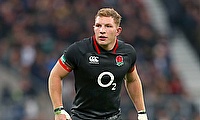
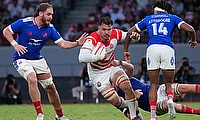
England v Fiji: Who Should Start at Centre? Five Options Steve Borthwick Must Consider
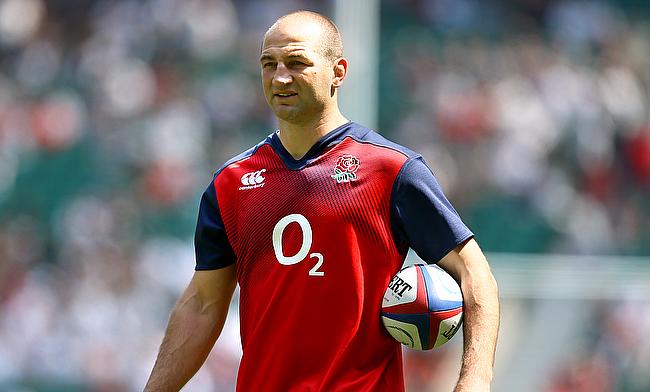
England head coach Steve Borthwick
©PA
As England prepare to face Fiji this weekend, much of the attention has focused on the forward battle and whether Steve Borthwick’s side can build on recent performances. But one of the most fascinating selection debates lies in midfield.
Who should start at centre against Fiji?
England’s midfield has rarely looked so competitive. Established internationals, emerging Premiership stars and players capable of covering multiple positions have all put forward compelling cases. The challenge for Borthwick is deciding which combination is best suited to a Fiji side renowned for its physicality, off-loading game and ability to punish defensive mistakes.
Against Fiji, selecting centres is about much more than attacking flair. It is about controlling momentum, winning collisions and making the right decisions under pressure.
Why the England centres will be crucial against Fiji
Every team approaches Fiji knowing what is coming.
They will carry hard through the middle of the field. They will look for quick ruck ball before releasing some of the world’s most dangerous runners into space. Their ability to keep the ball alive means one missed tackle or one poor defensive read can quickly become seven points.
That means England’s centres have two enormous responsibilities.
Firstly, they must stop Fiji winning the gain line through midfield.
Secondly, they need enough creativity to ask questions of the Fijian defence when England have possession.
Finding players who can do both consistently at Test level is never straightforward.
No, this is an open race
Unlike previous years, England are no longer reliant on trying to find an established partnership.
There are genuine options.
The Premiership has produced several outstanding performers, while England’s coaching staff have shown they are prepared to reward form rather than reputation.
The debate now centres around five realistic candidates.
Actually, Seb Atkinson is making a compelling case
Seb Atkinson may not attract the same headlines as some of his rivals, but he quietly produces exactly the sort of performances international coaches appreciate.
According to Premiership data, Atkinson boasts a tackle success rate approaching 92%, the highest among the principal candidates shown in the BBC comparison. That consistency matters enormously against a side like Fiji, where first-up tackles are critical.
He is also comfortable carrying into heavy traffic without sacrificing defensive organisation.
For England, Atkinson represents reliability.
Sometimes reliability wins Test matches.
Janse van Rensburg could be built for Test rugby
If there is one player who appears tailor-made for playing Fiji, it may be Janse van Rensburg.
His carrying numbers are among the strongest in the Premiership comparison, while his physical presence immediately catches the eye.
He enjoys contact.
Against Fiji, that matters.
England cannot afford to be passive in midfield. They need centres capable of meeting Fiji’s power head-on while also generating quick ball for Alex Mitchell and Fin Smith.
Should Janse van Rensburg receive the opportunity, he would bring genuine gain-line presence that England have occasionally lacked.
Max Ojomoh offers creativity but can England afford the gamble?
Bath’s Max Ojomoh has developed into one of English rugby’s most intelligent attacking centres.
His passing, support lines and awareness consistently create opportunities.
Yet Test rugby against Fiji is a unique examination.
The defensive numbers shown in recent Premiership analysis suggest there is still room for improvement. While statistics never tell the whole story, England know Fiji will repeatedly test the midfield through direct runners before exploiting any hesitation.
Borthwick therefore has to decide whether Ojomoh’s attacking qualities outweigh the defensive risks in this particular fixture.
Henry Slade still brings priceless experience
Statistics never fully explain what experienced internationals contribute.
Henry Slade remains one of England’s best organisers.
His communication.
His kicking game.
His ability to recognise space.
His calmness during chaotic moments.
Those qualities become increasingly valuable against Fiji, who often thrive when matches become unpredictable.
Even if younger players begin to establish themselves, Slade remains an important figure within England’s squad.
Tommy Freeman remains the fascinating wildcard
The statistics almost leap off the page.
Highest try involvement.
Most dominant tackles.
Outstanding attacking contribution.
Yet there is an important caveat.
Much of Tommy Freeman’s Premiership rugby came on the wing, naturally increasing his attacking opportunities compared with specialist centres.
The bigger question is whether England see him as a long-term international centre or simply someone capable of covering the position when required.
His athleticism undoubtedly makes him attractive against Fiji, particularly if England want to attack wider channels.
However, there is also an argument that England gain even more by returning Freeman to the wing, where he has already established himself as one of Europe’s most dangerous finishers.
What should England do against Fiji?
Selection should never become purely a numbers exercise.
Statistics help.
Video analysis helps.
Experience helps.
Ultimately, international rugby is about combinations.
Against Fiji, England need players who can defend aggressively, communicate constantly and provide enough attacking threat to prevent the Fijian defence from simply focusing on the outside channels.
If Steve Borthwick wants the strongest balance, an Atkinson–Janse van Rensburg midfield partnership has plenty to recommend it.
Atkinson offers defensive assurance and composure.
Janse van Rensburg supplies physicality and gain-line success.
That combination would also allow Tommy Freeman to return to the wing, giving England another genuine strike runner in open space while retaining Henry Slade’s experience from the bench if required.
The bigger picture for England
Regardless of who starts against Fiji, this feels like an important moment for England.
The Nations Championship is not simply about winning this weekend.
It is about identifying the midfield partnership capable of taking England through the next World Cup cycle.
England have spent several seasons searching for continuity in the centres.
Perhaps the encouraging news is that they are no longer short of options.
Against Fiji, those options will receive another searching examination.
And whichever pair runs out on Saturday may take one significant step towards making the England midfield their own.