Could South Africa and New Zealand name an injured XV to rival the series stars?
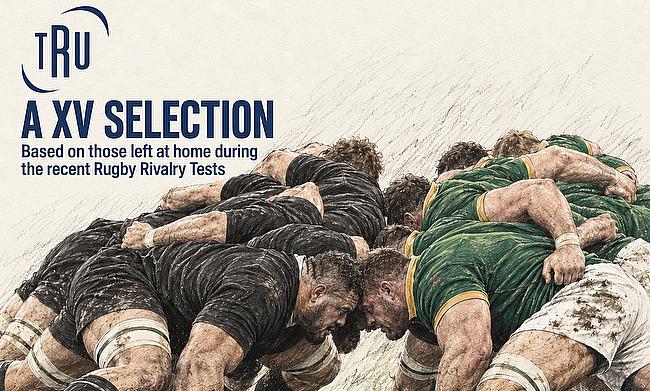
South Africa and New Zealand lost enough injured talent to build a formidable combined XV
South Africa’s 43-28 victory in Baltimore? completed a 3-1 series triumph and brought the curtain down on Rugby’s Greatest Rivalry. The four Tests produced enough outstanding performances to fill several combined sides. Yet the quality missing from the contest was almost as striking; so, could the Springboks and All Blacks produce a complete XV from players who missed the entire Test series through injury?
First, the ground rules. Ardie Savea is not eligible. The All Blacks captain started the opening three Tests before dislocating his shoulder?, so placing one of the series’ most influential players in a “left behind” team would distort the exercise. The same applies to anybody injured once the Test series had begun.
“Left at home” also needs a little flexibility. Several New Zealanders travelled to South Africa and appeared against provincial opposition, only to be ruled out before the first Test. The fairest definition is therefore a player who made no appearance in any of the four internationals, with injury the reason for his absence.
The resulting pack is extraordinary. Tamaiti Williams and George Bell join Frans Malherbe in the front row, combining New Zealand mobility with one of South Africa’s great scrummaging tightheads. Behind them, Scott Barrett partners RG Snyman. Barrett’s back surgery? removed the All Blacks’ regular captain before departure, while an ACL rupture ended Snyman’s 2026 season before it had properly started.
Kwagga Smith, Anton Segner and Jean-Luc du Preez form a wonderfully contrasting back row. Smith supplies breakdown menace, Segner athleticism and du Preez the carrying power. Smith and du Preez were both described by Rassie Erasmus as being out for the year, while Segner required ankle surgery? after initially being named for New Zealand’s opening Test.
The backline requires more projection, but remains compelling. Cortez Ratima’s knee injury? makes him the scrum-half, with Jordan Hendrikse directing matters at 10. Caleb Clarke and Sebastian de Klerk provide power and pace on the wings, while Billy Proctor and Leicester Fainga’anuku offer a muscular midfield. Jaco Williams, comfortable on the wing or at full-back, completes the side.
There are caveats. De Klerk and Williams are prospects rather than established Test figures, and the balance is influenced by where the injuries occurred. But that is also the point: even after removing every player who featured in the series, the two nations can still assemble a side containing World Cup winners, an All Blacks captain and a formidable Test-quality pack.
The injured XV: 15 Jaco Williams (South Africa); 14 Sebastian de Klerk (South Africa), 13 Leicester Fainga’anuku (New Zealand), 12 Billy Proctor (New Zealand), 11 Caleb Clarke (New Zealand); 10 Jordan Hendrikse (South Africa), 9 Cortez Ratima (New Zealand); 1 Tamaiti Williams (New Zealand), 2 George Bell (New Zealand), 3 Frans Malherbe (South Africa), 4 Scott Barrett (New Zealand, captain), 5 RG Snyman (South Africa), 6 Kwagga Smith (South Africa), 7 Anton Segner (New Zealand), 8 Jean-Luc du Preez (South Africa).
However, this is not intended to be the final word. Injury information around extended squads, overseas-based players and those on the fringes of selection is not always complete. Have we overlooked somebody who would strengthen this side? Was there an All Black or Springbok who would have toured, or been considered, had injury not intervened? Perhaps there is a specialist full-back, another destructive forward or an established international who deserves inclusion. Talking Rugby Union would like readers from both countries to challenge our selection, suggest alternatives and help us construct the strongest possible combined injury XV from this remarkable series.