A new broadcast home for BUCS Super Rugby - and a journey TRU has followed closely
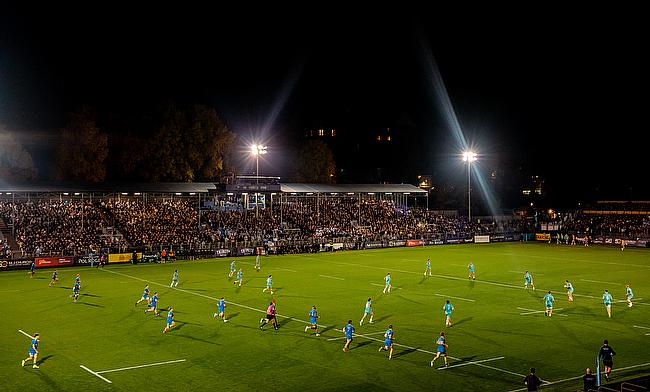
TRU is looking forward to following the next chapter of BUCS Super Rugby
©BUCS Super Rugby
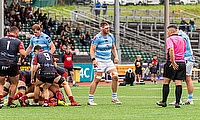
This week's announcement that Clubber TV will broadcast every BUCS Super Rugby fixture during the 2026-27 season represents another significant step forward for university rugby.
Greater visibility, more live matches and a wider audience can only benefit a competition which has become an increasingly important part of the pathway into professional rugby.
For Talking Rugby Union, however, university rugby is not a newly discovered market.
It has been part of our identity since 2012.
TRU was covering university rugby before BUCS Super Rugby was introduced in 2016.
Written reports, photography, video, player columns and live event coverage have remained parts of our work ever since.
But our relationship with the university game has always extended beyond simply reporting its results.
Talking Rugby Union has provided a platform on which university players could showcase their abilities to a much wider rugby audience. It has also created opportunities for players to develop their voices and tell their own stories.
Some subsequently went on to enjoy outstanding professional careers.
Josh Beaumont, who progressed from Durham University to captain Sale Sharks and represent England, had his own column with TRU.
So did Simon Hammersley, another Durham graduate who went on to play professionally for Newcastle Falcons and Sale Sharks.
Italian international Sebastian Negri represents another excellent example of a university player whose development TRU was able to follow before his career took him onto the international stage.
These were not players being introduced to our readers after they had become established professionals. TRU was interested in their journeys while they were still developing.
That has always been the point.
A Personal Connection to the University Game
The connection was personal from the beginning.
TRU's Max Skofic was playing at Manchester Metropolitan University, while Max Ashcroft was part of the rugby environment at the University of Bath.
Their experiences gave TRU an early understanding of the quality, intensity and potential within university rugby.
It was a level producing compelling matches and outstanding players, but one which was receiving comparatively little consistent media attention.
TRU wanted to help change that, not only by writing about university rugby, but by creating opportunities within it.
From Coverage to Creating Teams
Through Max S and Max Ashcroft, Talking Rugby Union funded a Sevens programme which was initially centred around players from the University of Bath, with valuable assistance from Tarleton Rugby Club.
It quickly became something more ambitious.
Under the guidance of Durham University coach Alex Keay, the programme developed into a combined Durham and Bath side which competed at Sevens tournaments across the UK and Ireland.
The team gave university players another stage on which to demonstrate their abilities. It also connected players from different programmes and placed them in competitive environments beyond the traditional university season.
Keay’s mantle was subsequently passed to Manchester Metropolitan University head coach Rob Jones.
Jones developed a further programme of Sevens rugby which travelled to competitions across the country and won tournaments. Results, however, were only part of its value.
Crucially, Jones helped create an environment in which Talking Rugby Union could introduce a women’s Sevens team.
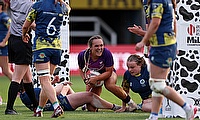
That team proved hugely successful and added another dimension to TRU’s involvement in the university game. It was not simply about providing coverage after matches had taken place. It was about helping create opportunities for players to participate, compete and be seen.
That history matters when assessing TRU’s place within university rugby today.
There before BUCS Super Rugby
BUCS Super Rugby was launched in 2016, giving the leading university programmes a clearer identity and a prominent national competition.
By then, TRU had already spent four years reporting on university rugby, publishing players’ work and supporting university-based Sevens teams.
Since the competition’s formation, we have followed its growth, attended its major events and told the stories of the players, coaches and universities responsible for its progress.
Our coverage has included match reports, interviews, photography, video, live events, emerging-player features and analysis of the increasingly important pathway between universities and the professional game.
University rugby is no longer viewed simply as something players do while completing their studies.
It has become a serious performance and development environment capable of preparing players for the Premiership, the Championship, National League Rugby and the international game.
The new broadcast agreement is further recognition of that progress.
Broadcasting the match is only part of the story
Making every BUCS Super Rugby fixture available to watch should introduce the competition to more supporters and provide valuable exposure for its players, coaches and university programmes.
TRU welcomes that development.
The live pictures can show what happens during the 80 minutes while independent journalism can explore why it happened, who is emerging, where those players came from and where they might go next.
It can follow the student who moves into National League Rugby, the university player balancing academic demands with high-performance sport and the previously unfamiliar name who could become an international player.
It can also look beyond the leading competition.
University rugby is larger than BUCS Super Rugby alone. There are players and stories throughout the university structure, within the women’s game and among institutions operating beyond the most heavily promoted programmes.
Those stories deserve attention too.
The Independent Home of University Rugby
TRU’s role will hopefully complement the expanded broadcast coverage.
We will continue identifying emerging talent, speaking to the people shaping university programmes and examining how the university game connects with the wider rugby pyramid.
We can celebrate the progress of the university game while still asking questions about development, opportunity and the transition into senior rugby.
The arrival of comprehensive live coverage confirms something TRU recognised in 2012: university rugby matters.
It matters as a competition in its own right. It matters as a development pathway. Above all, it matters because of the players, coaches and volunteers who give it its identity.
For 14 years, Talking Rugby Union has not merely watched that development from the sidelines.
We have reported on it, photographed it and filmed it. We have given university players their own columns and introduced them to a wider audience. We have funded teams, supported Sevens programmes and helped create competitive opportunities for both male and female players.
New broadcasters and new audiences are extremely welcome, but as university rugby enters its most visible chapter yet, TRU wants to remain part of the journey.
Talking Rugby Union intends to remain the independent home of #UniRugby.