Brisbane 2027: Six pool matches, six rugby stories and a city at the heart of the World Cup
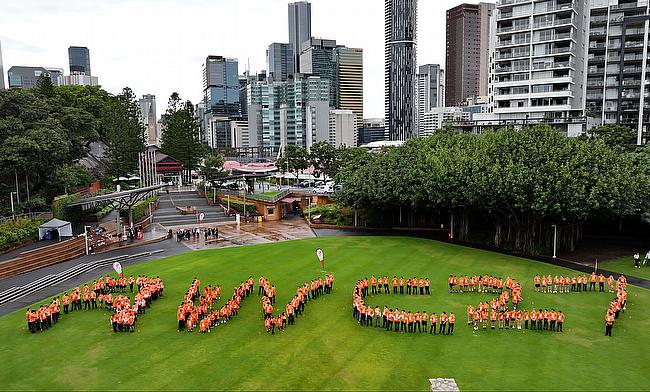
Brisbane will undoubtedly be one of the major hubs at next year's World Cup
©World Rugby
When Rugby World Cup 2027 gets underway in Australia next October, Brisbane will be one of the tournament’s most important destinations.
The Queensland capital will host 10 matches at Suncorp Stadium, beginning with England against Tonga on Saturday 2 October and continuing through to two quarter-finals on the final weekend of the same month.
For supporters planning an Australian World Cup adventure, the city offers an opportunity to experience some of international rugby’s biggest names alongside nations whose ambitions extend well beyond simply making up the numbers.
The six pool fixtures will bring together 12 countries, providing a fascinating cross-section of the international game.
There will be familiar opponents, contrasting playing styles, emerging rugby nations and potentially significant contests as teams compete to reach the expanded knockout stage.
With matches spread across three weekends, Brisbane also offers travelling supporters the opportunity to combine rugby with time exploring Queensland rather than constantly moving between host cities.
England begin against Tonga: Saturday 2 October
England’s opening Pool F encounter with Tonga will be one of the early attractions, with the 20:15 kick-off promising a Saturday-night occasion at a stadium renowned for generating a formidable atmosphere.
England have won all four previous meetings with Tonga, including World Cup encounters in 1999, 2007 and 2019, but tournament openers are rarely straightforward. England will be looking to establish momentum immediately, with Zimbabwe and Wales awaiting them later in the pool programme.
For Tonga, the fixture represents another opportunity to demonstrate the strength of Pacific Islands rugby on the global stage.
Their traditionally physical approach, powerful ball carriers and passionate support should provide England with a demanding opening examination. Tonga will also be determined to show that the growing opportunities available to Pacific Island players can translate into greater competitiveness at international level.
For supporters travelling from Britain, the match provides an attractive starting point to their World Cup experience, combining an England fixture with the atmosphere of one of Australia’s great rugby stadiums.
Argentina v Canada: Monday 4 October
Two days later, Brisbane hosts a very different encounter when Argentina and Canada meet in Pool C, which also contains Fiji and Spain.
Argentina will enter the tournament expecting to progress, although their ambitions will extend considerably beyond simply surviving the pool stage.
The Pumas - who have reached the semi-finals in two of the last three World Cups - have established themselves as credible opponents for rugby’s leading nations, combining traditionally powerful forward play with an increasingly ambitious attacking game.
Their performances against southern hemisphere opposition (such as their 29-23 win over the All Blacks last year) have demonstrated that they are capable of challenging the established international order.
Canada’s challenge is rather different, with their return to the World Cup after missing France 2023 providing an opportunity to rebuild their international standing.
Canadian rugby has endured a difficult period, but qualification for Australia offers the chance to demonstrate progress against one of the strongest sides in the Americas.
The fixture is also a reminder that the Rugby World Cup is about more than the traditional European and southern hemisphere powers. For Canada, competing effectively against Argentina would represent an important step in restoring confidence and credibility on the international stage.
France v Japan: Saturday 9 October
Perhaps Brisbane’s most intriguing pool fixture arrives on the second Saturday when France face Japan, bringing together two nations with contrasting rugby identities and significant international followings.
France possess the depth, physicality and individual quality to challenge for the Webb Ellis Cup, while Japan have developed a distinctive reputation for speed, handling and attacking ambition.
Their performances at the 2015 and 2019 World Cups helped transform international perceptions of Japanese rugby and demonstrated what could be achieved through a commitment to an ambitious playing philosophy.
For France, controlling possession, territory and tempo could be particularly important against opponents who are at their most dangerous when allowed to generate quick ball and attacking momentum.
Japan’s challenge will be to create enough opportunities to make their attacking instincts count while coping with the physical demands imposed by one of Europe’s strongest rugby nations. The fixture also offers travelling supporters a compelling Saturday-evening occasion in one of Australia’s most accessible major cities.
South Africa v Georgia: Sunday 10 October
The following afternoon, the world champions take centre stage when South Africa meet Georgia in a contest that could provide one of the most interesting examinations of forward power during Brisbane’s pool programme.
Georgia have long been respected for their scrummaging and physical approach, producing forwards who have established themselves across European professional rugby.
South Africa, meanwhile, have built much of their recent international success around forward dominance, defensive intensity and exceptional squad depth, making this a particularly intriguing encounter for those who appreciate the technical aspects of the game.
Georgia will be determined to demonstrate that their forward pack can compete with the world’s best, although matching the Springboks across 80 minutes represents a considerably greater challenge.
South Africa will be looking to establish momentum as they pursue an unprecedented third successive men’s World Cup title, while managing their resources through the pool stage.
Beyond the result, the contest should provide another indication of Georgia’s progress and their ambition to compete consistently with rugby’s established powers. It also gives supporters an opportunity to watch two nations for whom the set-piece remains central to their rugby identity.
Australia v Chile: Saturday 16 October
Brisbane’s penultimate pool fixture brings the hosts to Queensland when Australia face Chile, an occasion that should attract considerable interest from local supporters.
The Wallabies will carry the expectations of a home nation seeking to re-establish itself among the game’s elite, with the tournament representing an important opportunity for Australian rugby both on and off the field.
Playing in Brisbane, where rugby union has a substantial following and at the Suncorp Stadium, which regularly stages major international occasions, should provide the hosts - who will have already faced Hong Kong and New Zealand - with an enthusiastic and demanding audience.
Chile, however, represent another important dimension of the expanded World Cup, having made their tournament debut in France in 2023.
Their qualification for Australia 2027 offers another opportunity to develop international experience and continue the growth of rugby in South America.
The fixture provides an intriguing contrast between a twice-crowned world champion and a nation still building its World Cup history.
For Australia, it will also be their final pool fixture before the knockout stages, potentially giving the match considerable significance in terms of selection, momentum and preparation for the challenges ahead.
Scotland v Portugal: Sunday 17 October
Brisbane’s final pool match may prove one of its most attractive for neutral supporters, with Scotland meeting Portugal in a contest that brings together two European nations with contrasting rugby histories.
Scotland will be aiming to progress from Pool D, which also includes Ireland and Uruguay, and will be conscious that the expanded tournament format offers opportunities as well as potential complications.
Their ability to combine attacking ambition with defensive organisation could prove important against opponents who have already demonstrated their willingness to challenge more established nations.
Portugal captured the imagination during France 2023, particularly with their historic victory over Fiji, and their attacking ambition helped establish them as one of the tournament’s most entertaining emerging nations.
Their willingness to move the ball, exploit space and play with confidence demonstrated that international rugby’s developing countries have much to contribute to the spectacle.
Scotland will enter the contest with the greater pedigree, but Portugal’s continued development gives the fixture considerable interest. Brisbane’s final pool match could provide a fitting conclusion to three weekends of international rugby.
Why the expanded World Cup matters
Australia 2027 will feature 24 teams for the first time, divided into six pools of four, with the top two teams from each pool and the four best third-placed sides qualifying for the Round of 16.
The revised format creates new possibilities for emerging nations, providing a route into knockout rugby without necessarily finishing among the top two in their pool. For established countries, it also introduces additional considerations around squad management, points difference and the potential consequences of finishing in different qualifying positions.
That broader competitive picture gives additional significance to fixtures involving countries such as Chile, Portugal, Canada and Georgia.
These nations should not automatically be regarded as peripheral attractions simply because they do not possess the history or resources of the traditional rugby powers.
Their performances will help determine whether the expanded tournament can deliver greater competitive depth and accelerate international development. For supporters, the opportunity to watch these teams alongside established contenders is one of the strongest arguments for embracing the new format.
Brisbane beyond the rugby
For travelling supporters, the appeal of Brisbane extends well beyond Suncorp Stadium, with the city offering a relatively compact centre, a spectacular riverfront setting, restaurants, parklands and access to some of Queensland’s best-known wildlife experiences.
South Bank provides a natural meeting place for visitors, while the city’s subtropical climate should make early October an attractive time to explore. There is also the opportunity to venture further afield towards the Sunshine Coast, Gold Coast or other parts of Queensland, although supporters attending several fixtures will need to balance sightseeing ambitions against travel distances and accommodation arrangements.
The concentration of matches is particularly appealing for those wishing to experience several nations without constantly changing hotels. France and South Africa play on consecutive days, 9 and 10 October, while Australia and Scotland feature on the following weekend, 16 and 17 October.
For many supporters, that could prove considerably more attractive than an itinerary dominated by airports, transfers and short hotel stays.
A city at the centre of the tournament
Brisbane’s six pool games offer more than a sequence of fixtures. They bring established powers and emerging rugby nations together in a city with a strong sporting identity and a stadium famous for its atmosphere.
The official tournament guide highlights the Caxton Street precinct near the ground, along with the city’s riverfront, parks, arts scene and nearby islands and rainforests.
Brisbane has also always worked well for me as a hub for exploring the coast, both north and south.
When I lived in Australia in the mid-1990s, Noosa was one of my favourite places. I’ve also visited Coolum and travelled much further north towards Cairns.
The Sunshine Coast and the Gold Coast each have their own appeal. As a Lancastrian, I’ve always been amused that the Gold Coast has a town called Southport.
I’ve enjoyed beachside holidays on the Gold Coast and trips further south towards Coffs Harbour. One place I particularly enjoy is Sawtell, a lovely beachside village just south of Coffs Harbour that I’d happily recommend.
For supporters building a longer trip around the rugby, Brisbane makes a natural starting point for exploring more of the coast.
Where to eat and drink
Brisbane does match days rather well. Suncorp Stadium sits on the edge of the city centre, surrounded by pubs, bars and restaurants that have been filling up before kick-off for generations.
Caxton Street: The obvious starting point
If there is one address every travelling supporter should know, it is Caxton Street.
The Caxton Hotel stands about 50 metres from the stadium and has long been the unofficial headquarters for pre- and post-match drinking, whatever the code. (Real Estate Source) It dates back to the 1880s. It is big, loud and busy, and on major match days the street is usually closed to traffic, turning the whole strip into an open-air party. (Only Sports)
It is not the only option. The Lord Alfred and Lefty’s Music Hall are long-standing favourites, Caxton Street Brewing Co. pours its own beers alongside burgers, and Moda (Spanish-inspired) and Libertine (French-Vietnamese) cater for those wanting a proper meal. (InDaily)
For a more substantial pre-match dinner, the Gambaro Hotel, a couple of minutes from the stadium, houses Black Hide Steakhouse and Gambaro Seafood Restaurant. (Visit Brisbane)
Paddington and Milton
On the other side of the ground, the Paddo Tavern is a popular meeting point, with pub food, pints and plenty of atmosphere. (InDaily)
Directly across the road from the stadium, Newstead Brewing Co. occupies a converted warehouse and pours its own beers alongside local guests. (Visit Brisbane) The Barracks precinct, on the walk from the city, offers a further cluster of bars and restaurants.
South Bank
South Bank is where many visitors will gravitate between matches, and it has a pub with real history.
The Plough Inn has traded on the site since 1864, and the current heritage-listed building dates from the 1880s. (Queensland Heritage Register) It is a sprawling place in the parklands with live music most nights. (Brisbane Economic Development Agency) It may well become a natural gathering point for supporters from every nation.
Howard Smith Wharves
For the best setting in the city, head to Howard Smith Wharves, a row of restored 1930s riverside buildings tucked beneath the Story Bridge.
Felons Brewing Co. is the anchor, brewing on site with a terrace on the water. Greek restaurant Greca and the riverside bar Mr Percival’s are among the neighbours. (Time Out)
It is a good choice for a long lunch on a non-match day, and a pleasant way to see the river.
Fortitude Valley and Eat Street
Fortitude Valley is Brisbane’s nightlife district. James Street and its surrounding laneways offer more polished dining, while the Valley proper keeps going late.
Further downstream, Eat Street Northshore is a weekend night market built from shipping containers, with street food from around the world and live music. There is a small entry fee. (Time Out)
A word of advice
Brisbane hosts State of Origin and major Test matches every year, so its venues know how to handle a crowd. But a World Cup with tens of thousands of visitors is a different scale.
Book dinner for match nights well ahead, particularly around England v Tonga and the back-to-back weekends of 9-10 and 16-17 October. And check opening hours before you travel: venues change, and a year is a long time in hospitality.
A city with a major role to play
Brisbane’s contribution to Rugby World Cup 2027 will not end with the pool stage, with Suncorp Stadium scheduled to host two Round of 16 fixtures on 23 and 24 October, followed by two quarter-finals on 30 and 31 October.
By the time the tournament reaches its decisive stages, the city will have welcomed some of rugby’s biggest names alongside nations seeking to establish their place in the international game.
England against Tonga provides the opening attraction for many British visitors, while France against Japan offers the prospect of contrasting styles and South Africa against Georgia promises a physical contest.
Australia’s appearance against Chile brings the host nation to the city, and Scotland against Portugal could provide a fitting conclusion to Brisbane’s pool programme.
Argentina against Canada adds another dimension, reflecting the changing fortunes and ambitions of rugby across the Americas. Together, the six fixtures offer a remarkably varied programme, with something to interest supporters beyond their own national allegiances.
For those looking to experience more than simply their own country’s journey, Brisbane could be one of the most rewarding destinations of Rugby World Cup 2027. Six pool matches, 12 nations, four subsequent knockout fixtures and a city that offers plenty to explore between games should make Queensland’s capital a compelling destination for international visitors.
The challenge for supporters may not be finding enough rugby to watch, but deciding how much time to leave for discovering the city and its surroundings.
Talking Rugby Union will continue its Rugby World Cup 2027 host-city series, exploring the fixtures, destinations and experiences awaiting supporters across Australia’s seven host cities.