Breakfast in Auckland, Bedtime in Argentina: My WHOOP and me
From Ireland’s challenge at Eden Park to England’s final assignment in Santiago del Estero, this Saturday’s Nations Championship is not simply six Test matches. It is a journey around the rugby world.
There is something slightly ridiculous about sitting beside the Mediterranean in July and deciding that your Saturday will be organised by rugby matches taking place thousands of miles away.
Breakfast in Auckland.
Mid-morning in Tokyo.
Lunch in Perth.
Afternoon in Edinburgh.
Early evening in Durban.
And, finally, bedtime in Argentina.
Six Test matches. Twelve nations. One extraordinary day.
A few days ago, I found myself writing about an Argentine footballer whose story began in South America, crossed the Atlantic and somehow ended in a family-run pizzeria in Alcossebre. That was Cioffi - the gunner. I am sure there will have been a ‘whoop’ of delight in his restaurant, after Argentina defeated England in the FIFA World Cup Semi-Final.
That is the thing about sport, it starts in one place and quietly takes you somewhere completely different.
This Saturday, rugby does exactly the same. The third round of the Nations Championship begins at Eden Park and finishes nearly 12,000 kilometres away in Santiago del Estero, where England conclude their southern journey against Los Pumas. In between, the television moves through Tokyo, Perth, Edinburgh and Durban.
For a new competition still establishing its identity, this may be the day it finally begins to make sense.
Not because of the tables.
Not because of the qualification permutations.
But because of the journey.
Breakfast at Eden Park
There are famous rugby grounds, and then there is Eden Park.
For generations, it has been the place where New Zealand expected to win and visiting teams hoped simply to survive.
That no longer applies to Ireland.
The relationship between these two rugby nations has changed dramatically during the past decade. Ireland have beaten the All Blacks at home, beaten them in New Zealand and won a historic Test series there.
They have also experienced the other side of the rivalry: the particular pain of losing a World Cup quarter-final to New Zealand when the possibility of something historic appeared to be within reach.
That history gives Saturday’s opening match considerably more weight than an ordinary July international.
Neither side has treated it as an opportunity for wholesale experimentation. Dave Rennie has made four changes to the New Zealand side, but the core remains formidable. Damian McKenzie starts at full-back, Will Jordan is on the wing, Jordie Barrett anchors the midfield and Ardie Savea leads the side from number eight.
Ireland arrive with considerable experience of their own.
The contest around the breakdown should be worth setting the alarm for by itself. Savea’s athleticism, carrying and ability to alter the momentum of a match will be central to New Zealand’s challenge. Ireland will attempt to answer with the collective pressure, accuracy and physical persistence that have become trademarks of their best performances.
For supporters watching in Britain, Ireland or Spain, the first coffee of the morning will come with Eden Park on the screen.
There are worse ways to start a Saturday.
The world keeps moving
Before the Auckland match has fully settled in the memory, rugby heads north.
Tokyo.
Japan against France.
Different atmosphere.
Different rugby culture.
Different rhythms.
Japan’s emergence has been one of the most important stories in the modern international game. The great victories over South Africa and Ireland changed perceptions, but the longer-term achievement has been to establish Japan as a meaningful part of rugby’s international calendar rather than an occasional World Cup curiosity.
France bring another kind of fascination; their resources are enormous. Their club competition is arguably the strongest in the world. Their challenge has always been converting that depth into sustained international consistency.
In the old touring structure, Japan against France might have felt like a standalone summer Test, briefly important and then quickly overtaken by the next fixture.
The Nations Championship attempts to provide context.
The result in Tokyo belongs to the same competition as what happened at Eden Park.
It matters alongside Perth, Edinburgh, Durban and Santiago del Estero.
Before lunchtime in Europe, the television moves again, and it is Australia against Italy in Perth.
Three Test matches across three countries before many people have decided what to eat for brunch; although I know my WHOOP will be monitoring me.
Australia’s every selection now exists against the backdrop of the 2027 Rugby World Cup on home soil. This is no longer distant planning. Every Test is part of the process of building combinations, confidence and depth before the tournament arrives.
Italy’s story is different but equally compelling.
For years, discussion around Italian rugby was framed by whether they belonged at the highest level.
That conversation has changed.
Italy are no longer treated as an administrative problem to be endured by the established nations. Their best performances have made them dangerous, ambitious and increasingly comfortable in elite company.
That is what this competition needs.
The Nations Championship cannot survive purely by staging the fixtures that are already enormous.
Its success will depend upon making Australia against Italy feel meaningful too.
An afternoon belonging to rugby
By early afternoon, the focus returns to Europe and as last weekend, officially, Fiji are the home team. Whether my WHOOP will understand that geographically, we are at Murrayfield; is a completely different matter. Only rugby could produce that sentence.
Yet there is something rather appealing about it.
Fiji have traditionally been described as everyone’s favourite second team, admired for their athleticism, improvisation and willingness to attack from almost anywhere.
That description is becoming outdated; they are no longer merely entertaining, they are dangerous. Plus they will be hurting after that loss to England.
The gap between Fiji and the established nations has narrowed because the individual brilliance is increasingly supported by structure, preparation and belief.
Scotland will understand the challenge.
This is not an exhibition match between contrasting styles. It is an important Test between two teams who will both believe they can win. For those who began the day with New Zealand and Ireland, Murrayfield marks the fourth stop on the journey. For everyone else, it is the point at which Saturday’s rugby fully arrives in the European afternoon.
The sofa becomes a grandstand.
The television remote becomes a passport.
Then attention swings south once again.
Durban.
South Africa against Wales.
The Springbok examination
South Africa’s team sheet makes uncomfortable reading for anyone facing them.
Aphelele Fassi starts at full-back behind a backline containing Jesse Kriel, Damian de Allende and Kurt-Lee Arendse, while Pieter-Steph du Toit captains a pack featuring Malcolm Marx, Jasper Wiese and the relentless physical threat that has defined the Springboks’ recent success. The remarkable thing about South Africa is that winning appears not to have made them cautious; it has given them permission to experiment. Now WHOOP may have a view on this.
Players are rotated. New combinations are tested. Different tactical ideas are introduced.
But the standards remain unmistakable, with every Test feeling like another stage in the long-term plan to remain at the summit of the international game.
Wales are in a very different place.
Their team contains talent, energy and emerging players, but it also carries the uncertainty of a nation attempting to rebuild while still being asked to face the strongest sides in the world.
Dewi Lake captains them in Durban, with Tomos Williams and Sam Costelow controlling the half-backs and Aaron Wainwright at number eight.
There are few more demanding assignments than South Africa away.
For Wales, this is not merely another match in a difficult period.
It is a measure of whether the foundations being laid can survive the most intense pressure international rugby can provide.
By now, those committed to watching the complete day may be facing challenges of their own.
Coffee has probably become beer.
Meals have been arranged around half-times.
Five matches have come and gone.
Argentina is still waiting.
The destination: Santiago del Estero
Finally, the day reaches South America.
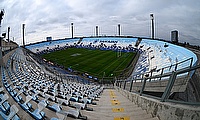
Argentina against England. There is something pleasingly circular about that for me as a few days ago, I was sitting in Alcossebre thinking about an Argentine footballer who crossed the Atlantic and eventually made a life on the Spanish Mediterranean.
Now my attention is drawn back across the ocean.
Same country.
Different sport. Different story.
England’s selection for Santiago del Estero is notable not because Steve Borthwick has changed everything, but because he has changed almost nothing.
The starting side is the same one that faced Fiji, with the exception of Ben Spencer coming in at scrum-half. That continuity matters.
Summer tours are often described as opportunities to discover new players and build depth. England have certainly done that. But there comes a point when experimentation has to become combination-building.
Borthwick appears to have reached that point.
Marcus Smith continues at full-back, allowing him to offer a second playmaking option outside Fin Smith. Henry Slade and Seb Atkinson remain together in midfield, while Immanuel Feyi-Waboso and Tommy Freeman provide the power and pace on the wings.
Guy Pepper, now firmly established at Bath, retains the number seven shirt alongside Ollie Chessum and Ben Earl. Pepper’s progress has been one of the more encouraging features of England’s recent development: industrious, combative and comfortable doing the less glamorous work that Test rugby demands. Bath signed him from Newcastle ahead of the 2024-25 season, and he has since become a consistent part of both the club and England back rows.
Henry Pollock again waits on the bench. That may be the most intriguing element of the selection. Perhaps like Cioffi, he is the gunner. Make no mistake the England footballers loss will not be lost on Pollock or the home crowd.
Whether the intention is to maximise his impact against tiring defenders or simply preserve the balance of the starting back row, England know they have one of the most exciting young forwards in the game available for the final quarter.
Argentina, of course, require no introduction.
The days when victories over the established powers were treated as extraordinary upsets are long gone.
Los Pumas have beaten New Zealand.
They have beaten South Africa.
They have beaten Australia.
They have developed players throughout the leading European leagues and established themselves as one of international rugby’s most dangerous opponents.
England will know exactly what awaits.
Santiago del Estero is also an appropriate final destination for this day. It is not London, Paris, Cardiff or Dublin.
It is somewhere less familiar to many northern-hemisphere supporters, which adds to the feeling that international rugby is taking us somewhere rather than simply repeating the same fixtures in the same places.
By kick-off, five Tests will already have been played across several time zones.
The final act may yet be the most compelling.
Perhaps this is the point
Every new competition faces questions.
Does rugby need another tournament? Will supporters understand the format?
Will the July fixtures feel connected to those played in November? Will Finals Weekend become a genuine destination in the rugby calendar? And will the algorithm behind my WHOOP get this. As I write this, it is much more likely that algorithm is studying a man on a parched fairway near Southport.
Those questions will not be answered by a press release.
They will be answered by Saturdays like this one.
The Nations Championship’s first three rounds are being played in July, with the northern teams travelling south, before the tournament resumes in November and leads into Finals Weekend. Every result contributes towards the eventual rankings.
That may sound complicated when written down but on Saturday, it becomes considerably simpler.
New Zealand against Ireland.
Japan against France.
Australia against Italy.
Fiji against Scotland.
South Africa against Wales.
Argentina against England.
The official schedule takes supporters from an 8.10am British start at Eden Park to England’s 8.10pm kick-off in Santiago del Estero.
Six matches. Twelve nations. Thousands of miles apart. One sport.
On Sunday morning, many of us will remember an Ardie Savea turnover, a Marcus Smith counter-attack, a Springbok scrum or whatever drama unfolds beneath the lights in Argentina.
But perhaps we will remember something else too.
For one Saturday, rugby made the world feel surprisingly small.
Breakfast in Auckland.
Bedtime in Argentina.
And for those of us following the journey from a sofa, a pub or, in my case, a terrace beside the Mediterranean, that sounds like a very good way to spend a Saturday. Let’s hope my WHOOP agrees.
Seniormash Reflections on Substack And for TalkingRugbyUnion.co.uk