Nations Championship countdown: Who could make England’s November squad?
22 October 2026

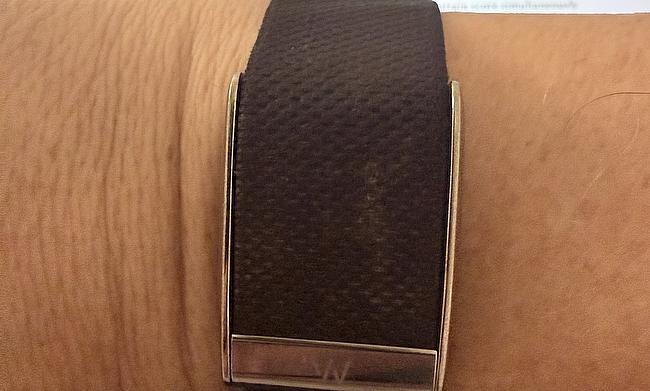
A sidebar for readers who’ve followed my weekend of biometric misery and are wondering what the strap on my wrist actually does
Given the volume of “yes but what IS it” messages currently arriving from friends, family, followers and at least one subscriber, I owe you an actual explanation rather than another paragraph about Alhambra. So: sidebar time. Normal service; me, losing an argument with a wristband, resumes shortly.
A WHOOP is a fitness wearable, but not like the ones you know. There’s no screen. It doesn’t tell the time, show your messages, which is either refreshingly pure or faintly sinister depending on your mood. It’s a fabric strap with a small sensor that sits against your wrist; or hidden in a sleeve or garment, for people more athletic than a man watching Test rugby from a sofa in Christchurch’s actual timezone, and does one thing, continuously: it measures what’s going on inside your body, twenty-four hours a day. It never clocks off. It has never once had a night off from me. I find this increasingly personal.
Founded in Boston in 2012, WHOOP works on a subscription model: you pay a membership, the hardware comes with it. The sensor tracks heart rate, heart rate variability, respiratory rate, skin temperature, blood oxygen and sleep stages, then the app boils all of that down into three headline scores, delivered with the tact of a parking warden.
Strain measures cardiovascular load; how hard your day has worked your heart, whether that’s a training session, a long walk, or, in my case, watching England hold on with ten men at 4am while doing absolutely nothing more physically demanding than standing up too fast. Sleep measures not just how long you slept but how well; deep sleep, REM, how consistent your bedtimes are, a category in which I currently have the consistency of the Nations Championship kick-off schedule. And Recovery is the big one: a morning score, green, yellow or red, calculated overnight from HRV, resting heart rate and sleep, telling you how ready your body is for today. Mine, most mornings this summer, has told me I am ready for very little.
That’s the core idea. Not “what did you do?” but “what can you do next?” Which is precisely why rugby players; actual ones, not men narrating from an armchair, have taken to it.
Rugby union is a brutal blend of demands. Players can cover four to five miles a game with top speeds over 20mph, absorbing collisions throughout, with training weeks routinely involving two sessions a day. At that level, effort was never the limiting factor. Recovery is.
The winners are the ones who arrive at Saturday freshest, which is a sentence I have never once been able to apply to myself on a Saturday, or indeed a Sunday, or a Monday morning after Mexico City.
So the sport has adopted WHOOP at institutional level, properly, not just as a gadget players fancy. The Rugby Players Association signed a multi-year deal making WHOOP its official fitness wearable, with England’s Anthony Watson and Poppy Cleall among the names attached. Rugby Players Ireland did the same, the first Irish sporting body to partner with the company. And the British & Irish Lions made WHOOP an official supplier for last year’s tour of Australia, equipping every player and staff member, partly to manage the toll of longhaul travel and jet lag which, for a man whose idea of long-haul these days is Rufford to Alcossebre, is a scale of problem I can only admire from a safe distance. I can only wonder how it would have coped with my long haul travel for Applied Chemicals, Sola International, Amscan and Harkness over a 20 year period. I actually ended up with lifetime gold status with BA, United and Delta; now that’s another story.
The travel point is real, and rather better evidenced than anything my own data has ever produced. Lions and Ireland scrum-half Conor Murray found that after an overnight flight to South Africa, his recovery score collapsed into single figures before slowly climbing back over the following days. His body knew before he did. That’s the whole pitch, really: the data catches what the mirror misses, accumulating fatigue, poor sleep, the early signs of illness, the true cost of a contact-heavy training day.
For professionals, that means training smarter, knowing when to push and when to back off, and protecting careers in a sport where the physical toll is enormous. For the rest of us, myself, my nephew Jack, anyone who’s ever done a Three Peaks Challenge and regretted it slightly less than they regret staying up for extra time, it means a small algorithmic conscience that notices everything.
And I do mean everything. It knows when you’ve had a late night. It knows, in a general and slightly indiscriminate way, when you’ve had a beer, whether that beer was a Moorhouse’s White Witch in Rufford or an Alhambra on a balcony in Alcossebre. It knows, apparently, when you’ve spent seventy-two hours watching Test rugby in Christchurch and Tokyo, football from Houston and Philadelphia, and Wimbledon in between, and it will express its disappointment in cold, colour-coded numbers, the way it has been doing to me all week.
Elite players wear one so they can perform at the highest level, arriving fresh for Saturday with careers and championships riding on the data.
I wear one so that a server in Boston can confirm, scientifically, and without a trace of sympathy, that the World Cup is bad for me.
Seniormash Reflections on Substack