Brake foot, shoulders out and straight dominance: World Rugby puts the scrum on notice
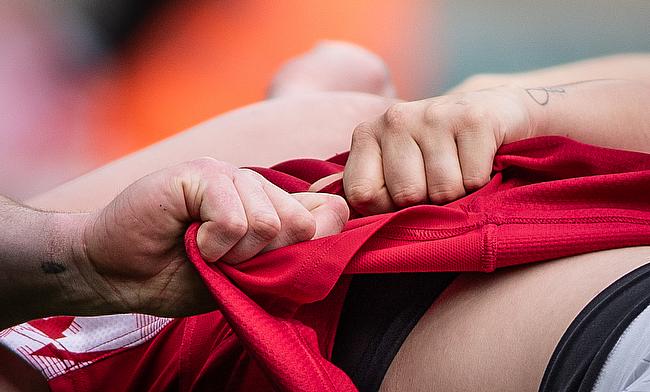
The mechanics of the scrum will be scrutinised during November's Nations Championship
©Lizzy Terry/TEZ.PHOTOG
As Rassie Erasmus and the Springboks prepare to begin the November phase of the Nations Championship against Italy, World Rugby has told officials exactly what it wants from the scrum.
Talking Rugby Union speaks to former England international Tommy Taylor and Caldy hooker Matt Gallagher about the brake-foot debate and why the hooker cannot be judged in isolation from the loosehead alongside him.
-
Rassie Erasmus spent much of 'Rugby's Greatest Rivalry' series against New Zealand defending the legality of his scrum.
As South Africa prepare to face Italy in Turin on Saturday, that debate has not disappeared. It has instead become part of World Rugby’s refereeing brief for the Nations Championship.
The governing body has identified the scrum as one of its special areas of focus during November. Hookers will be expected to keep the brake foot grounded in the tunnel until the “set” call, while both loosehead props must keep their right shoulders visible rather than tucking in towards their hookers.
Referees have also been told to reward dominance achieved by driving straight, not at an angle.
These may sound like three separate technical details. In reality, they are closely connected.
The position of the loosehead’s shoulder affects the space available to the opposing tighthead. That influences whether the two front rows engage squarely, whether the scrum travels straight or begins to crab across the field, and how safely and effectively the hooker can withdraw the brake foot and strike for the ball.
For Erasmus, scrum coach Daan Human and a Springbok front row featuring Ox Nche, Malcolm Marx and Thomas du Toit this weekend, the renewed emphasis is particularly significant.
The scrum was one of the defining battlegrounds of Rugby’s Greatest Rivalry, producing public accusations, counter-accusations and repeated debate over which pack was driving straight.
Now World Rugby has attempted to establish a common picture before the Nations Championship resumes.
From the Greatest Rivalry to a global directive
During the South Africa-New Zealand series, All Blacks head coach Dave Rennie questioned whether the Springboks were “walking around” his front row rather than scrummaging legally through it. Erasmus rejected the allegation and argued that New Zealand were attempting to influence referees.
The Baltimore finale - which South Africa won 43-28 to win the series 3-1 - introduced further controversy when All Blacks captain Codie Taylor was twice sanctioned early in the match for withdrawing his brake foot prematurely.
New Zealand assistant coach Neil Barnes claimed both hookers had behaved similarly and suggested South Africa’s reputation as the stronger scrum was influencing the picture seen by officials.
Former Wallabies hooker Jeremy Paul then challenged the law itself, warning that requiring a hooker to remain over a planted forward foot could create a dangerous position as force of the pack arrived from behind.
The argument was no longer simply about which team had won a scrum. It became a question of whether a law designed to protect the hooker might create a different biomechanical problem.
That discussion has clearly travelled into World Rugby’s preparation for November.
The leading referees and coaches from the 12-team Nations Championship and the Nations Cup gathered before the international window. Former Wales hooker and captain Jonathan Humphreys led specialist work on the scrum, with former Wales and British and Irish Lions coach Warren Gatland also contributing.
All 24 head coaches were given the same material. World Rugby’s aim is to establish a common understanding before the competition rather than allow a month of different interpretations to develop.
Why the brake foot was introduced
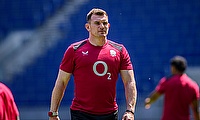
Former Sale Sharks and England hooker Tommy Taylor is now the Premiership club’s Skills and Performance Coach as well as a coach at National Two North side Sedgley Park.
He accepts that the brake foot can feel like a hindrance, but says the original motivation was player welfare.
“To be honest, I think it is a bit of a hindrance for the scrum, but there’s a reason for it,” Taylor told Talking Rugby Union.
“It came from work around axial loading; essentially the amount of load going through hookers’ necks, particularly during the bind call. A lot of weight was going through there, so it was introduced to reduce the axial-loading pressure on the front-rowers’ necks, primarily from a safety point of view.
“I think it has evolved into more of a stability and control issue now, essentially to depower the hit. That is why they brought it in and why they police it.”
Axial loading describes the compression travelling through the hooker’s head, neck and spine while the two packs are bound but not yet fully engaged.
The brake foot gives the hooker an additional point of support during the “crouch” and “bind” stages. Under Law 19, it can be adjusted while continuing to act as a brake, but should only be withdrawn after the referee calls “set”.
Taylor has also seen how refereeing priorities can change over the course of a season.
“They tend to focus on it heavily for the first two or three weeks of the season every year, and then it seems to drift off a little bit, similar to the strike,” he said.
“That said, they are definitely policing it more strictly this year. At Sharks, we have already had quite a bit of communication with the referees that it is going to be something they are looking out for, and you can see it in the international games already, with referees calling it when a hooker moves their foot.”
That pattern matters. If the law is essential to safety and stability, its enforcement should not depend on whether a competition is in its opening fortnight or its final months. Nor should a hooker have to guess whether a referee regards the brake foot as a priority that afternoon.
Matt Gallagher: “It will cause more harm than good”
Matt Gallagher, the former Sedgley Park hooker now playing in the Champ for Caldy, shares Jeremy Paul’s concern about what happens when the front foot remains planted.
“I think the new brake-foot rules will cause more harm than good for hookers,” Gallagher told TRU. “Keeping your foot planted forces you to lift yourself over the brake foot on the set in the scrum.”
That is the central contradiction World Rugby must resolve. The governing body regards the grounded foot as a source of stability before engagement. Gallagher believes that withdrawing it from a planted position forces the hooker upwards and over the foot at precisely the point when he needs to move safely into a balanced scrummaging position.
It does not necessarily follow that the law is wrong. The reduction of pre-engagement loading may outweigh the concern raised by Gallagher, Paul and other hookers. But the disagreement deserves a biomechanical answer, not merely a restatement that the law exists for safety.
How much axial loading has the brake foot removed? Does the position create different pressures as the hooker withdraws the foot on “set”? Do height, leg length and stance change the risk? And have the findings been tested across professional, semi-professional and community rugby?
Those are reasonable questions when current and former hookers describe the movement as unnatural or potentially harmful.
The hooker’s sprint start
Taylor’s approach is to coach the hooker into a position from which the foot can remain grounded without preventing an effective launch into the engagement.
“From a hooker’s point of view, if you are trying to gain some benefit from it, you probably need to be a little bit more forward in your set-up,” he explained.
“We talk a lot about shin angle. As a hooker, you want to be stable and in control of the scrum, but you also want to be in a position where you do not have to move your foot to get out of the blocks and generate your hit.
“A lot of that comes down to getting the front leg almost into a sprint stance. You want the shin angle to be at a level that allows you to get out of the blocks without being caught moving your foot. At the same time, you want the hips in the right position; not too high.”
The sprint-start comparison makes the problem easier to understand. A hooker may comply visibly by keeping the sole on the grass, yet still be poorly positioned to move. Another may adjust the foot in an attempt to obtain balance rather than gain an illegal advantage.
The referee has to judge the outcome, but the outcome is partly created by the two props on either side.
Why World Rugby is looking at the loosehead
World Rugby’s instruction that the loosehead keeps the right shoulder out is therefore not an obscure addition to the brake-foot discussion. It may be central to making the whole process work.
If the loosehead tucks his right shoulder in towards his own hooker, he removes the space into which the opposition tighthead should engage. The tighthead may then be forced across the scrum or towards the hooker, creating the angled pressure, head-on-head positioning and instability officials are trying to eliminate.
Taylor’s priorities closely match the renewed directive.
“The main thing I would want from my loosehead is stability,” he said. “I want him attacking the tighthead so that the tighthead does not come on the angle on the hooker.
“Coming off his right leg, it is really important for the loosehead to stay square and maintain pressure on the tighthead, so he does not go out and turn in. You do not want the loosehead to move out, turn and kick his hips out. For me, stability is the biggest priority.”
Taylor acknowledges the importance of maintaining a channel between the loosehead’s legs so the hooker can strike, although he says modern props’ set-up usually provides one.
Gallagher describes the relationship in similarly direct terms.
“From my loosehead, I expect our hips to be connected and for him to keep the opposition tighthead square,” he said. “That allows me to get both feet back and hook the ball quickly.”
These observations show why the three elements of World Rugby’s scrum brief must be refereed together. A grounded brake foot cannot guarantee stability if the loosehead closes the space and the opposing tighthead drives across the hooker. Equally, a loosehead with a visible shoulder cannot make the engagement safe if the hooker withdraws the brake before “set”.
The front row functions as a unit. Its laws must be interpreted in the same way.
What to watch in Turin and across the Nations Championship
South Africa’s meeting with Italy offers an immediate test of the new emphasis. Erasmus has selected Nche, Marx and Thomas du Toit to start, with Jan-Hendrik Wessels, Gerhard Steenekamp and Wilco Louw providing an entirely new front row from the bench.
Referee Eoghan Cross will therefore be overseeing one of the deepest and most technically scrutinised packs in international rugby.
The early engagements should tell us how strongly the directive will be applied. Are both hookers keeping their heels grounded until “set”? Can the referee see the right shoulders of both looseheads? Are the packs set temple-to-temple? When one side moves forward, is it travelling straight or rotating around an angle?
There is a wider officiating change too. TMOs have been told to intervene only on clear and obvious matters, within a short window, with their remit focused largely on foul play and try-scoring situations. That places even more responsibility on the referee and assistants to establish a reliable live picture of the scrum.
World Rugby has also announced a crackdown on hip-drop tackles, reinforced the requirement that tacklers do not drop to their knees before contact, and confirmed how 20-minute and permanent red cards will operate.
But the scrum may be the most revealing test of its attempt to align decision-making.
The ambition is sensible: protect the player, retain a genuine contest, improve continuity and make the game easier to follow. The danger is that an early flurry of technical free-kicks could simply replace scrum resets with another form of interruption.
World Rugby must therefore judge success by more than the number of brake-foot offences detected. The measure should be whether scrums become safer and more stable, with dominance achieved in a straight and recognisable contest.
The brake foot may ultimately be shown to make the scrum safer, but in a sport increasingly required to demonstrate that its welfare interventions are evidence-led, saying a law was introduced for safety cannot be the end of the conversation.
The question this November is whether World Rugby can make the law work as one connected piece of front-row mechanics, rather than asking the referee to find one visible foot and assuming the rest of the scrum must be safe.