Why Dublin Remains One of Rugby’s Great Cities
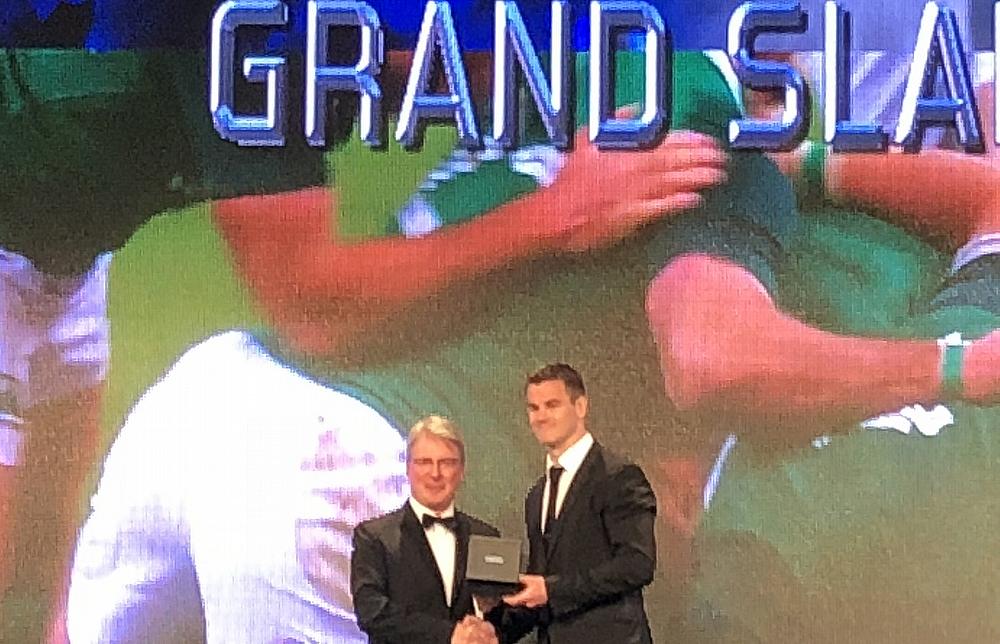
©Photos from Mark Ashcroft Collection
From Lansdowne Road to the RDS, few places celebrate the game quite like Ireland’s capital
When the announcement came that Wigan Warriors and Warrington Wolves would take Super League to Dublin next year, it immediately struck me as the perfect choice.
Some cities host rugby; whilst others live it. For me, Dublin has always belonged firmly in the second category.
For more than thirty years I’ve been fortunate enough to visit the city for business and rugby, and every trip has reinforced the same feeling. Whether you’re walking towards Lansdowne Road, enjoying breakfast in Ballsbridge, sharing a pint after the match or discussing rugby with former internationals, Dublin has a way of making visitors feel like they’re part of the occasion rather than simply spectators.
It is, quite simply, one of rugby’s great cities.
A Surprise Flight and My First Taste of Dublin
My own rugby story with Dublin began in the early 1990s.
I was working for Applied Chemicals, and one of my Irish colleagues managed to secure two tickets for Ireland against Scotland at the old Lansdowne Road. My travelling companion was my great friend Glyn Lloyd and that was an adventure almost ended before it began.
We rang Ryanair to book our flights from Manchester and were told they were completely full.
Disappointed, we resigned ourselves to missing out but then, later that same day, the telephone rang. Demand had been so strong that Ryanair had decided to put on an additional flight, and suddenly we had our seats. Looking back today, when flights between Britain and Ireland are almost routine, it feels extraordinary. Ryanair was still establishing itself, and simply adding another flight because people wanted to travel seemed wonderfully entrepreneurial.
Even the arrival has remained with me.
As we descended into Dublin we were offered a small tot of whisky, or perhaps it was brandy. I can’t remember which, but I do remember smiling and thinking that Ireland certainly knew how to welcome visitors.
There was just one small problem; we had organised the flights, but only just. However, we had completely forgotten to organise somewhere to stay. Eventually we found a hotel around forty minutes outside Dublin. Fortunately for the two of us, a weekend of Guinness and rugby has a remarkable habit of making logistical mistakes seem entirely insignificant.
Lansdowne Road
That first trip became the start of something much bigger, as over the years business frequently brought me to Dublin, and rugby usually gave me an excellent excuse to extend my stay.
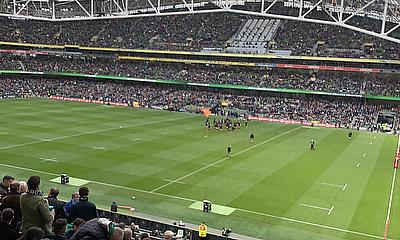
I watched the evolution from the old Lansdowne Road, one of rugby’s truly iconic grounds, to the magnificent Aviva Stadium that stands there today.
Many of those later visits came through the generosity of shareholders and friends within Dublin’s financial community, who introduced me to the famous Irish hospitality that visiting supporters speak about with such affection.
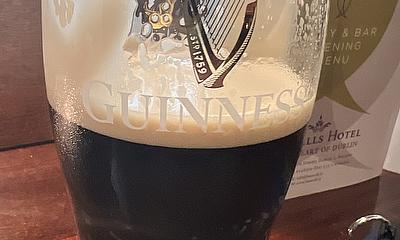
Those weekends developed their own familiar rhythm. Outstanding company and plenty of Guinness. When the game finished there were leisurely walks back through Ballsbridge towards the city centre, with supporters from both nations discussing every refereeing decision, every turnover and every missed opportunity.
What has always struck me is how naturally everyone mixes and how many bars there actually are to mix.
My Dublin Routine
Whenever business took me across to Ireland, I almost always stayed at the Herbert Park Hotel.
It became something of a home from home and from there, my Dublin routine almost wrote itself.
Breakfast at Roly’s Bistro, which still serves one of the finest breakfasts you’ll find anywhere. Then perhaps a stroll through Herbert Park before meetings and, if rugby was involved, a visit to The Bridge 1859. We’ll actually there didn’t need to be rugby; for me the solo visitor it was a pint, some food and a great people watch.
It is exactly the sort of pub every rugby city should possess; a place where rugby dominates naturally rather than artificially.
Its ownership tells its own story; The Bridge 1859 is backed by a remarkable group that includes former Ireland internationals Jamie Heaslip, Rob Kearney, Dave Kearney and Sean O’Brien, together with businessman Noel Anderson. You feel those rugby roots the moment you walk through the door.
Perhaps that’s why it has become such a favourite gathering place before and after matches at both the Aviva Stadium and the nearby RDS.
The RDS Arena: Leinster’s Fortress
It’s worth dwelling on the RDS itself, because it isn’t just a venue Dublin happens to have; it’s one of the reasons Dublin’s rugby culture runs as deep as it does.
Home to Leinster since the club’s earliest days, the RDS has built a reputation as one of the most intimidating away trips in European club rugby. Its tighter footprint compared to the Aviva means the crowd sits almost on top of the pitch, and visiting sides regularly talk about the noise and closeness of the RDS as a genuine factor in matches, in a way few other grounds in the URC or Champions Cup manage to replicate.
Leinster’s record there over the past two decades has been extraordinary; the province has built its status as one of the dominant forces in European rugby largely off the back of results delivered on that ground, backed by a fanbase that treats midweek Champions Cup nights with the same intensity as international weekends. Walking to the RDS on a European night, past the queues outside The Bridge and the pubs along Anglesea Road, is as good an illustration as any of what makes Dublin different: this isn’t a city that only turns up for the Aviva and the big international occasions. It fills a club ground on a Saturday afternoon in December just as readily.
That intensity is precisely why the ground works so well as a neutral, standalone occasion too. It has already hosted matches well beyond Leinster’s own fixture list, and the venue has just undergone a €52 million redevelopment, reopening in August 2026 under a new name, the Laya Arena, with capacity now standing at around 20,000-20,600.
Supporters can enjoy breakfast at Roly’s, stop for a pint at The Bridge and then take an easy stroll to what is now the Laya Arena.
That’s rugby done properly.
Conversations Beyond the Game
Some of my favourite Dublin memories have had very little to do with what happened during eighty minutes on the field. One afternoon I was introduced by performance synergist, Matt Jevon, to former Ireland international Bernard Jackman.
Bernard had recently retired from playing and was beginning to build the next chapter of his professional life. Like many supporters, I knew Bernard the player.
What impressed me was meeting Bernard the person and we spent time discussing leadership, business and perhaps most importantly, the challenge elite sportsmen face when their playing careers come to an end. I was tempted to offer him a job!
Professional rugby prepares players brilliantly for competition and doesn’t always prepare them for retirement or injury.
That conversation opened my eyes to the uncertainty, reinvention and resilience required once the boots are finally hung up. To this day it remains one of the most interesting rugby conversations I’ve ever had and much more pleasing is that it wasn’t simply a one-off meeting.
Both my son Max and I have stayed in regular contact with Bernard over the years, watching with admiration as he has developed an outstanding career as a coach, broadcaster and one of rugby’s most thoughtful commentators.
Once again, Dublin had delivered more than a rugby match, it had created a lasting friendship.
Rugby’s Real Strength
One story has always encapsulated Irish rugby for me.
Andy Farrell and Owen Farrell have spoken about walking into a Dublin pub after a match and simply being welcomed as though they were regulars rather than famous internationals; and one having just played for England with his Dad coaching Ireland. I first met the two of them in 2008 in a hotel in Coventry.
That story has always resonated in the press and especially for me, as it reflects everything I have experienced myself.
Irish rugby has managed to remain connected to its communities.
Everyone simply enjoys the game together.
That culture is perhaps Dublin’s greatest strength.
A City Built for Rugby — Now Rugby League Too
The decision to bring Wigan Warriors and Warrington Wolves to Dublin next year is about far more than staging a rugby league fixture overseas.
The fixture, dubbed the Battle for Dublin, is set for Saturday 24 April 2027, kicking off at 5.30pm, and will be the first-ever Super League match played in Ireland. Fittingly, it lands at the newly redeveloped Laya Arena, Leinster’s own ground, bringing rugby league to a stadium built and sustained by rugby union crowds. There’s history behind the fixture too: Warrington and Wigan first met in Dublin back in 1934 at Shelbourne Park, and Wigan returned to the city in 1995 to face Leeds in a Charity Shield match, so this isn’t entirely uncharted territory for the sport, even if a full Super League fixture is new.
It also continues a pattern for both clubs, who met in the first-ever Super League game played in the United States, in Las Vegas in 2025, while Wigan also faced Catalans Dragons in Paris more recently. Warrington chief executive Karl Fitzpatrick called Dublin “the perfect next destination” after Las Vegas and Paris, and Wigan’s Kris Radlinski framed the occasion as a chance to win over people “discovering rugby league for the first time” - language that could just as easily describe what Dublin has done for generations of rugby union visitors.
It recognises something those of us who have visited the city for years already understand.
Dublin knows and embraces rugby.
It totally seems ‘to get’ rugby supporters. Whether it is the Six Nations, European Cup weekends, Leinster at the RDS or now Super League at the Laya Arena, the city has an authenticity that cannot be manufactured.
Every supporter probably leaves with their own memories. I have shared just a few of my own.
Mine began with a surprise Ryanair phone call, an unbooked hotel and an unforgettable afternoon at Lansdowne Road. They have continued through countless visits to the Aviva, breakfasts at Roly’s, evenings in The Bridge, fascinating conversations with Bernard Jackman and friendships that have lasted decades.
That’s why I suspect Wigan and Warrington supporters will return home with stories that extend far beyond the scoreline.
Because that’s what Dublin does.
It reminds us that rugby has never simply been about what happens on the pitch.
At its best, it is about people, friendships, conversation and memories. There are few cities in world rugby create those memories quite like Dublin.
Photos from Mark Ashcroft Collection
From an original photoessay on Seniormash Reflection and in collaboration with the team at TalkingRugbyUnion.co.uk