The One Bright Light: Will Jordan and the Long Road Back to Eden Park

Will Jordan kept delivering even as the All Blacks endured a bruising series against South Africa.
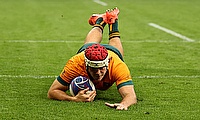
There's a particular kind of All Blacks fan who will have watched the wreckage of Baltimore through their fingers and still found themselves grinning at one moment: Will Jordan, right on the stroke of half-time, finishing off a 32-phase move that had no business succeeding against a defence as organised as South Africa's. It didn't change the outcome. Nothing was going to change the outcome by that point. But it was the kind of finish that reminds you why this man has become, almost by stealth, one of the most reliable try-scorers New Zealand rugby has produced this decade.
A quiet kind of brilliant
Jordan doesn't get talked about the way Beauden Barrett does, or Ardie Savea, or even his own back-three partner Damian McKenzie. There's no highlight-reel step, no showman's flourish. What there is, relentlessly, is the finish, the angle found half a second before anyone else sees it, the acceleration into space that looks unhurried right up until the moment he's five metres clear. Baltimore was his second try of the series; he'd also crossed in Soweto the week before, arriving at 55 minutes to put the All Blacks 17-12 up in a Test that would ultimately slip away in the final quarter. Two different results, two different countries, the same cold competence in front of the posts.
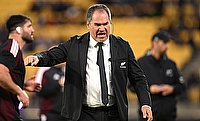
It's worth saying plainly: across four Tests in which his team lost three, Will Jordan was not the problem. The problems in Baltimore were the ones this column has already gone through; a set-piece that leaked penalties, a ten-minute technological farce that summed up the fixture's growing pains in the United States, a defence that couldn't find an answer for Kurt-Lee Arendse running from deep. Jordan simply did his job, at both ends, in every Test he played. If Dave Rennie is searching for a foundation stone to build the next twelve months around, he doesn't have to look very far.
The numbers behind the tour
Jordan's Rugby's Greatest Rivalry series alone tells its own story. He scored twice in the series opener at Ellis Park, added another in Soweto and finished with the Baltimore try right on half-time; four tries from the tour, and a series where he was one of the very few All Blacks to end on the front foot in every fixture. Against a Springboks side that had historically been his toughest opponent, no less: heading into the series he'd managed just three tries in ten previous Tests against South Africa. He leaves it with seven in fourteen.
Zoom out and the career picture is even more striking. Jordan became the All Blacks' all-time leading Test try-scorer back in July, when a hat-trick against Italy in Wellington took him past Doug Howlett's 49-try record; a mark that had stood for nearly two decades. The Baltimore try was his 55th in Test rugby, from just 61 appearances, a strike rate of very nearly a try a match that places him among the most prolific finishers the international game has ever seen. He already holds the All Blacks' single-match try record with five against Tonga in 2021, and his eight tries at the 2023 World Cup in France equalled the single-tournament record held jointly by Jonah Lomu and Bryan Habana. For a player who still doesn't get talked about with the same breathlessness as some of his teammates, those are extraordinary numbers to be quietly compiling in the background.
Now the ledger resets
Rugby has a way of demanding you move on before you're ready, and the All Blacks get almost no time to sit with what just happened in Baltimore. The Bledisloe Cup is next, and it arrives with its own weight this year: first Test at Eden Park on 10 October, the return leg at Sydney's Accor Stadium a week later on 17 October. New Zealand have held the Bledisloe since 2003, a run of dominance so long that entire rugby-watching childhoods have been lived without ever seeing Australia lift it. That streak isn't seriously threatened by one bad month against the world champions but "isn't seriously threatened" is not the same as "safe," and after three Springbok defeats on the spin, the margin for a sluggish start against the Wallabies has shrunk to roughly zero.
There's a reasonable case that this is exactly the fixture New Zealand rugby needs right now. Whatever else is unresolved about this current group; the halfback pecking order, the balance of the loose forwards, the captaincy question with Ardie Savea's return still to be managed, Australia represent a chance to win playing with some freedom again, rather than simply trying to stem a green-and-gold tide. Jordan, McKenzie and the back three should have space to work with against a Wallabies side still building its own depth ahead of a home World Cup in 2027, and if the Baltimore performance had one silver lining beyond the tries themselves, it's that the back three looked dangerous in the moments they got the ball moving.
Why this matters more than usual
None of this is only about pride, either, tempting as it is to file the Bledisloe under "traditional rivalry, business as usual." Both these teams are now firmly inside the four-year run-up to Australia 2027, and Rennie's side arrives at Eden Park having just lost a series to the reigning world champions for the second year running. Results against Australia won't erase that context, but they will start to answer the only question that actually matters this cycle: is this All Blacks team building toward something, or just weathering it? Will Jordan, on the evidence of the last month, is doing his part. Eden Park on 10 October will tell us a good deal about who's doing theirs.