Rassie Erasmus reflects on Greatest Rivalry Revival
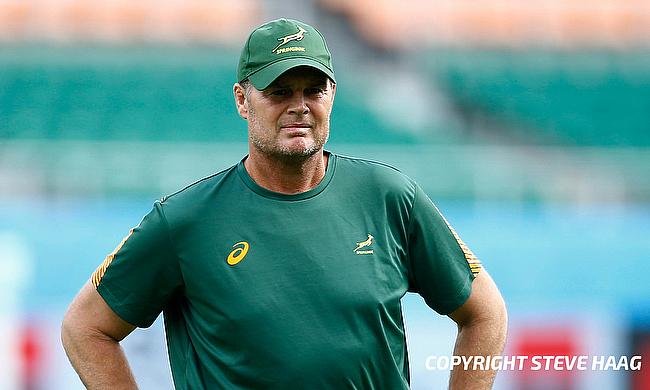
Rassie Erasmus reflects on South Africa’s 3-1 Greatest Rivalry series win over the All Blacks and the history behind the revived tour.
©Steve Haag
Rassie Erasmus has reflected on the significance of Rugby’s Greatest Rivalry after the Springboks completed a 3-1 series victory over the All Blacks, describing the revived tour format as an intense experience shaped by the long history between South Africa and New Zealand.
Springboks seal 3-1 Greatest Rivalry series win
South Africa secured the inaugural Rugby’s Greatest Rivalry title with a 43-28 victory over New Zealand at M&T Bank Stadium in Baltimore.
The Springboks recovered after losing the opening Test 33-16 at Ellis Park. They responded with a 33-26 victory in Cape Town before winning 29-24 at FNB Stadium in Soweto and completing the series triumph on neutral ground in the United States.
The 2026 series marked the first comparable multi-match All Blacks tour of South Africa since 1996, 30 years earlier.
Erasmus recalls All Blacks memories from youth
Erasmus said the concept carried particular meaning for him because of his memories of watching New Zealand rugby during South Africa’s period of international isolation.
He recalled following All Blacks players including Murray Mexted and remembered the controversial 1981 Springbok tour of New Zealand, which included the famous flour-bomb incident during the Auckland Test.
Erasmus said the Springbok coaching staff supported the Greatest Rivalry concept when it was proposed because of the history and emotion surrounding contests between the two nations.
“Firstly, when the chat started, growing up in the era where there wasn’t [much international] rugby, and we used to watch New Zealand and the Cavaliers tour and the flour bomb Tests.
“So for me, you know, my heroes, as I said many times, were Murray Mexted and those kind of guys. And when this tour came up on the radar, we supported it as a coaching team; we said, ‘yeah, for sure’.
1996 All Blacks tour remains part of rivalry history
The previous comparable All Blacks tour of South Africa came in 1996, when New Zealand won the three-Test series 2-1 to secure their first series victory on South African soil.
Erasmus said the 2026 series generated competitive tension throughout, both on and off the field, while also stressing that he did not want Australia or Argentina to be left behind as the touring concept develops.
“I mean, I’d hate it if Argentina and Australia get left behind somewhere because we don’t want that. They’ve always been good to us as well. But I mean, not because we won the thing; from the first Test match, every week was filled with adrenaline.
“It was competitive, off the field, and both media sides, you know, sort of backed their team and that’s great.”