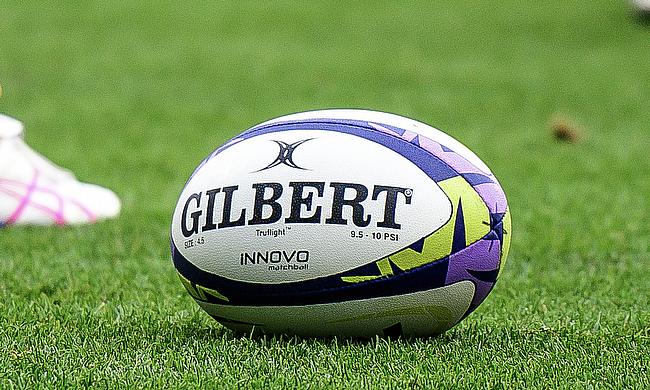
Your Deposit Limit Isn't What It Was: A Rugby Fan's Rule Check Before the 2027 Six Nations
Around this time last year, I set myself a £100 monthly limit on my betting account and felt genuinely grown-up about it.
Then a decent call on a National League Rugby game landed me £60. I withdrew it, and in my head that was £60 of headroom back for the following weekend.
Turns out that maths doesn't work any more. Since 30 September 2026, deposit limits on UK-licensed sites have been rewritten, and I'd wager plenty of fans haven't noticed.
With the Six Nations kicking off on Friday 5 February, when Ireland host England in Dublin, this felt like the right moment for a quick rule check before the first anthem.
What Actually Changed on 30 September
The headline is simple. Every site licensed by the Gambling Commission now has to offer you a gross deposit limit, and only that kind is allowed to be called a "deposit limit". It also has to sit at least as prominently as any other money limit, so it can't be tucked away three menus deep.
Gross means everything you pay in over the period counts. Withdrawals don't give you any room back. Net limits, which knock your withdrawals off your deposits, are still allowed as an extra, but they can't wear the "deposit limit" label any more.
Sites that had dropped gross limits had to bring them back, after the Commission pushed the deadline from 30 June to the end of September. All of this builds on the changes from 31 October 2025, when sites started prompting you to set a limit before your first deposit and reminding you to review your account at least every six months.
Think of it like a law clarification at the breakdown. Same game, but the wording now decides the outcome.
The Jane Test: Why Most of Us Get It Wrong
Here's a quiz the Commission itself used in research with Yonder. Jane sets a £200 monthly limit. She deposits £100 on day one, makes no more deposits, then withdraws £50 on day 14. How much more can she deposit this month?
Under a gross limit, the answer is £100. Under a net limit, it's £150, because her withdrawal is taken off what she's paid in.
If you got that wrong, you're in good company. Only 46% of people answered the gross version correctly, and just 43% got the net version right, with 458 people in each group. The Commission's own verdict was that comprehension of net limits was poor.
Would I have got it right before writing this? Probably not.
For rugby fans, the upshot is straightforward. Cashing out after a good Friday night in Dublin no longer reloads your limit for the rest of the month. Whatever you've paid in, you've paid in.
Setting a Limit That Survives Six Weekends of Rugby
The 2027 Six Nations runs from 5 February to 13 March: five rounds over six weekends, with a breather on 27–28 February. The danger weekends pick themselves. England host France on Sunday 14 February, Wales host England on 6 March, and Super Saturday on 13 March serves up Italy v Wales, England v Scotland and Ireland v France back to back.
Sites have to offer limits over 24 hours, seven days and a month, and if you set more than one, the tighter limit always applies. That's the trick. A weekly limit stops one big weekend eating the month's budget, while a monthly cap keeps the overall number honest.
Lowering a limit happens straight away. Raising one takes at least 24 hours, and you then have to confirm it again before it kicks in. I've actually come to see that as a feature. Nobody makes their best decisions the morning after a last-minute penalty miss.
Once you hit your limit, the site has to stop you depositing until the period restarts. One thing worth checking is whether your site's month runs from the 1st or from the day you set it. Don't assume.
Where the Rules Stop
There are two catches. First, limits are per account. A £30 weekly limit with one bookie doesn't follow you to a second app on your phone. The only tool that covers every online site licensed in Great Britain at once is GamStop.
Second, none of this travels offshore. If you've ever searched for Curacao Casinos UK, the sites you'll find run on a Curaçao licence rather than a Gambling Commission one, so the 30 September rules, the 24-hour cooling-off and GamStop simply don't apply there. That matters more than you might think. In a study of banking data published by the Commission on 28 October 2026, 91% of people making repeated payments to illegal operators also kept gambling with licensed ones, although the sample wasn't nationally representative.
People tend to stack sites rather than swap them. That's exactly why a limit at one site only goes so far.
Before the Anthems
So here's my plan before 5 February. Set a gross weekly limit, add a monthly cap on top, and treat the 24-hour wait as a friend rather than an obstacle.
It's also worth knowing that bonus terms on licensed sites have been tidied up since 19 January 2026. Wagering requirements are now capped at ten times, and offers that make you bet and play slots to qualify are banned.
If betting has stopped feeling like part of the fun, GamStop is free and lets you exclude yourself for six months, one year or five years. The National Gambling Helpline is on 0808 8020 133, free and open 24 hours a day, with live chat through GamCare, for anyone in England, Scotland and Wales. Gambling is for over-18s only.
A limit isn't there for the first minute of a Test. It's there for the 80th.