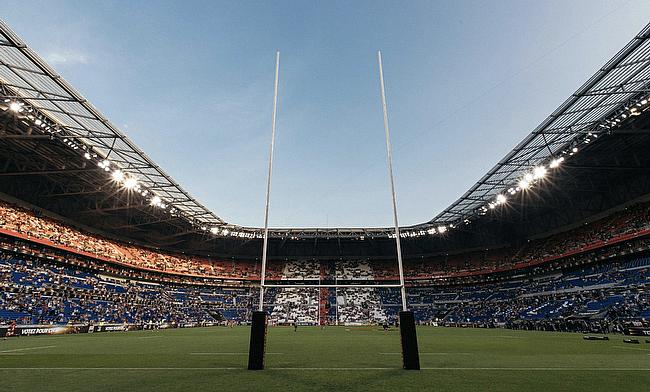
Top Rugby Nations to Watch in the Upcoming International Season
Top Rugby Nations to Watch in the 2026 International Season
The 2026 international season already has a harder edge than the usual July postcard tour. World Rugby’s new Nations Championship starts on 4 July, the rankings still have South Africa at No.1 ahead of New Zealand, Ireland, France, Argentina, and England, and the opening slate is strong enough to sort serious teams from merely interesting ones: New Zealand host France in Christchurch, Australia get Ireland in Sydney, South Africa face England at Ellis Park, and Argentina open against Scotland in Córdoba.
France arrives with numbers that still sting
France is impossible to ignore because the last six weeks gave them both form and proof. Fabien Galthié’s side retained the Six Nations title on 14 March with a 48-46 win over England at the Stade de France, sealed by Thomas Ramos from 43 meters, and Louis Bielle-Biarrey finished the championship with a record nine tries before being named Player of the Championship again on 2 April. Six Nations Rugby’s own numbers make the attack look even sharper: France scored 33 points or more in every match of the tournament, which had never been done before. There is a catch, and it matters. They conceded 130 points and 19 tries across the same five games, then fly into a July line of New Zealand in Christchurch, Italy in Wellington, and Ireland at Eden Park, which means style points will stop being enough the moment the defensive spacing gets tested in consecutive weeks.
South Africa still sets the standard
South Africa remains first in the rankings for a reason, and it is not nostalgia. Rassie Erasmus starts the season against the Barbarians at Nelson Mandela Bay Stadium on 20 June, then the Springboks go straight into the Nations Championship opener against England at Ellis Park on 4 July, with the rest of the year building toward another heavyweight run that still includes New Zealand on tour later in 2026. The useful detail with South Africa is always what happens after halftime. The bench changes the pace, the collision count rises, the maul starts asking different questions, and a match that looked manageable after 35 minutes tends to feel shorter by 60.
New Zealand has the most revealing month of anyone
No team has a cleaner July test set than New Zealand, and no team has a more revealing one. The All Blacks open the Nations Championship against France at One New Zealand Stadium in Christchurch on 4 July, then host Italy at SKY Stadium on 11 July and Ireland at Eden Park on 18 July, a three-match run that tells you almost everything about their depth, their tight-five balance, and whether their attack can stay patient when the line speed gets aggressive. The schedule matters because there is no easy pivot built into it. France will stress the defensive edge early, Italy will force accuracy around set-piece detail, and Ireland at Eden Park is the kind of final-week check that strips away lazy optimism if the breakdown work has been loose in the first two rounds.
Ireland still looks built for hard travel
Ireland sits third in the rankings and heads into July with the sort of travel block that usually sharpens serious sides rather than flattering them. Their Southern Series fixtures are fixed for Australia in Sydney on 4 July, Japan on 11 July, and New Zealand at Eden Park on 18 July, which is about as honest a three-week read as a coach could ask for in year one of a new competition. There is a reason Ireland remains relevant even after France finished above them in the Six Nations. The breakdown work stays exact, their shape in the first phase rarely gets rushed, and they still know how to turn a clean exit and one dominant carry into field position that looks more valuable by the minute. Around this sort of travel-heavy window, the application melbet fits naturally into the same phone routine as team sheets, kickoff reminders, and the late check to see if the market moved after a No.10 was ruled out.
Argentina has stopped feeling like a novelty
Argentina is now fifth in the rankings, which matters because the conversation has finally moved past surprise. Los Pumas host Scotland in Córdoba on 4 July, Wales in San Juan on 11 July, and England in Santiago del Estero on 18 July before turning toward South Africa at Vélez on 8 August and Australia in Jujuy and Mendoza later that month and in early September. That is not a decorative calendar; it is a statement one. The reason Argentina stays worth watching is not only the athletic line-breaking in the back three or the crowd energy in Córdoba.
England are messy, watchable, and still dangerous
England comes into the season ranked sixth, bruised by a dreadful Six Nations finish, but not broken. Reuters’ match report from Paris made the contradiction plain: Steve Borthwick’s side lost 48-46 to France in the final round, finished with only one win in the championship, yet still produced tries through Tom Roebuck, Ollie Sleightholme, Ollie Chessum twice, Luke Cowan-Dickie, Tommy Freeman, and Marcus Smith in a performance their own coach described afterward as a blueprint. That matters because England’s July route is not forgiving: South Africa in Johannesburg on 4 July, Fiji a week later, then Argentina in Santiago del Estero on 18 July. It gets even more interesting with Courtney Lawes now back in the selection conversation after coming out of international retirement. England is not stable. They are still worth watching because unstable teams sometimes tell the season the truth before the polished ones do.
Watch the nations that have to answer real questions
That is the simplest way to sort the field before July. France has to defend better without losing attack; South Africa has to prove the standard remains unreachable; New Zealand has to come through three hard home tests cleanly; Ireland has to survive the most demanding travel line; Argentina has to turn credibility into authority; and England has to show that Paris was not just noise. The upcoming international season does not need to be sold. It already has enough weight in the calendar, enough pressure in the fixtures, and enough unresolved rugby in it to keep the smart eyes busy well past the first whistle.