Springboks will not use Rassie Erasmus ban as excuse against France - Siya Kolisi
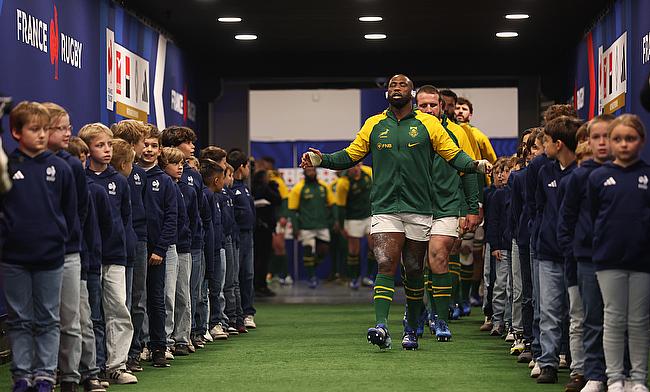
Siya Kolisi insists South Africa will not use Rassie Erasmus' six-match ban as an excuse ahead of the Nations Championship final
©Nations Championship / Getty
South Africa captain Siya Kolisi has admitted that head coach Rassie Erasmus' absence on matchdays has been difficult for the Springboks but insists the team will not use his suspension as an excuse ahead of Sunday's Nations Championship final against France.
Erasmus is serving a six-match ban imposed by World Rugby following his criticism of match officials after South Africa's 21-19 defeat to France in Paris earlier this month.
The suspension prevented Erasmus from attending the Springboks' subsequent Test against Ireland and will also keep him away from Allianz Stadium, Twickenham, when South Africa face France in the inaugural Nations Championship final on November 29.
Kolisi Refuses to Make Excuses
Speaking at the Nations Championship Finals launch at Twickenham, Kolisi acknowledged the challenges created by Erasmus' absence but emphasised the importance of focusing on preparations.
"There are things we can't control, so there's nothing we can do about it," Kolisi said.
"All we can do is go to training, prepare, watch videos and prepare our mindset for the game and also talk to each other."
Although Erasmus remains involved in training and preparations throughout the week, World Rugby's suspension prohibits him from attending the stadium, coaching or communicating with players and team management on matchdays.
"The coach is there with us at every single training session until we have to go and play the game, and that's it," Kolisi explained.
The Springboks captain stressed that the squad must take responsibility rather than allow the situation to affect their performance.
"We are not going to make excuses and say it's been a big thing that our head coach isn't at the stadium."
Erasmus Remains Involved in Preparations
Despite being absent on matchdays, Erasmus continues to play a central role in South Africa's preparations, with responsibility shared among the remaining coaching staff.
Kolisi acknowledged that losing the head coach's presence during matches, particularly his influence during half-time discussions, was a significant adjustment.
"We know it's tough; it's good to have him around, but now he's not there, and we have to make it work as a group."
The Springboks captain also highlighted the importance of collective leadership, explaining that the Springboks' coaching staff and senior players share responsibilities to ensure the team continues functioning effectively.