Remember the Geese: Eddie Jones, Martin Mere and a Lesson in Leadership
Sometimes a rugby story arrives remarkably close to home.
Talking Rugby Union is based in Rufford, a small Lancashire village sitting on the edge of
Martin Mere; one of Britain’s great wetland landscapes and today home to the Wildfowl & Wetlands Trust. For those of us who live around here, geese are part of the rhythm of the seasons. Thousands migrate through this corner of West Lancashire, their distinctive formations filling the skies above Martin Mere and the surrounding farmland. I have written exclusively about the mere on my Substack Channel.
So when Eddie Jones revealed that he has been showing his Japan players videos of geese flying in formation, it immediately caught my attention. Only Eddie, you might think. But perhaps there is rather more to it than that. And it also brought back a personal memory of the man himself.
More bizarrely, as I walked to my local pub, the Hesketh Arms on Thursday 13th August 2026; I looked overhead. Was there ever a clearer signal than to publish.
Eddie, Steve and an unexpected drink at the bar
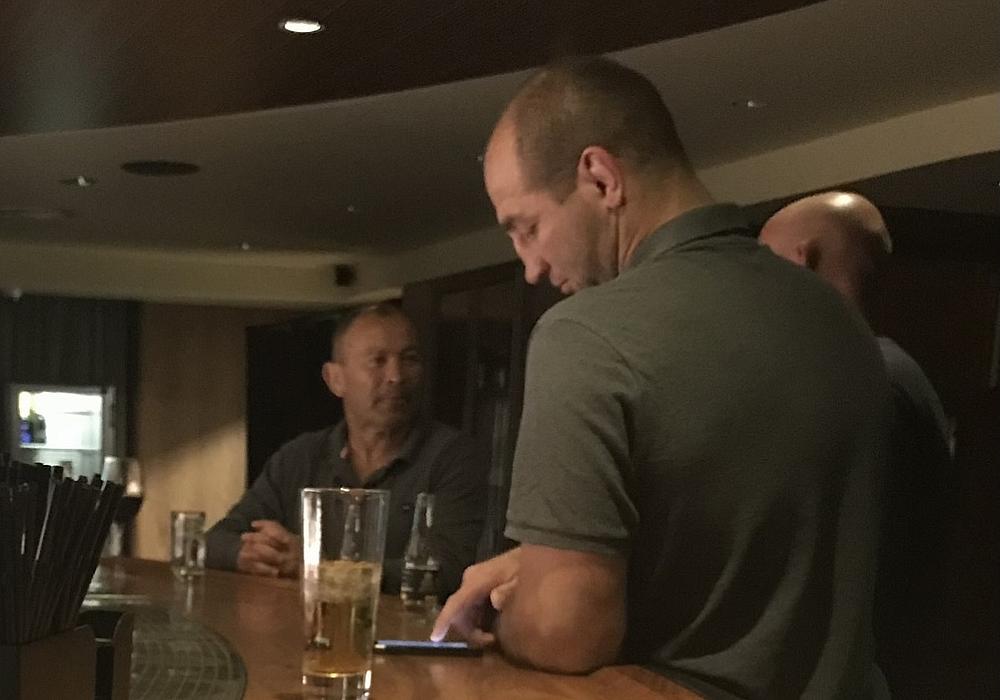
Back in 2017, I was at Syon House, not far from Twickenham. At the time, Eddie Jones was England head coach and Steve Borthwick was one of his key assistants. I was sitting at the bar when the pair walked in, and of all the places they could have chosen, they came and sat right next to me.
Eddie ordered a glass of red wine. Steve ordered a glass of water. For anyone who has subsequently followed the contrasting personalities and careers of the two men, somehow those choices seem wonderfully appropriate; there was Eddie, the Australian provocateur, conversationalist and perpetual seeker of the next idea, and beside him Borthwick, measured, analytical and disciplined.
Nine years later, Borthwick is England head coach and Jones is back coaching Japan. And Eddie is still finding different ways of making rugby players think. This time, his inspiration comes from the geese.
The ball-carrier is king
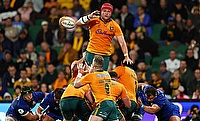
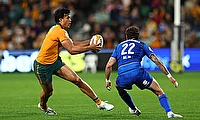
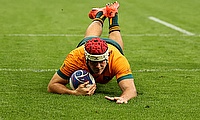
Japan narrowly lost 35-32 to Australia in Osaka in the opening match of their two-Test series, and Jones wasn’t satisfied with Japan’s support play. His response was not simply another session analysing attacking shapes or studying clips of the Wallabies. He showed his players geese.
“The reason we watch videos of geese is that the head of the flock is like the ball-carrier,” Jones explained. “The ball carrier is king, and then everyone else has got to follow after that.” Jones’ argument is that the birds travelling behind respond continually to the one in front: “The geese fly hundreds, thousands of miles in formation and they follow the one goose in front, and it’s the responsibility of the support players to respond to what the ballcarrier does.”
From Rufford, where those formations are such a familiar sight, the analogy makes perfect sense. Look upwards on the right autumn or winter day and you can see exactly what Jones means; one leads, the others respond, the formation adapts, and the collective keeps moving.
Perhaps rugby has become too complicated
There is something refreshing about the simplicity of the message. Modern international rugby is awash with information: GPS data, analysts, laptops, drones, detailed attacking structures, defensive systems, statistical models. Every movement can seemingly be measured. Yet some of the most important moments in rugby remain gloriously unpredictable.
A centre suddenly breaks the gain line. A prop gets an arm free in the tackle. A scrum-half spots a defender looking the wrong way. A winger steps inside rather than outside. For perhaps two seconds, the carefully designed structure disappears, and the opportunity belongs to whichever team reacts first.
That is where Jones’ geese come in. Don’t support the ball-carrier simply because the playbook says you should be standing somewhere; watch him, read him, react to him, follow him. The ball-carrier becomes the leader of the flock. And as Brian Ashton taught, a ball-carrier looking for space will be lethal.
Sir Alex got there first
There is another wonderful connection. Eddie Jones isn’t the first great coach to use migrating geese as a sporting metaphor; Sir Alex Ferguson was fascinated by them too. During his extraordinary years at Manchester United, Ferguson would sometimes stop training and point towards geese flying overhead in their familiar V formation.
His interpretation was slightly different from Jones’. Ferguson focused on shared leadership: during a long migration, the same bird doesn’t remain at the front throughout the journey, and different members of the flock take responsibility for leading. His message to his players was that leadership should work in much the same way.
Ferguson later took the story into another sport. Ahead of the 2014 Ryder Cup at
Gleneagles, European captain Paul McGinley invited Ferguson to speak to his team, and “remember the geese” became part of the language of the European camp. Europe went on to win convincingly, and, almost too perfectly, McGinley later recalled that as Europe celebrated their victory, a V formation of geese flew over the clubhouse.
Two coaches, two interpretations
There is something intriguing about two hugely successful coaches seeing the same natural phenomenon and extracting different lessons from it. For Ferguson, it was share the leadership. For Jones, it’s follow the leader. They aren’t contradictory, in fact, put them together and you have a pretty good description of rugby.
The leader changes continually. At one moment it might be the captain making a decision. Seconds later it’s the fly-half calling the play. Then a prop carries through contact. A winger makes a break, and suddenly that winger is leading. Everybody else’s responsibility changes: follow him, support him, keep the formation alive. Then someone else takes over.
From Martin Mere to Townsville
Jones made five changes for Japan’s second meeting with Australia in Townsville, including selecting university student Yoshitaka Yazaki on the wing and handing Shunsuke Uenobo his first start at centre. After coming within three points in Osaka, Japan clearly believe they can trouble Australia again, and Jones says his side have set themselves the challenge of “really taking it to Australia”.
Perhaps the most interesting thing to watch won’t be a set-piece move or a particular tactical kicking strategy, but what happens when Japan break the Australian defensive line. Does the ball-carrier find himself isolated? Or do two or three Japanese shirts immediately appear alongside him? Because if they do, those videos have served their purpose.
Having seen the game, it is difficult to make a conclusion.
Back here in Rufford, the geese will continue arriving and departing from Martin Mere as they have done for generations. Local farmers posting on Facebook on Sunday 16th August, that there were signs of autumn, with pink footed geese overhead.
Most people watching them probably won’t see a rugby attacking system. Eddie Jones does. And thinking back to that unexpected evening at Syon House in 2017; Eddie with his red wine, Steve Borthwick with his water, perhaps I shouldn’t be remotely surprised.
Nine years later, Eddie is still Eddie. Still curious. Still looking outside rugby for ideas. Still trying to make players see the game differently. And this time, from our little corner of West Lancashire, we know exactly where he’s coming from.
Remember the geese.
SeniorMash Reflections collaborating with TalkingRugbyUnion.co.uk
More about Martin Mere on www.markashcroft.substack.com