Me, My WHOOP and Big Sam
There are two Big Sams in this story. One managed Bolton Wanderers. The other played rugby with my son.
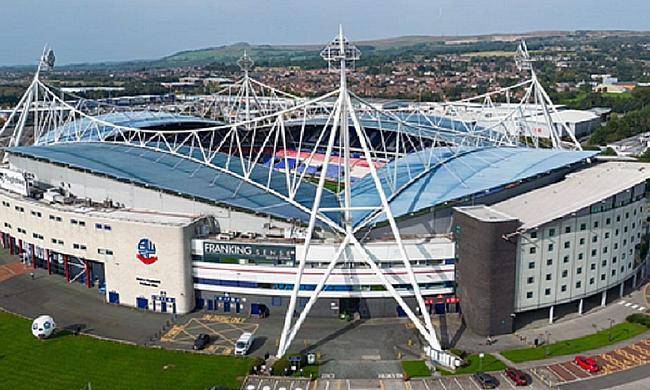
Reebok Stadium; Home of Bolton Wanderers
More than 20 years later, one of them is still playing and I am the one wearing the WHOOP.
Every couple of weeks, I drive past the stadium I will always call the Reebok.
I know it isn’t called that anymore.
Stadiums, like rugby competitions, appear to change their names with increasing regularity. But in my head, it remains the Reebok Stadium, the remarkable new home Bolton Wanderers moved into in the late 1990s, and the place where, for a period, something rather extraordinary happened.
Usually, I am driving past on my way to watch Sedgley Park.
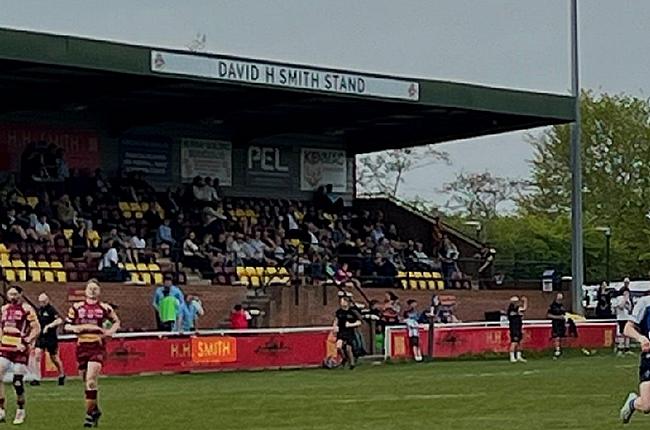
Park Lane: Home of Sedgley Park Tigers
And somewhere on my wrist, my WHOOP is quietly collecting information.
Heart rate.
Strain.
Recovery.
Sleep.
Probably information about me that I don’t particularly want to know.
Recently, as the old Reebok came into view, I had a thought.
How would Big Sam cope with a WHOOP? And what would my Dad think; both about WHOOP and the new stadium name. He loved going to the Reebok but Burnden Park was etched in his memory [see the Story of the Rufford Spud for more]
Although, in my rugby life, that question about Big Sam requires some clarification.
Because I have known two Big Sams.
THE OTHER BIG SAM
When my son Max was making his way through the rugby union pathway, we spent a considerable amount of time standing on touchlines.
Lancashire Under-16s.
Lancashire Under-18s.
The North of England.
Eventually, for Max, the Bath Rugby Academy and the University of Bath.
It was an exciting journey for the players. For the parents, it was also a journey involving a lot of driving, a lot of waiting around and an increasingly detailed knowledge of rugby club car parks.
One of Max’s contemporaries was a centre called Sam Russell. To us parents on the touchline, he was Big Sam. Some nicknames require imagination. This one didn’t.
Fast forward more than 20 years. Six months or so ago, I was at Preston Grasshoppers watching them play Otley. And there, still playing in the centres, was Sam Russell. And what was everybody still calling him? Big Sam. Some things in sport change beyond recognition. Some things don’t change at all.
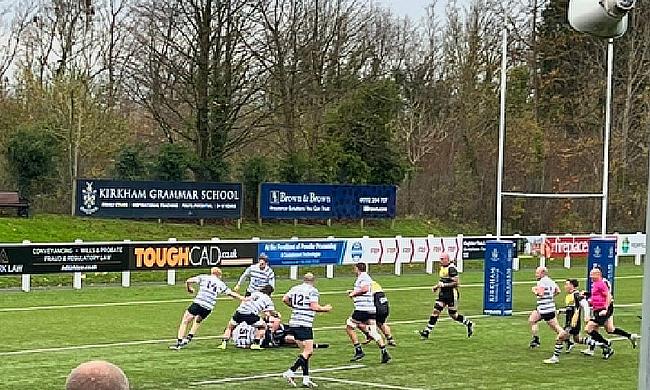
And that is how, while driving past the old Reebok on my way to watch National League rugby, I found myself thinking about two Big Sams. One was still playing rugby. The other had once turned Bolton Wanderers into one of the most fascinating sporting experiments in English football. And I was the one wearing the WHOOP.
BIG SAM, THE FUTURIST
The public image of Sam Allardyce was always wonderfully old school. Big coat. Big personality. Big centre-forward. Set pieces. Second balls. A man who looked as though he’d be happier discussing the importance of winning the first header than heart-rate variability.
Except that image never told the whole story. Because while English football was busy constructing the caricature of Big Sam, Allardyce was quietly becoming one of the game’s great early adopters.
Sports science. Performance analysis. Nutrition. Psychology. Heart-rate monitoring. Individual training programmes. Recovery. Data.
Bolton were exploring ideas that would eventually become completely normal across elite sport. Former players have recalled using heart-rate monitors in training and being exposed to approaches to nutrition and recovery that were far from standard in English football at the time. Some of this was happening in the early 2000s. The iPhone hadn’t even been invented.
Today, I wake up, look at my wrist and receive a recovery score before I have made a cup of tea. Twenty years ago, Sam Allardyce was already asking many of the same basic questions.
How hard has this athlete worked? How well has he recovered? What should he do today? And, perhaps most importantly, should every athlete be treated in exactly the same way?
Allardyce’s answer to the last question was clearly no. And that might have been one of the secrets of Bolton Wanderers.
THE BOLTON LABORATORY
Just look at some of the names. Jay-Jay Okocha. Youri Djorkaeff.
Fernando Hierro. Iván Campo. Nicolas Anelka. Gary Speed. Stelios Giannakopoulos. Kevin Davies. And, for a short but important period, Fredi Bobic.
It sometimes looked less like a Premier League squad and more like somebody had been playing Championship Manager after three pints. Yet somehow, it worked. Bolton could not compete financially with Manchester United, Arsenal or the other giants of the Premier League. So Allardyce had to find another way. Find footballers others had overlooked. Find experienced players whose careers appeared to be winding down. Find players who needed rebuilding. Then create an environment capable of getting something more from them.
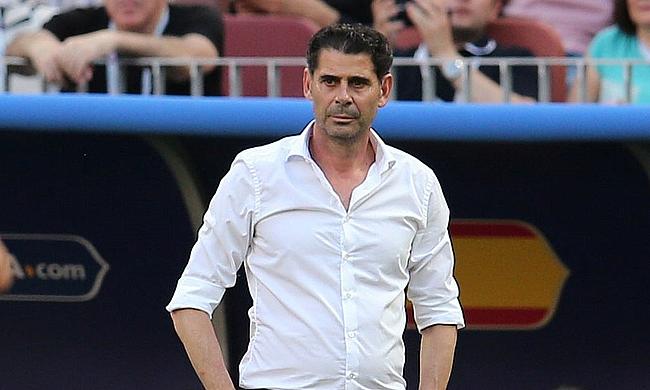
Fernando Hierro arrived at Bolton at 36. The question was not whether a 36-year-old former Real Madrid captain should train exactly like a 22 year-old. The question was how you got the maximum possible performance from Fernando Hierro. That sounds obvious now. It was less obvious then. And it sounds remarkably like the world of modern wearable technology. Individual baselines.
Individual strain. Individual recovery. The athlete, rather than simply the team.
THE REBIRTH OF FREDI BOBIC
I remember another signing particularly well. Fredi Bobic. A German international centreforward who arrived at Bolton on loan from Borussia Dortmund in January 2002. His career had stalled. He was 30. He was not playing regularly.
Then he came to Bolton. Bobic scored four goals during his short spell, including a hugely important hat-trick against Ipswich Town as Bolton fought to stay in the Premier League. I just loved sitting in the Whites Hotel hospitality suite with my Dad and Max watching him play and he helped them survive. He then returned to Germany, joined Hannover 96, scored 14 Bundesliga goals and, after four years away from international football, earned a recall to the German national team.
The recall did not come directly because of four months at Bolton. But the revival had begun.
That was what Allardyce’s Bolton did so well. It looked at footballers whose careers appeared to be travelling in the wrong direction and asked a different question. What is still there? That question sits at the heart of sports science. Not what should a 30-year-old striker be able to do? What can this 30-year-old striker do? Not how much training should a professional footballer complete? How much training does this particular professional footballer need? Not whether Fernando Hierro is too old. Whether Fernando Hierro is ready to play on Saturday.
Give Big Sam a WHOOP and I suspect he would have disappeared into an office for three days.
THE TWO BIG SAMS
Which brings me back to Sam Russell.
When Max and Sam were progressing through the rugby pathway, sports science was already becoming increasingly important. Academies were becoming more sophisticated. Strength and conditioning was developing. Players were being measured, monitored and analysed in ways that would have been unimaginable to previous generations. Heading off to the south of France for the Lancashire Under 18’s, it was Big Sam front and centre. It was not Big Sam or Josh Beaumont (youngest son of Sir Bill Beaumont) who gave the thank you speech, it was Gareth Harris. A genuine moment after a game that erupted with a mass brawl featuring players and the crowd. My thanks to team manager, Howard Hughes for shielding my wife.
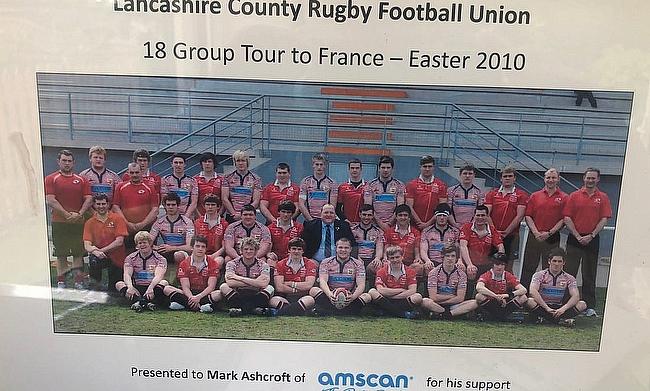
More than 20 years later, Sam is still playing. Still in the centres. Still Big Sam. And that, in itself, says something. Longevity in rugby is not straightforward. Football has physical demands. Rugby has physical demands and then, every few seconds, somebody tries to run through you.
A WHOOP can tell you about cardiovascular strain. It can monitor heart rate. It can analyse sleep and recovery. But can it truly understand what it feels like to spend Saturday afternoon tackling people? Can it distinguish between a gentle jog and having a large National League forward arriving directly into your ribcage?
I would like to see the notification. “We have detected unusual levels of being run over.” Or perhaps: “Your recovery may be affected by repeated collisions with Otley’s back row.”
That is where rugby presents a fascinating challenge for the world of wearables. The strain of the game is not simply the distance travelled or the heart rate reached. It is collision. Contact. Impact. The accumulated physical cost of tackling, carrying and clearing rucks.
And at National League level, there is another dimension. Many players are combining serious rugby with jobs, businesses, studies and families. The recovery question does not end when they leave the changing room. Somebody may spend Saturday afternoon playing National League rugby and Monday morning sitting in an office, teaching a class, running a business or working on a building site. Imagine playing for Lymm this season; they are in Cheshire, but the RFU have placed them in National 2 West. Enjoy those trips to Devon and Cornwall - I am sure those players wearing WHOOP will get some odd inputs.
Sam Allardyce wanted to know whether Fernando Hierro was ready for another Premier League match. A National League rugby player might want to know whether he has recovered from Saturday’s collisions before going back to work on Monday. I simply want to know whether watching Sedgley Park with a pint should really count as strain.
WHEN BIG SAM BECAME THE EXPERIMENT
Years after leaving Bolton, Allardyce took the idea of monitoring performance one step further. He became the experiment. While managing Sunderland, his own heart rate was reportedly monitored around a Premier League match for a newspaper feature examining stress.
It was the perfect Big Sam story. The man who had spent years wanting more information about the bodies and minds of his players was now producing data of his own. His heart rate was rising before kick-off. Which raises the obvious question. What on earth would a WHOOP have made of him?
Imagine it. Bolton defending a one-goal lead. Kevin Davies introducing himself enthusiastically to another centre-half. The opposition win a free-kick.
Big Sam begins chewing his gum at a rate that should probably be classified as cardiovascular exercise. STRAIN 16.7. The referee makes a questionable decision. 17.4. Sam turns towards the fourth official. 18.1. Bolton score a 93rd-minute winner from a set piece.
19.3.
WHOOP immediately sends a notification. “You have exceeded your recommended strain target for today.”
Sam ignores it. Obviously. Because if there is one thing I have learned since acquiring a WHOOP, it is that technology does not always understand sport.
THE MAN WHO WOULD HAVE LOVED THE DASHBOARD
The truth is that Sam Allardyce would not have treated WHOOP as a toy. He would have wanted the data. All of it. Players. Coaches. Physios. Possibly the chairman.
I can imagine the Monday morning meeting. “Okocha. Green recovery.
Excellent. Nolan. Amber. Campo. Red. Who had a beer?” Silence. WHOOP had already grassed them up.
And then there would have been Jay-Jay Okocha. How does a wearable measure genius? Sleep: poor. Recovery: 38%.
Recommended strain: low. Then he nutmegs three players and scores from 30 yards.
WHOOP “This activity appears inconsistent with your recovery.”
Exactly. Data can tell us a great deal. It cannot tell us everything. Perhaps Sam Allardyce understood that too. The science was there to help the athlete. Not replace the athlete.
SO WHICH BIG SAM WOULD COPE BEST?
I started with a simple question. How would Big Sam cope with a WHOOP? The answer depends on which Big Sam.
Sam Allardyce would dominate it. Within a week, he would understand the dashboard better than I do. Within a month, every player would have one. Within six months, Bolton would probably have employed a Head of WHOOP Strategy. And by the end of the season, Sam would be sitting in a press conference explaining that Bolton’s expected recovery score was significantly better than Manchester United’s.
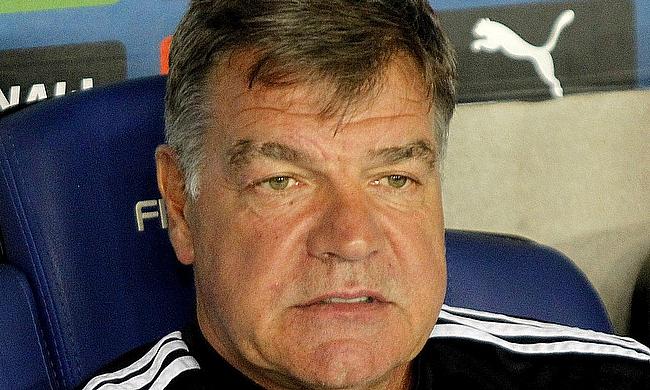
Sam Russell? After more than two decades of rugby, I suspect he might simply look at the numbers, look at the bruises, and trust his own body.
And me? I will continue driving past the stadium I will always call the Reebok. On towards Sedgley Park. WHOOP on my wrist. A device capable of measuring my heart rate, sleep, recovery and strain. Unable, as yet, to fully understand the physiological demands of standing beside a rugby pitch, worrying about the score and drinking a pint.
Somewhere, I can imagine Sam Allardyce looking at my dashboard.
Shaking his head. Chewing his gum. “Mark, the data isn’t the problem. The problem is what you’re doing with it.”
Perhaps the real question was never how Big Sam would cope with a WHOOP. It was always: which Big Sam?
Photos courtesy of Mark Ashcroft and Shutterstock. Seniormash Reflections collaborating with TalkingRugbyUnion.co.uk with this article originally published on Substack.
