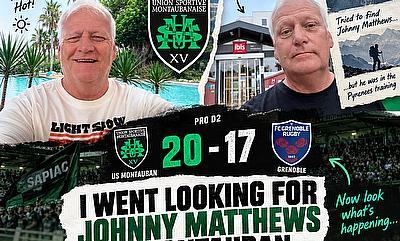
I Went Looking for Johnny Matthews in Montauban. He Was in the Pyrenees.
A hot few days in south-west France, an unsuccessful attempt to find a former Sedgley Park hooker and a month later, US Montauban are reminding everyone how quickly rugby stories can change.
There are occasions when a rugby story starts long before you realise there is a story.
Mine started in Montauban in early August.
It was hot; blinkin hot.
The sort of south-west French heat where sightseeing becomes less about ticking off historic buildings and rather more about calculating the distance to the next café, patch of shade or cold drink.
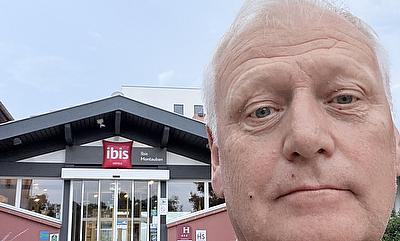
Karen and I were staying at the Ibis, and as I normally do when travelling through rugby country, I started looking around.
Montauban is that sort of place. You don’t have to go very far before rugby announces itself.
This is not Toulouse, Bordeaux or one of the great international destinations of French rugby. Montauban is a city of around 60,000 people where the rugby club feels woven into the identity of the place.
And that, increasingly, is what fascinates me about Pro D2.
But I also had a more specific mission.
I was trying to find Johnny Matthews for our dog, Mollie, his number one fan.
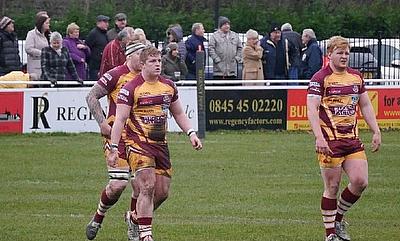
From Sedgley Park to Montauban
Johnny is one of those players whose career Talking Rugby Union has been able to watch from a very different starting point.
Long before Glasgow Warriors, Scotland and now France, there was Sedgley Park. That matters to me and Mollie.
TRU has always been interested in the routes players take rather than simply where they eventually arrive.
And Matthews’ route is a wonderful one.
So, finding myself in Montauban, I thought there might be an opportunity to catch up with him.
There was one problem, he wasn’t there. Johnny and his new team-mates were away doing their pre-season work in the Pyrenees.
My carefully conceived piece of investigative rugby journalism therefore became a walk around Montauban followed by a return to the Ibis.
Sometimes you get the interview.
Sometimes the hooker is up a mountain.
But the visit left an impression and now, barely a month later, I find myself looking at Montauban again.
Only this time the temperature, quite literally, hasn’t changed much.
Friday night’s game against Grenoble was played in temperatures around 35C.
I knew exactly what that felt like.
Now look what’s happening
Montauban have started their return to Pro D2 with two victories from two matches.
First came a 25-21 victory at Nevers.
Then on Friday evening Grenoble came to Stade Sapiac.
And not just any Grenoble.
These were the opponents Montauban defeated 24-19 in the 2025 Pro D2 final to complete their remarkable promotion to the Top 14.
Montauban subsequently discovered just how enormous the jump to France’s top division can be.
Now they’re back and on Friday it felt like an early opportunity to discover what that experience had left behind.
For 15 minutes, the answer appeared to be: quite a few scars.
Grenoble were magnificent out of the blocks.
Marc Palmier kicked an early penalty, Otunuku Pauta scored after four minutes and Palmier added two more penalties.
Montauban 0 Grenoble 14.
At Sapiac.
Not quite the homecoming anyone had envisaged.
Manager Sébastien Tillous-Borde subsequently described Montauban’s opening as “catastrophic”. There was, he said, insufficient energy and engagement.
Then Montauban remembered something.
They remembered how to fight.
Twenty unanswered points
Josua Vici scored after 18 minutes.
Enzo Hervé converted and later added a penalty.
Suddenly 0-14 had become 10-14 at half-time.
Then Tillous-Borde did something that caught my attention, he changed three forwards at the interval.
Daniel Brennan went off.
Christopher Vaotoa went off.
Lewis Bean went off.
Leo Aouf, Sidi Mohamed Diallo and Noa-Isaac Kanika-Bilonda came on.
Tillous-Borde described the intention behind the changes with that wonderfully descriptive French expression:
“Un électrochoc.”
A shock to the system and it worked.
Stéphane Ahmed scored shortly after the restart, Hervé converted and then kicked another penalty.
From 0-14 down, Montauban were suddenly 20-14 ahead.
Grenoble’s only subsequent points came from an 80th-minute Thomas Alary penalty.
Final score:
Montauban 20 Grenoble 17.
Two games.
Two victories.
Eight league points.
Now look what’s happening.
And Johnny was right in the middle of it
This is where my failed August rendezvous becomes even more interesting.
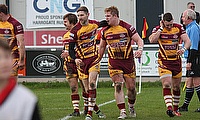
Johnny Matthews started at hooker.
Alongside him at loosehead was Daniel Brennan, born in France but an international age-grade player.
Karl Wilkins, formerly of Northampton Saints, Bedford and Béziers, captained Montauban.
Lewis Bean, another player with Northampton, Bedford and Glasgow connections, started in the second row.
Joey Walton, formerly of Exeter Chiefs, was at inside centre.
This is precisely why I think British rugby supporters should start paying more attention to Pro D2.
These aren’t British players disappearing into some rugby outpost.
They are becoming part of one of the most fascinating professional competitions in Europe.
Matthews was involved until the 65th minute, when an injury ended his evening. Shortly before that, Montauban had come agonisingly close to the score which would probably have settled the match, but his final pass went forward.
And there was something else I noticed when looking through the statistics afterwards.
Winning without being perfect
Montauban didn’t win because they dominated every aspect of the game.
Far from it.
They had 54 per cent possession and 55 per cent territory, but their scrum experienced considerable difficulty.
Of four scrums awarded to Montauban, they lost three.
Grenoble won four of their six.
Montauban also had opportunities to put the game away and failed to take them.
Grenoble played part of the second half short-handed following Cameron Holt’s yellow card and Raffaele Costa Storti’s red, yet the home side still couldn’t completely escape.
At 20-17, the final whistle probably brought as much relief as celebration.
But perhaps that is the point.
Tillous-Borde said something afterwards which struck me.
He looked back to the mentality of the Montauban side that had previously succeeded in Pro D2 and suggested that they had won matches through mental strength.
He sees something similar developing again.
That’s worth remembering.
Professional sport spends enormous amounts of time analysing systems, structures, budgets and performance data.
Sometimes teams simply rediscover how to win.
The view from the Ibis
And that’s what I love about travelling and writing.
In early August, Montauban was simply another stop on our journey.
We stayed at the Ibis.
We walked the city and I absorbed a little of the place.
I went looking for a rugby player who wasn’t there because he was sweating his way through pre-season training somewhere in the Pyrenees.
Nothing particularly remarkable happened.
Except now it feels differen because when I watch Montauban, I’m no longer looking at a name on a Pro D2 results page.
I can picture the streets.
I remember the heat.
I understand a little more about where Stade Sapiac sits within its community and I have a reason to look for the number two shirt.
That’s one of the pleasures of rugby.
Follow the game for long enough and seemingly unconnected experiences begin joining themselves together.
Johnny Matthews’ journey from Sedgley Park to Glasgow and Scotland was already interesting.
Now he’s living in Montauban and playing in Pro D2.
Montauban’s own journey has been even more extraordinary: promotion, a desperately difficult Top 14 experience, relegation and now two victories from their opening two matches back in the second tier.
And Grenoble?
Remarkably, the team Montauban beat to go up are still trying to find their own way out.
I went to Montauban in August looking for Johnny Matthews.
I didn’t find him.
But I might just have found another rugby story worth following.






![Pro D2 Round Two: What to Watch on Thursday and Friday [3rd & 4th September]](/images/c-042912/001.jpg)