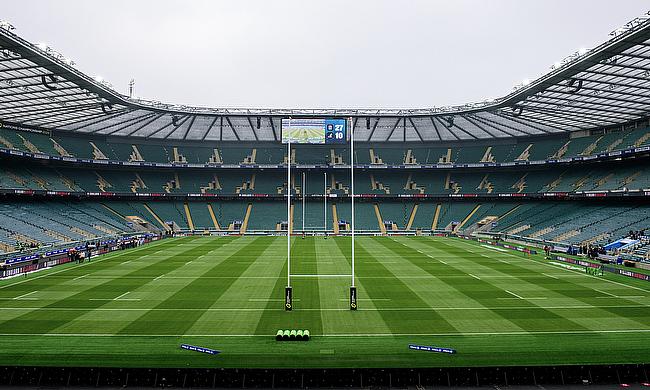
From Kings Park to Loftus Versfeld: South Africa’s URC stadiums and the sponsors behind their names
From Kings Park to Loftus Versfeld: South Africa’s URC stadiums and the sponsors behind their names
South Africa’s four United Rugby Championship franchises play in stadiums that have hosted a World Cup semi-final, a World Cup final and decades of Test rugby. Three of the four grounds have also changed their names several times, as naming rights became one of the main ways South African rugby funds itself.
The clearest example is in Durban, where the Sharks’ home has carried the name of a local bookmaker since January 2022. For South African fans, the link between the stadium and the operator goes beyond the signage. Anyone who wants to enter a promo code on Hollywoodbets in South Africa can claim a no-deposit R25 free bet and 50 free spins. The free bet has to be played once at minimum odds of 5/10, which is low enough to cover most home favourites in a URC round.
Hollywoodbets Kings Park: the Sharks in Durban
Kings Park opened in 1958 with room for 12,000 spectators. It was rebuilt in time for the 1995 Rugby World Cup, and on 17 June that year it staged one of the most famous matches in the tournament’s history. The semi-final between South Africa and France was delayed by more than an hour while standing water was cleared from the pitch. Had it been called off, South Africa would have gone out on disciplinary record. Ruben Kruger scored the only try, and the Springboks won 19-15.
The ground’s record attendance, 57,000, came for South Africa against New Zealand in the 2002 Tri Nations. Since 2000 it has been known in turn as ABSA Stadium, Mr Price Kings Park, Growthpoint Kings Park and Jonsson Kings Park. The Hollywoodbets name took effect on 1 January 2022 under a three-year deal. In August 2023 the Durban-based company replaced Cell C as the Sharks’ title sponsor, with its logo on the front and back of the shirt. Wet weather is still a feature of the ground: when the All Blacks toured South Africa in August 2026, New Zealand thrashed the Sharks 54-0 in Durban in atrocious conditions.
Loftus Versfeld: the Bulls in Pretoria
Loftus Versfeld is the exception. Work on the ground began in 1906, and it opened in 1923 as the Eastern Sports Ground. Robert Loftus Owen Versfeld, the founder of organised sport in Pretoria, died in May 1932, and the local union renamed the ground in his honour. Sponsors changed the name twice: it was Minolta Loftus from 1998 to 2003, then Securicor Loftus from 2003. On 1 September 2005, the sponsor of the day, Vodacom, restored the original name.
The stadium holds 51,762 and has staged Tests against New Zealand, Australia, England and Ireland, as well as matches at the 2010 FIFA World Cup. For the Bulls, the name has become part of the club’s identity, and no naming-rights deal has replaced it since.
Ellis Park: the Lions in Johannesburg
Ellis Park opened in June 1928 with a Test against the All Blacks. Its place in rugby history was fixed on 24 June 1995, when South Africa beat New Zealand 15-12 after extra time in the World Cup final, in front of 65,000 spectators.
The Johannesburg ground has also been through several commercial names. It was Coca-Cola Park from 2008 to 2012 and Emirates Airline Park from 2015 to June 2025, and a new five-year naming-rights deal began in July 2026. With a capacity of 62,567, it is the largest of the four South African URC venues.
DHL Stadium: the Stormers in Cape Town
The Stormers made the biggest move. In 2021 they left Newlands, the home of Western Province rugby for more than a century, for Cape Town Stadium, which the city built for the 2010 World Cup. The ground took a new name the same year: Cape Town Stadium became DHL Stadium on 1 June 2021 under a multi-year naming-rights partnership with the logistics company.
The refurbished stadium seats 62,000. The move gave the Stormers a modern venue in Green Point, close to the city centre and the V&A Waterfront, and a capacity far beyond anything Newlands could offer.
Naming rights at South Africa’s four URC grounds
The four grounds reflect four different approaches. Pretoria has kept a name that dates back to 1932. Durban and Johannesburg treat naming rights as a regular source of income and change sponsor every few years. Cape Town swapped a historic ground for a World Cup stadium and sold its name in the same year. For supporters following their teams to South Africa during the URC season, the name on the ticket often says as much about South African sponsorship as about the history of the ground.