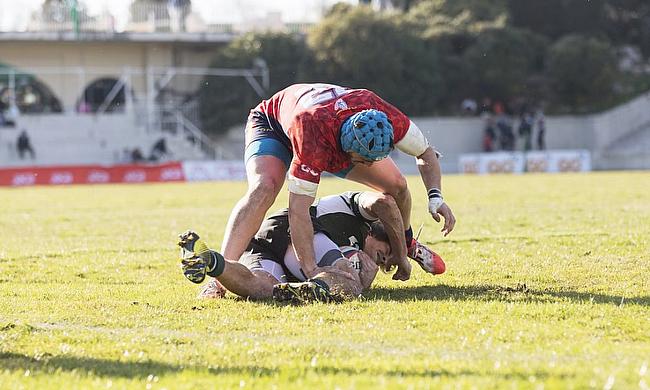
Balancing Rugby Training and Academic Deadlines: A Student’s Guide
For student rugby players, university life rarely moves at walking pace. It is more like a game played in fast-forward. One minute you are sitting in a lecture trying to stay focused on an assignment brief, and the next you are pulling on your training kit, heading out into the cold for a contact session, or travelling for a Wednesday fixture.
To plenty of people outside the game, student rugby can look like the perfect balance of sport and social life. But anyone who has lived it knows the reality is more demanding than that. There is gym work, video review, recovery, lectures, coursework, travel, and the pressure to perform both on the pitch and in the classroom. At times, those two worlds can feel as if they are pulling in opposite directions.
And yet, some of the most organised, resilient, and driven people in the university game are the ones who learn how to manage both. It is not easy. It takes discipline, honesty, and routine. But it can be done.
Why Student Rugby Brings Unique Pressure
Unlike many university hobbies, rugby is not something you simply dip in and out of when it suits you. Once the season starts, it shapes your week. Training sessions are fixed. Gym blocks are planned. Matchdays are non-negotiable. Recovery matters. If you switch off for too long, your body feels it and your performances usually show it.
That is what makes the student game so demanding. Your rugby diary is often locked in place, while your academic work is left to fit around it. On paper, that can seem manageable. In practice, it is where problems begin.
A lecture can be missed and caught up later. Reading can be postponed. An essay plan can be left until tomorrow. The danger is obvious. Tomorrow quickly turns into next week, and before long the stress begins to build.
For players involved in competitive university setups, especially those juggling BUCS fixtures, squad expectations, and strength and conditioning work, there is rarely much empty space in the calendar. Add in injuries, travel, and the mental fatigue that comes with constant pressure, and it is easy to see why deadlines can suddenly feel overwhelming.
The challenge is not just about having enough time. It is about using your time well when your body is tired and your focus is stretched.
The Week Has to Be Planned Like a Match
The best student rugby players do not drift through a game and hope for the best. They prepare, know their role, and understand what the week demands. Academic life needs the same approach.
A lot of students rely too heavily on memory. They tell themselves they will “fit in” study around training, but that usually means important work gets pushed into whatever time is left over. And in a busy rugby week, leftover time is not much of a plan.
It helps to map out the full week in advance. Put everything in first: lectures, seminars, training sessions, gym work, matchdays, travel, meals, and sleep. Only then do you get a true picture of the time you actually have.
Once that is clear, study needs to be scheduled properly. Not vaguely. Properly. “Work on essay” is too broad. “Read two journal articles before lunch on Tuesday” is much better. Clear tasks are easier to start, and starting is usually the hardest part.
Build Study Around Your Energy Levels
This is where many student athletes go wrong. They assume every free hour has equal value, but it does not.
The hour after a heavy evening session is not the same as a quiet morning before lectures. After training, you may be physically spent and mentally flat. That is probably not the best time to tackle a difficult reading or write the core argument of an assignment. It might, however, be a decent time to organise notes, check emails, or put together a plan for the next day.
The sharper parts of the day should be protected for your hardest academic work. Use your best concentration on the tasks that really need it. Treat your focus like energy in the final quarter of a close game. Spend it wisely.
Wednesday Fixtures Change Everything
Anyone who has played university rugby knows how much a midweek fixture can disrupt the rest of student life. Wednesday matches can dominate the entire day and often affect the days around them too. There is the build-up on Tuesday, the travel and preparation on Wednesday, and then the physical impact afterwards. Even when the result goes your way, the recovery can take a toll. Sore shoulders, heavy legs, and general fatigue are not ideal conditions for productive study.
That means the week has to be built with matchday in mind. If you leave all your key academic tasks until after a Wednesday fixture, you are asking for trouble. The smarter move is to get ahead earlier in the week. When deadlines, training loads, and travel all pile up, some students begin looking for shortcuts. It is common for students to search ‘how to do my assignment’ or ‘pay someone to write my essay’ when the pressure rises. In those moments, ethical academic support can be useful in more appropriate ways, including help with essay structure, citation guidance, proofreading, and planning. Used responsibly, this service can reduce stress, improve time management, and provide timely delivery of support materials when students are under pressure.
Monday and Tuesday often become crucial academic days for student players. They are the moments to make progress before rugby takes over. That might mean getting a draft started, finishing required reading, or setting up the rest of the week so that Thursday and Friday are less stressful.
Small Deadlines Beat Last-Minute Panic
Big assignments become dangerous when they stay big in your head. A 2,000-word essay sounds intimidating if you think about it as one huge task. It feels far more manageable when it is split into smaller steps: research, reading, outline, first draft, and edit.
That is the key. Create your own deadlines before the real one arrives.
If an assignment is due on Friday, aim to have the reading done by Monday, the structure sorted by Tuesday, a draft in progress by Wednesday, and enough left on Thursday to edit rather than panic. If you ever need to turn to an essay service for help, you can check reviews first to make sure it’s reliable. Student rugby does not often reward those who leave everything until the final whistle, and university life is no different.
Recovery Is Not a Luxury
There is a temptation among students to wear exhaustion like a badge of honour. Early lecture, hard session, library until midnight, then repeat. It can feel productive. It can even feel impressive. But eventually, it catches up with you.
Rugby players know better than most that recovery matters. Without it, performance drops. Reactions slow. Concentration fades. Motivation begins to wobble. The same is true academically. A tired player is rarely at their sharpest in the classroom, just as an overstretched student is unlikely to bring much energy to training.
Sleep matters. Hydration matters. Food matters. So does giving yourself the occasional break without guilt.
That does not mean lowering standards. It means recognising that your body and your mind are part of the same system. If one side is under pressure, the other usually feels it too.
Burnout rarely arrives all at once. It builds gradually. A player who is constantly drained, falling behind with work, and dragging themselves from one commitment to the next is not showing toughness. They are usually running too close to empty.
Good routines help prevent that. So does honesty. If you are overloaded, admit it early. That is not weakness. It is maturity.
Communication Can Save a Season
One of the most useful habits any student athlete can develop is speaking up before things spiral.
Too many players stay silent when deadlines pile up or when rugby starts affecting their academic work. They tell themselves they will sort it out alone. Sometimes they do. Often they do not.
Tutors are far more likely to respond positively when students communicate early and clearly. A lecturer may not move a deadline, but they may offer guidance, recommend support, or point you towards resources that help you manage the workload. Leaving everything until the last minute usually closes those doors.
The same goes for coaches. Good university coaches understand that their players are students first. That does not mean standards disappear during exam season, but it does mean there should be room for sensible conversations about pressure, availability, and balance.
Teammates can be part of that support as well. Rugby has always been built on trust, shared effort, and looking after each other. That should not stop when the boots come off. Whether it is sharing notes, helping someone catch up after travel, or simply checking in when a mate looks burned out, small actions can make a big difference.
The Skills That Help You in Rugby Also Help You at University
There is a reason many student athletes come out of university stronger in more ways than one. Rugby teaches habits that transfer well beyond the pitch.
Discipline is one of them. So is accountability. Time management, resilience, and dealing with setbacks all matter in both environments. A bad result on Wednesday cannot derail the rest of your week. Nor can one poor mark define your semester. You reset, respond, and go again.
That mindset is valuable. Student rugby can be chaotic, but it also teaches structure. It can be exhausting, but it also builds resilience. The same qualities that help players push through a difficult training block can help them stay calm when coursework pressure rises.
The trick is to stop seeing rugby and academics as rivals. They are not always fighting each other. In many cases, the habits developed in one area strengthen the other. Players who learn to organise their week, respect recovery, communicate honestly, and prepare properly usually give themselves a far better chance of succeeding in both.
Balancing rugby training and academic deadlines will never be completely easy. There will always be weeks when the calendar looks too full and the pressure feels heavy. But that is part of student sport. The answer is not perfection. It is consistency, planning, and the willingness to deal with problems before they become crises.
For any student player trying to hold everything together, that is the real lesson. You do not need to win every hour of every day. You just need a system that keeps you moving forward. Get that right, and you give yourself every chance to perform where it matters most — in the lecture hall, in the gym, and on the pitch.